Pond liners protect water quality, prevent soil intrusion, and create stable habitats for koi, goldfish, and aquatic plants. This guide highlights top-rated liners in a range of sizes and thicknesses, with practical notes on durability, installation, and safety for fish. Each option prioritizes UV resistance, puncture resistance, and easy maintenance to help you choose confidently.
Summary of chosen products:
| Product | ||||
|---|---|---|---|---|
| UWIOFF Pond Liner, 7 x 10 Ft | 7 x 10 ft | 20 mil | HDPE | Small ponds up to 200 gal |
| UWIOFF 10 x 13 Ft Pond Liner | 10 x 13 ft | 20 mil | HDPE | Medium ponds up to 500 gal |
| UWIOFF 15 x 20 Ft Pond Liner | 15 x 20 ft | 20 mil | HDPE | Large ponds and water features |
| Coocure 15 x 20 Ft Reinforced PE Pond Liner | 15 x 20 ft | 28 mil | Reinforced PE | Durable, flexible large-liner projects |
| VEVOR 20 x 25 ft Pond Liner | 20 x 25 ft | 45 mil | EPDM | Heavy-duty, long-term outdoor use |
UWIOFF Pond Liner, 7 x 10 Ft

The 7 x 10 ft UWIOFF liner is designed for compact ponds up to about 200 gallons. At 20 mil thickness, it balances durability with flexibility, making it easier to mold into irregular shapes. The liner is made from HDPE, which offers improved puncture resistance and UV stability compared with LDPE. It is marketed as safe for fish and plants, appealing to DIY pond builders who need a reliable, lightweight option for small water features.
Installation requires no tools, aligning with quick setups for backyard ponds, streams, or fountains. The liner’s UV resistance helps maintain integrity in sunny climates, while its lightweight profile reduces handling strain during placement. Consider this option when your project is a smaller backyard koi pond or a feature with tight footprint constraints.
UWIOFF 10 x 13 Ft Pond Liner, 20 Mil
This medium-sized liner accommodates ponds up to roughly 500 gallons or larger layouts when cut to fit. It shares the same 20 mil HDPE construction as the smaller option, providing a sturdy barrier against soil intrusion and water loss. The material is described as UV-stable, puncture-resistant, and compatible with outdoor pond environments for years of service. Its flexibility makes it well-suited for ponds with curved edges or irregular shapes in gardens or courtyards.
UWIOFF 15 x 20 Ft Pond Liner, 20 mil

For larger ponds or expansive water features, the 15 x 20 ft liner offers generous coverage with the standard 20 mil thickness. It emphasizes UV resistance and leak-proof performance, with durability designed to endure outdoor conditions and sun exposure. Its adaptability allows it to be cut to fit various pond footprints while maintaining a flat, even surface inside the pond to minimize soil buildup and simplify cleaning. This is a sensible choice for backyard koi ponds or mixed water gardens with multiple features.
Coocure 15 x 20 Ft Reinforced PE Pond Liner

The Coocure liner uses a reinforced PE structure with a 28 mil thickness for added durability. The three-layer composition—middle woven HDPE with reinforced PE sides—enhances puncture and tear resistance, making it suited for larger, more rugged installations where sharp rocks or heavy root growth might challenge thinner liners. Its flexibility aids shaping to irregular ponds and water features, such as koi enclosures, duck ponds, or waterscapes in garden designs. It is marketed as safe for koi and general aquatic life.
ToLanbbt Pond Liner 7 x 10 Ft

The ToLanbbt liner also measures 7 x 10 ft with 20 mil HDPE, offering UV and puncture resistance and no plasticizers. It emphasizes ease of cutting, enabling custom fitting for ponds with irregular shapes or complex outlines. The liner’s black color aids camouflage of liner edges and helps integrate the pond with surrounding landscaping. This option suits hobbyists who enjoy tweaking pond layouts as plants and features evolve over time.
Adroiteet 10 x 15 Ft Pond Liner, 20 Mil
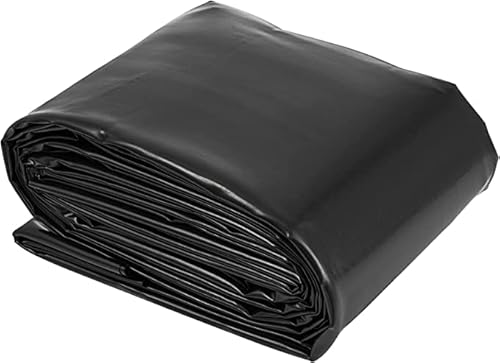
The Adroiteet 10 x 15 ft liner provides 20 mil HDPE with a focus on longevity and pond protection. The liner is described as sun-proof and waterproof, designed to minimize soil intrusion while offering a stable surface for plants and fish. The design aims at reliable performance in outdoor environments, suitable for sizeable backyard ponds with koi or other ornamental species. It emphasizes ease of installation and long-term durability.
Buying Guide: Key Purchase Considerations
- Size and shape compatibility: Measure your pond footprint carefully. If you expect future expansion or irregular edges, choose liners that can be cut to fit or come in larger formats.
- Thickness and material: HDPE liners (20 mil) strike a balance between durability and flexibility for most backyard ponds. For harsher environments or larger installations, reinforced PE or EPDM (as in 45 mil) can offer additional protection against punctures and sun exposure.
- UV resistance and longevity: Look for UV-stable formulations to minimize UV degradation. This is especially important in sunny climates where liners face prolonged sun exposure.
- Safety for aquatic life: Ensure the liner is non-toxic and safe for fish and plants. This is typically highlighted in product features and packaging.
- Installation and maintenance: Tools-free installation is convenient for DIY projects. A flat liner surface reduces soil buildup and simplifies cleaning, while darker colors help hide the liner edges.
- Environmental considerations: Some liners emphasize environmental friendliness or safe disposal, which can be a factor for large or garden-scale ponds.
- Warranty and lifespan: Review any warranty information and typical lifespans stated by the manufacturer. Heavier, reinforced liners often offer longer service in demanding installations.
When selecting a liner, balance size requirements with durability, ease of installation, and the specific features of your pond ecosystem. For koi ponds, prioritize puncture resistance and UV stability to protect the liner from wear and sunlight. For pond fountains or waterfalls, a flexible, easy-to-cut liner helps accommodate multiple water features in a single project. Consider the long-term maintenance implications and the potential need to replace sections without rebuilding the entire pond.