Discover top double screen bee boards that help manage swarming, assist queen rearing, and maintain hive health. This guide highlights five strong options from Witbee, BeeCastle, and Honey Lake, focusing on build quality, airflow, and practical hive management benefits for American beekeepers.
| Product | Brand | Key Benefit |
|---|---|---|
| Witbee Snelgrove Board for 10 Frame Langstroth | Witbee | Swarm control and spring splits |
| Witbee 2Pcs Beehive Double Screen Board | Witbee | Six entrances for flexible bee movement |
| Witbee Beehive Double Screen Board for 8 Frame | Witbee | Efficient swarming management and queen rearing |
| BeeCastle Screened Bottom Board Dipped in Beeswax (10-Frame) | BeeCastle | Airflow and weather protection |
| Honey Lake Langstroth Metal Screened Bottom Board (10 Frame) | Honey Lake | Durable cedar with beeswax coating |
The selections cover single-board and multi-board options, with emphasis on airflow, heat circulation, and practical uses like queen rearing and spring splits. Each product is designed to fit standard Langstroth 8- or 10-frame hives, ensuring compatibility for most American beekeeping setups. Below are detailed sections for each option, including features and practical notes for installation and use.
Witbee Snelgrove Board for 10 Frame Langstroth

The Witbee Snelgrove double screen board is designed with a fir wood frame and a double-layer 304 stainless steel mesh (3mm aperture). This construction ensures strong durability while allowing heat and airflow to pass between the upper and lower hive sections. The primary purpose is to create a clean separation that helps manage swarming pressure in spring and provides a practical setup for queen rearing. The screen permits exchange of heat and scents, supporting brood development and colony health. Recommended for Beekeepers focusing on swarm control and queen rearing strategies.
Key features include a robust fir wood frame, a double-layer stainless steel mesh, and a design that supports heat circulation. The device helps create a controlled split by isolating bees above from those below, making it a practical tool for spring splits and swarm prevention. Its simple integration with standard Langstroth hives makes it accessible for hobbyists and commercial operations alike. If you’re pursuing queen rearing or swarm management, this snelgrove board offers a reliable framework for your hive experiments.
Witbee 2Pcs Beehive Double Screen Board

This product includes two double screen boards designed for 10-frame Langstroth hives, enabling flexible management through six separate entrances. The two boards work in tandem to simplify swarm control and enable selective movement of bees between the upper and lower compartments. This configuration supports various operations, including spring splits and queen rearing, by enabling precise manipulation of bee populations. The mesh and wooden frame provide durability while ensuring good airflow throughout the hive, reducing heat buildup at critical brood levels.
Practical considerations include the option to run a top split over a parent colony or adjust the number of bees in play by using the six entrances. The design emphasizes heat exchange within the hive, helping brood development and colony strength. The dual-board setup is especially useful for beekeepers who run experiments in swarm management or queen production, offering a straightforward path to adjust colony dynamics across seasons.
Witbee Beehive Double Screen Board for 8 Frame Langstroth

Designed for 8-frame Langstroth hives, this Witbee snelgrove board supports spring splits and queen rearing with a double-layer stainless mesh and a fir wood frame. The perforated screen isolates colonies above and below while preserving heat flow, enabling effective brood rearing and colony management during critical periods. Its compact size makes it ideal for mid-size apiaries or hobbyists who prefer precise, localized control over hive dynamics. The product’s emphasis on heat circulation also supports healthy brood temperatures during cooler months.
Applications include swarm prevention, queen rearing, and top-side splits. The two-layer mesh structure and solid wood construction help resist weather-related wear while maintaining airflow. If your management plan includes regular swarm control or queen production, this option provides a practical, scalable approach for 8-frame hives without sacrificing hive health or performance.
BeeCastle Beehive Screened Bottom Board Dipped in Beeswax (10-Frame)
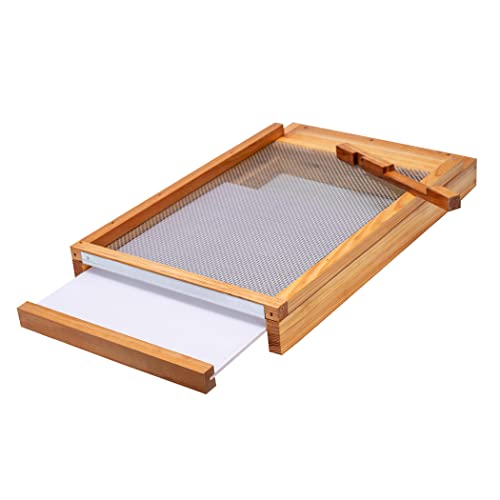
This screened bottom board from BeeCastle for 10-frame hives features cedar wood coated with 100% beeswax, designed to shield the wood and extend its lifespan. The screened bottom board promotes airflow and offers effective climate control, helping to keep the hive cool in warm months and slightly ventilated in cooler periods. The cedar construction, beeswax coating, and removable metal inserts contribute to durability and ease of cleaning, making it a practical upgrade for beekeepers seeking improved ventilation and hive longevity.
Considerations include climate suitability and maintenance needs. Beeswax coating protects wood against weather, while the metal insert adds strength and durability. This bottom board excels in hot climates or seasons with high temperatures, where airflow and ventilation significantly impact bee comfort and colony health. It pairs well with other hive components to create a balanced environment for brood and worker activity.
Honey Lake Langstroth Metal Screened Bottom Board (10 Frame)

The Honey Lake screened bottom board uses cedar wood and is dipped in beeswax, with precise dimensions for a 10-frame Langstroth hive (16-1/4″ x 22″ x 2-9/16″). The wax coating offers weather protection while maintaining a lightweight, sturdy frame. The metal insert enhances durability, and the overall design supports effective ventilation and climate control. This product is suitable for beekeepers seeking a reliable, long-lasting bottom board that supports airflow and hive health during peak seasons.
When selecting a bottom board, consider climate, maintenance preferences, and how it integrates with existing hive components. Beekeepers in hot climates may prioritize airflow and moisture management, while those in cooler regions might emphasize insulation compatibility. The beeswax finish provides a natural protective layer, aligning with natural beekeeping practices and reducing the need for frequent treatments or coatings.
Buying Guide
Key purchase considerations for double screen or screened bottom boards include hive size compatibility (8- or 10-frame Langstroth), airflow and ventilation, ease of installation, and durability under local weather conditions. Mesh aperture size affects heat transfer and mite management; 3mm mesh is common for preventing bees from passing while allowing adequate airflow. Wood types (cedar or fir) influence durability and weather resistance, while wax coatings can extend life in humid environments.
Usage scenarios vary by season and purpose. For swarm prevention, double screen boards enable controlled splits and queen rearing, helping maintain colony strength while managing swarm impulses. When climate control is paramount, screened bottom boards with good ventilation prevent moisture buildup and maintain bee comfort. For queen rearing, the ability to isolate queen mothers and place nucs or splits on top or bottom supports selective breeding and colony expansion.
Installation considerations include ensuring proper alignment with the hive’s frames and entrances. Some models offer multiple entrances or adjustable layouts to fine-tune bee distribution. For those with existing equipment, confirm frame size compatibility and ensure that the screen mesh is securely attached to prevent bee escape or frame damage. Finally, assess maintenance needs—beeswax finishes require minimal upkeep, while metal inserts should be inspected for wear or corrosion over time.
In summary, the best double screen boards blend durable construction, effective airflow, and practical features like multi-entrance options or queen-rearing utilities. Your choice should reflect your hive size, local climate, and goals—whether you aim to reduce swarming, improve brood health, or generate new queens for expansion.