Palm trees require steady, balanced nutrition to maintain lush fronds and strong roots. This guide highlights five top liquid fertilizers designed to support palms at all life stages, indoors or outdoors. Each option delivers essential macronutrients along with micronutrients that palms crave, such as iron and zinc. We compare formula balance, application ease, and suitability for different palm varieties, so you can choose the right boost for your tropical display or landscape.
| Product | Brand | Size | Key Benefit |
|---|---|---|---|
| Farmer’s Secret Palm Tree Booster Fertilizer 32oz | Farmer’s Secret | 32 oz | High-concentration, multi-nutrient mix with iron and zinc |
| Gardenera Premium Liquid Palm Tree Plant Fertilizer 8oz | Gardenera | 8 oz | Organic, balanced blend for indoor/outdoor palms |
| TPS NUTRIENTS Liquid Palm Tree Food 32 oz | TPS NUTRIENTS | 32 oz | Simple mixing, nutrient-rich formula for all palms |
| Southern Ag Palm Nutritional Spray 1 Pint | Southern Ag | 16 oz | Nutritional spray to correct deficiencies in palms |
| HiThrive Premium 16 oz Palm Fertilizer | HiThrive | 16 oz | Micronutrient-rich formula for robust growth |
Farmer’s Secret Palm Tree Booster Fertilizer — 32oz

Farmer’s Secret Palm Tree Booster Fertilizer combines a robust macronutrient mix with trace minerals that palms rely on for steady growth. The product is described as highly concentrated, so a small amount goes a long way. Application is straightforward: dilute one teaspoon per gallon of water and apply weekly along the drip line. For younger palms, up to 1.5 teaspoons per week; for mature trees, up to three teaspoons per week. This formulation targets all palm types across life stages, suitable for outdoor landscapes or container specimens.
The fertilizer emphasizes iron and zinc as secret ingredients for palms, aiming to combat common deficiencies that can lead to pale fronds and slowed growth. While designed for versatility, users should monitor salt buildup or over-watering in container palms and adjust concentrations accordingly. Regular weekly feeding aligns with standard palm care routines, particularly where soil quality is variable or fertilization history is inconsistent.
TPS NUTRIENTS Palm Tree Fertilizer — 8 Oz Liquid Plant Food
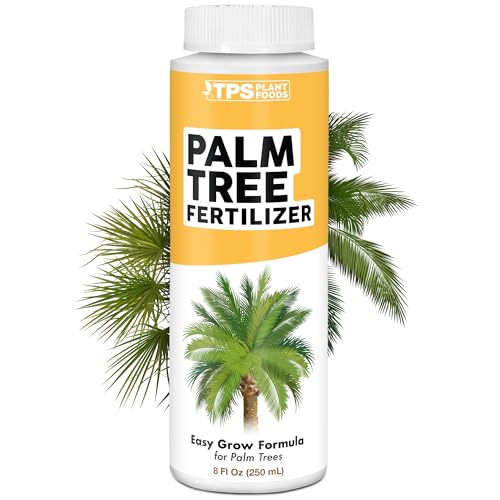
TPS NUTRIENTS offers a simple mixing solution: dissolve two tablespoons of the liquid fertilizer per gallon of water. This method is designed for convenient feeding of both indoor and outdoor palms, ensuring consistent nourishment for better root development and vibrant fronds. The nutrient-rich formula targets all palm varieties, making it a versatile option for mixed-species landscapes. Regular use supports overall palm health, and pairing with additional nutrient support can be beneficial in challenging growing conditions or during active growth periods.
Key strengths include ease of use and broad applicability to different palm environments. Potential considerations involve ensuring thorough mixing to avoid uneven distribution and aligning feeding schedules with local weather patterns to prevent runoff or irrigation interference. The product’s emphasis on a balanced nutrient profile helps palms maintain lush green color while supporting structural resilience.
TPS NUTRIENTS Palm Tree Fertilizer — 32 oz

This larger 32-ounce option from TPS NUTRIENTS follows the same simple mixing approach: two tablespoons per gallon of water. It’s pitched as a scalable solution suitable for palms both indoors and outdoors. The consistent nutrient profile supports healthy root systems and vibrant fronds, with the advantage of covering more plants per bottle. As with smaller bottles, ensure even distribution and adjust feeding frequency during periods of extreme heat or drought to prevent nutrient burn or leaching.
The product line emphasizes compatibility with a wide range of palm species, including indoor ornamentals and outdoor landscaping palms. When using larger volumes, consider soil moisture and container capacity to avoid overwatering. This option is a practical choice for households or properties with multiple palm specimens requiring steady nutrition across seasons.
Gardenera Premium Liquid Palm Tree Plant Fertilizer — 8oz

Gardenera’s Premium Liquid Palm Tree Plant Fertilizer is marketed as an organic, micronutrient-rich formula designed for indoor palms and outdoor specimens alike. The 3-1-2 concentrate focuses on balancing nitrogen, phosphorus, and potassium while delivering micronutrients that support healthy growth, frond development, and overall vigor. The product’s organic positioning appeals to growers seeking natural inputs and reduced synthetic additives in indoor environments or sensitive outdoor areas.
Application involves mixing per gallon of water in a simple ratio, typically two tablespoons per gallon as with other palm formulas. Gardeners may appreciate Gardenera’s emphasis on organic nutrient delivery, which can align with sustainable landscaping or indoor air-quality considerations. As with all liquid feeds, even distribution and compatibility with existing plant care routines are essential for optimal results.
Southern Ag Palm Nutritional Spray — 1 Pint

Southern Ag Palm Nutritional Spray is formulated as a spray-on solution designed to correct nutritional deficiencies observed in palms, such as yellowing and browning of fronds. This foliar approach can complement root feeding, particularly when soil conditions impede nutrient uptake. The product claims to address four essential nutrients and is suitable for use on a variety of palms and ornamentals. Foliar sprays can provide rapid nutrient delivery to leaves, though they are typically used in conjunction with root feeds for sustained growth support.
Users should follow label directions for coverage and spraying frequency, especially on delicate fronds. Weather conditions, leaf surface moisture, and rain exposure can influence efficacy. The spray format makes it a flexible option for quick remediation in seasonal care routines or in situations where soil-based feeding is temporarily impractical.
Buying Guide: Palm Fertilizer Purchase Considerations
When selecting a liquid fertilizer for palm trees, consider these key factors to ensure optimal growth and health:
- Nutrient balance: Look for formulas with balanced N-P-K ratios and include micronutrients such as iron, zinc, magnesium, and manganese to prevent common palm deficiencies.
- Concentration and dilution: Highly concentrated products save space and cost, but require precise measurement. Follow label directions to avoid nutrient burn, especially for container palms with smaller soil volumes.
- Palms versus ornamentals: Some formulas are designed for all palms, while others are marketed for indoor or outdoor use. Choose based on your palm species, location, and growing conditions.
- Application method: Liquid feeds can be soil-applied or foliar. Soil applications support root uptake, while foliar sprays offer rapid leaf nutrition that can complement root feeding during deficiency signs.
- Watering schedule compatibility: Align feeding with your irrigation routine. Avoid applying fertilizer in extreme heat or drought to minimize runoff and root stress.
- Indoor versus outdoor use: Indoor palms may benefit from organic or gentler formulations to protect indoor air quality and avoid salt buildup in limited soils.
- Container care: Potted palms need more frequent feeding due to limited soil volume. Use lower concentrations and adjust frequency to prevent fertilizer burn.
- Environmental impact: For organic or natural options, verify product claims and ensure compatibility with your overall landscape management plan and any local guidelines.
- Maintenance goals: Define whether your priority is greening, frond density, root vigor, or general health, and select a product whose primary benefits align with your goals.
In practice, many palm enthusiasts benefit from combining a steady soil-feed regimen with occasional foliar nutrition to address visible leaf symptoms promptly. Monitor frond color, growth rate, and soil moisture, and adjust feeding accordingly. With any fertilizer, start with a conservative rate and observe the plants over several weeks before increasing dosage or frequency.