Choosing an organic fertilizer for roses helps support soil health while encouraging prolific blooms. The following selections are well-suited for a range of rose types, from Knockouts to climbers, and they also benefit flowering shrubs. This guide highlights key features, application notes, and what to look for when comparing options.
Summary of selected products:
| Product | Brand | NPK | ||
|---|---|---|---|---|
| Espoma Rose-Tone 4-3-2 | Espoma | 4-3-2 | Yes | Ready-to-use; monthly feeding; contains calcium |
| Jobe’s Organics Granular Rose Fertilizer | Jobe’s Organics | 3-4-3 | Yes | Granular, lightweight; minimizes runoff |
| Burpee Organic Bloom Granular | Burpee | Unknown on label | Yes | Immediate nutrient burst with long-lasting feed |
| Down To Earth Rose & Flower Mix | Down To Earth All Natural Fertilizers | 4-8-4 | Yes | Balanced for blooms and root health |
| Great Big Roses Concentrate | Great Big Plants | Unknown on label | Unknown | Concentrated liquid feed; boosts uptake |
Espoma Rose-Tone 4-3-2 Organic Fertilizer for All Types of Roses
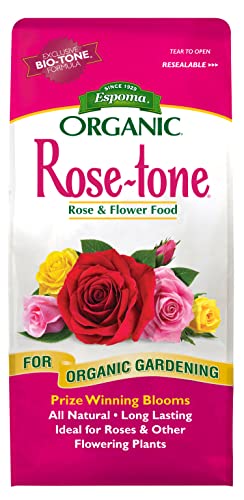
- For use on all types of roses, including knockouts and climbers, plus other flowering plants.
- Contains a rich blend of natural ingredients with Bio-tone formula; 4-3-2 analysis and 5% calcium.
- Environmentally safe with no sludges or toxic additives; ready to use with no mixing.
- Best applied monthly through the growing season (May–September) around the drip line, then watered in.
Jobe’s Organics Granular Rose Fertilizer

- Contains 4 pounds of organic fertilizer granules designed to minimize runoff and mess.
- Formulated with a 3-4-3 NPK ratio to support roses and flowering plants.
- Uses no synthetic chemicals and is OMRI-listed for organic gardening.
Burpee Organic Bloom Granular All-Natural Food

- Natural plant food for roses and flowering plants, suitable for containers or beds.
- OMRI-listed for organic use with a long-lasting nutrient release for up to three months.
- Includes microbes to promote blooms, color, and strong root development.
Down To Earth Rose & Flower Mix

- Balanced 4-8-4 formula, designed to enhance flowering and root development.
- OMRI-listed and free from synthetic additives; safe for organic gardening.
- Ideal for roses, bulbs, and ornamentals, delivering vibrant blooms and healthy foliage.
Great Big Roses Concentrate

- Concentrated concentrate designed to improve soil and rose fertilizer uptake.
- Contains compost extract with humic acids, trace minerals, and seaweed for soil vitality.
- Intended to boost vigor and bloom potential when used as directed.
Espoma Rose-Tone 4-3-2 (Two Pack)

- Same Rose-Tone formula in a bundled 2-pack for ongoing seasonal feeding.
- Monthly applications during May–September with no mixing required.
- Contains 5% calcium and supports flowering along with green growth.
Buying Guide: Key Purchase Considerations
Selecting the right organic fertilizer for roses involves evaluating nutrient balance, OMRI listing, and your growing conditions. The following perspectives help clarify common choices.
Organic vs. Synthetic
Organic fertilizers feed through natural minerals and microbial activity, supporting soil structure and long-term health. They are often preferred for organic gardens and for reducing environmental impact. In contrast, synthetic blends can deliver rapid nutrient bursts but may not improve soil biology over time.
NPK Balance And Bloom Focus
Roses typically benefit from higher phosphorus (P) for blossoms and adequate potassium (K) for vigor, with moderate nitrogen (N) to support foliage. Look for formulas around 4-8-4 to 4-3-2 for a balance that promotes blooms and root development without excessive vegetative growth.
OMRI Listing and Safety
OMRI-listed products are approved for organic gardening by the USDA. If you garden organically or want assurances about additives, verify OMRI status on the product label or supplier page.
Application Method And Schedule
Consider whether the fertilizer is ready-to-use or requires mixing. A monthly feeding schedule during the growing season is common for rose tones, whereas granular blends may offer longer intervals between applications. Container rose plants may benefit from smaller, more frequent feedings.
Soil Health And Environmental Impact
Some products include beneficial microbes or compost extracts to improve soil biology. Others emphasize calcium or trace minerals that support robust stems and color. Evaluate how the product aligns with your soil type and climate to avoid nutrient imbalances.
Container vs. Garden Use
Container roses demand steady, balanced nutrition and steady irrigation. Look for slow-release formulas or those labeled for containers to prevent salt buildup and ensure even uptake.