The best reusable seed-starting tray fits the number of plants you intend to raise, the space you can provide and the way you want to remove the transplants. Choose that working arrangement before comparing the number of cells printed on a package.
This research-based shortlist compares five exact options with different structures: flexible pop-out cells, a capillary-watering bundle, conventional cells with flats, an air-prune insert and opening deep cells. It does not report hands-on tests, measured germination rates or a guaranteed number of seasons of use.
Write down the crops and approximate plant quantities in your actual plan, then mark the footprint available for starting them. A large cell count is not a benefit if you cannot give the resulting plants an appropriate growing setup and a place to go next.
Keep the reusable container separate from consumables such as growing medium and from equipment such as lighting. A tray can be a useful purchase while still being only one part of the seed-starting station.
Burpee 8 XL SuperSeed: a small flexible-cell tray
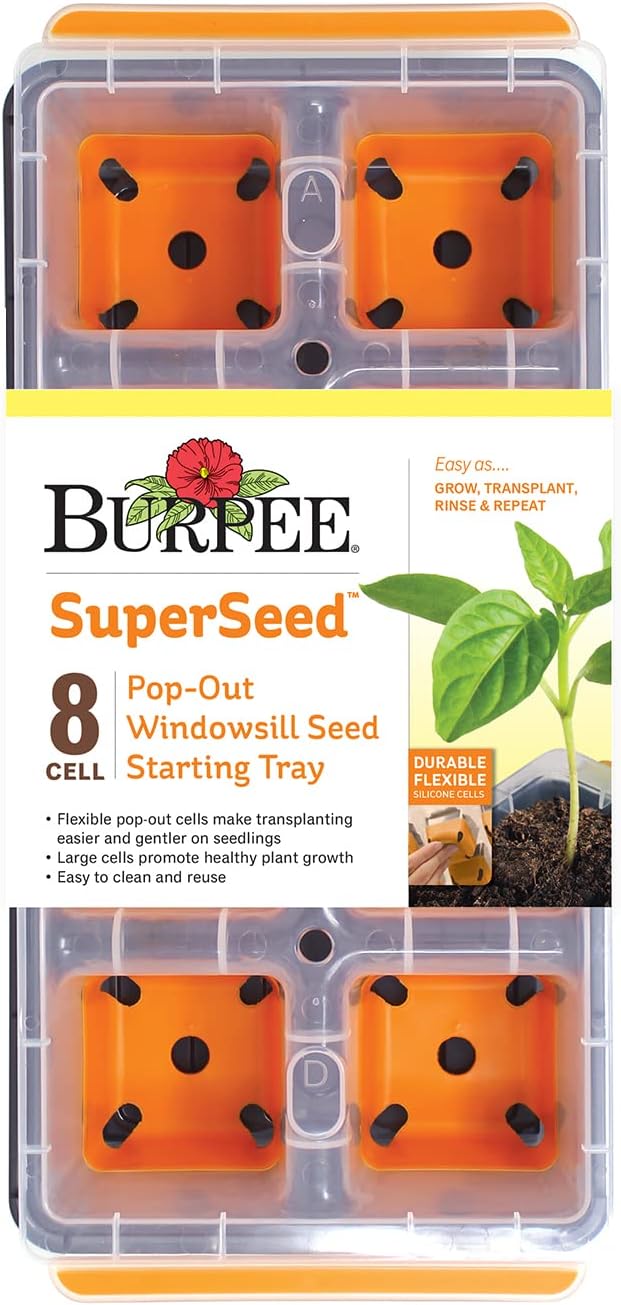 Check Burpee 96518 orange, eight XL cells on Amazon
Choose the orange eight-cell SuperSeed when you want a small batch with flexible cell bottoms rather than a large linked flat. Burpee identifies item 96518, an 11-by-5¼-inch tray with silicone cells and a watering tray.
Skip it if you need a large number of starts in one linked insert or want a capillary-mat reservoir system. Compared with the GrowEase bundle, the reason to choose this version is its smaller batch and pop-out design, not evidence of better germination.
Include suitable seed-starting medium, seeds and any other equipment your growing plan needs in the total cost. Do not count a humidity cover or light as included simply because another seed-starting package has one.
Before buying, confirm the orange eight-XL-cell version rather than one of Burpee’s larger SuperSeed formats. Keep the maker’s cleaning instructions with the product so its stated top-shelf dishwasher suitability is not expanded into permission for any treatment.
If you only plan a few transplants, map their names to the available cells before ordering a second tray. That makes the limited capacity an intentional boundary instead of an inconvenience discovered after sowing.
GrowEase Organic Success Kit: two 24-cell starters with supplies
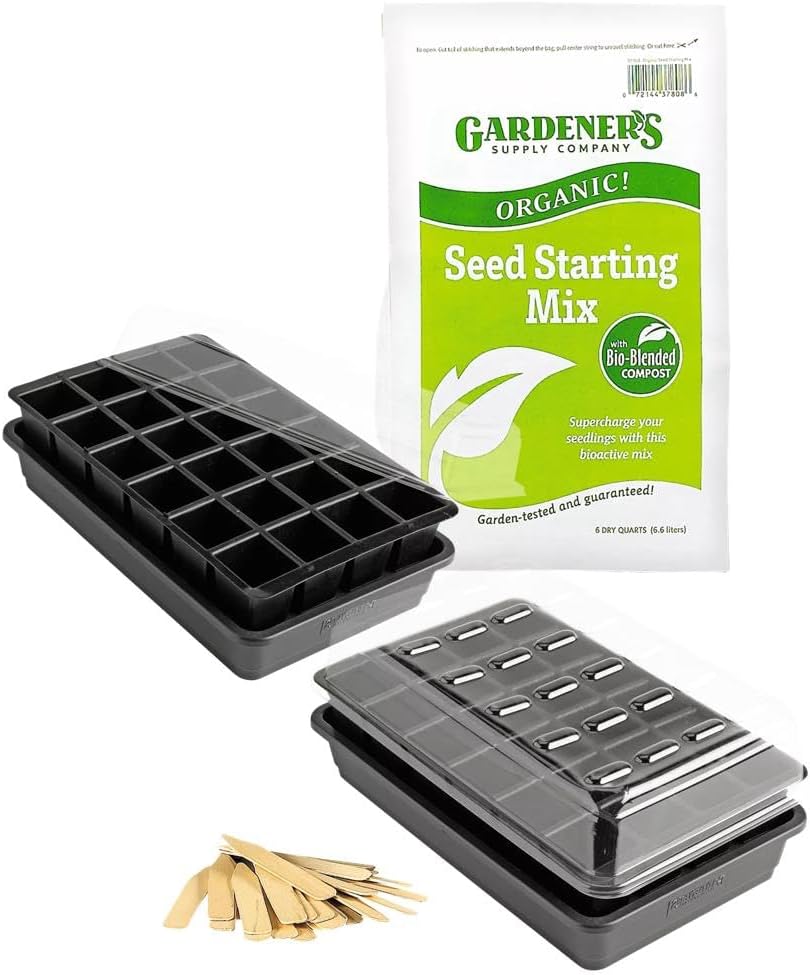 Check GrowEase Organic Success Kit, two 24-cell starters on Amazon
Choose the selected Organic GrowEase Success Kit when you want two 24-cell starters together with medium and markers. Gardener’s Supply lists two starters, six quarts of mix and 24 wooden markers in this bundle.
The documented system uses a reservoir, platform and capillary mat. Skip it if you prefer a simple insert you water directly, or already have the components and supplies that make the bundle useful.
Compared with the small Burpee, you are buying a different watering arrangement and more planting capacity. The self-watering name does not mean you can skip monitoring or assume that any seed, room and medium combination will work unattended.
Compare the bundle’s delivered cost with the complete list of separate items you actually need, including appropriate growing equipment outside the package. Before checkout, verify the two-starter Success Kit rather than a single GrowEase starter or replacement component.
Divide your planned crops between the two starters on paper. If they need different care or transplant schedules, retain that distinction in your labels instead of treating all 48 positions as one undifferentiated task.

Bootstrap Farmer 72-cell combo: linked cells plus supporting flats
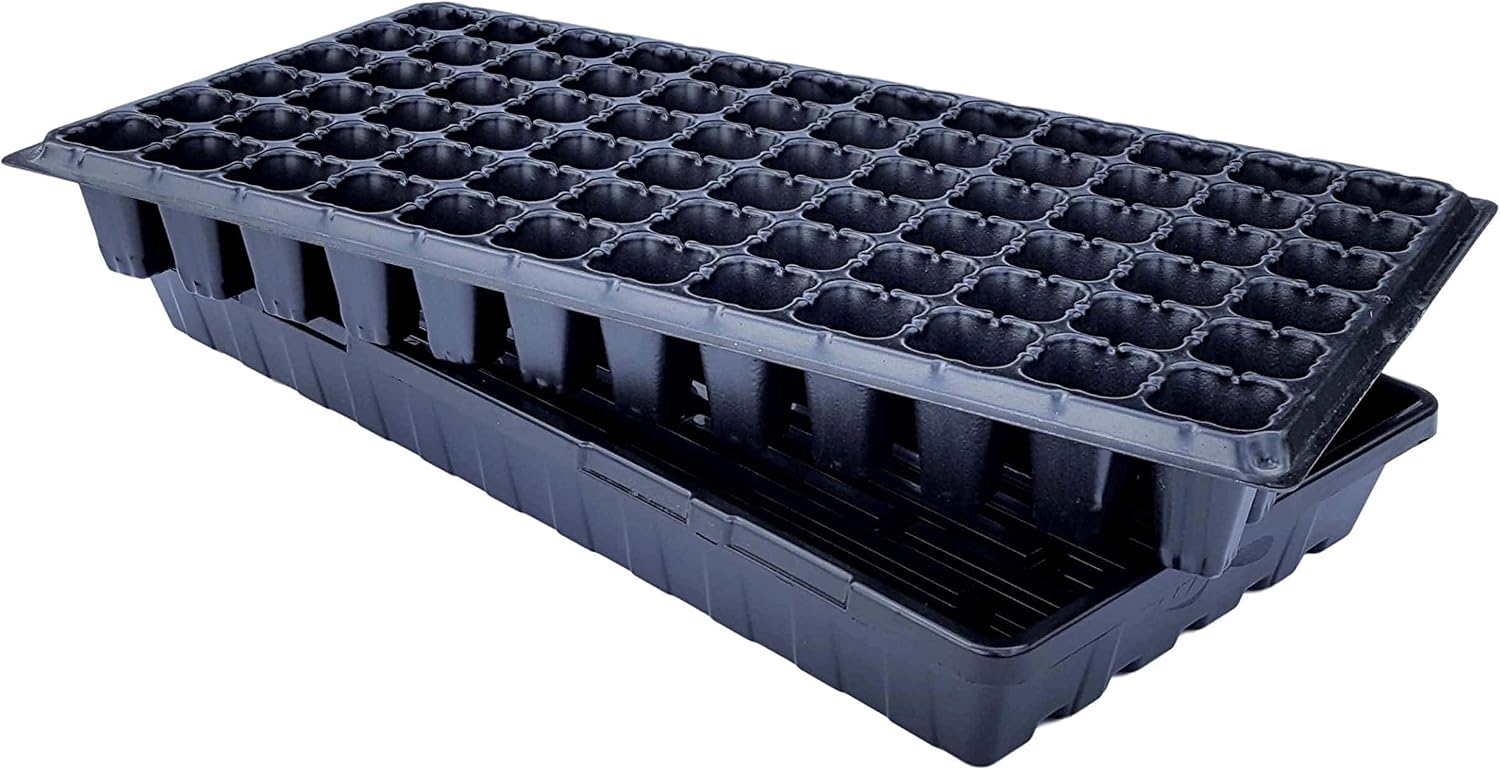 Check Bootstrap Farmer 72-cell and flat five-pack combo on Amazon
Choose the five-pack combo when you want conventional 72-cell inserts with matching supporting flats supplied together. Bootstrap Farmer states that the five-pack contains five 72-cell trays and five heavy-duty 1020 trays.
Skip it if your planting plan needs only a few starts, or if the linked-cell arrangement does not suit how you separate crop batches. Compared with the air-prune five-pack, this selection includes the supporting flats rather than selling only that different insert design.
Include medium, seeds and any separately needed covers or growing equipment when comparing the complete station cost. A bundle that supplies ten pieces is not automatically ten independent seed-starting systems, and the count should be read with each piece’s role attached.
Before ordering, verify the five-pack combo in the selected listing, not the 60-insert bulk listing or a different cell count. Mark the complete outside footprint against your actual shelf rather than treat the category name 1020 as an exact clearance measurement.
Five 72-cell inserts provide 360 cell positions, which is simple capacity arithmetic rather than a harvest forecast. If that is far beyond your plan, compare a smaller suitable purchase instead of filling every cell to justify the bundle.
Bootstrap Farmer air-prune 72-cell: a different insert structure
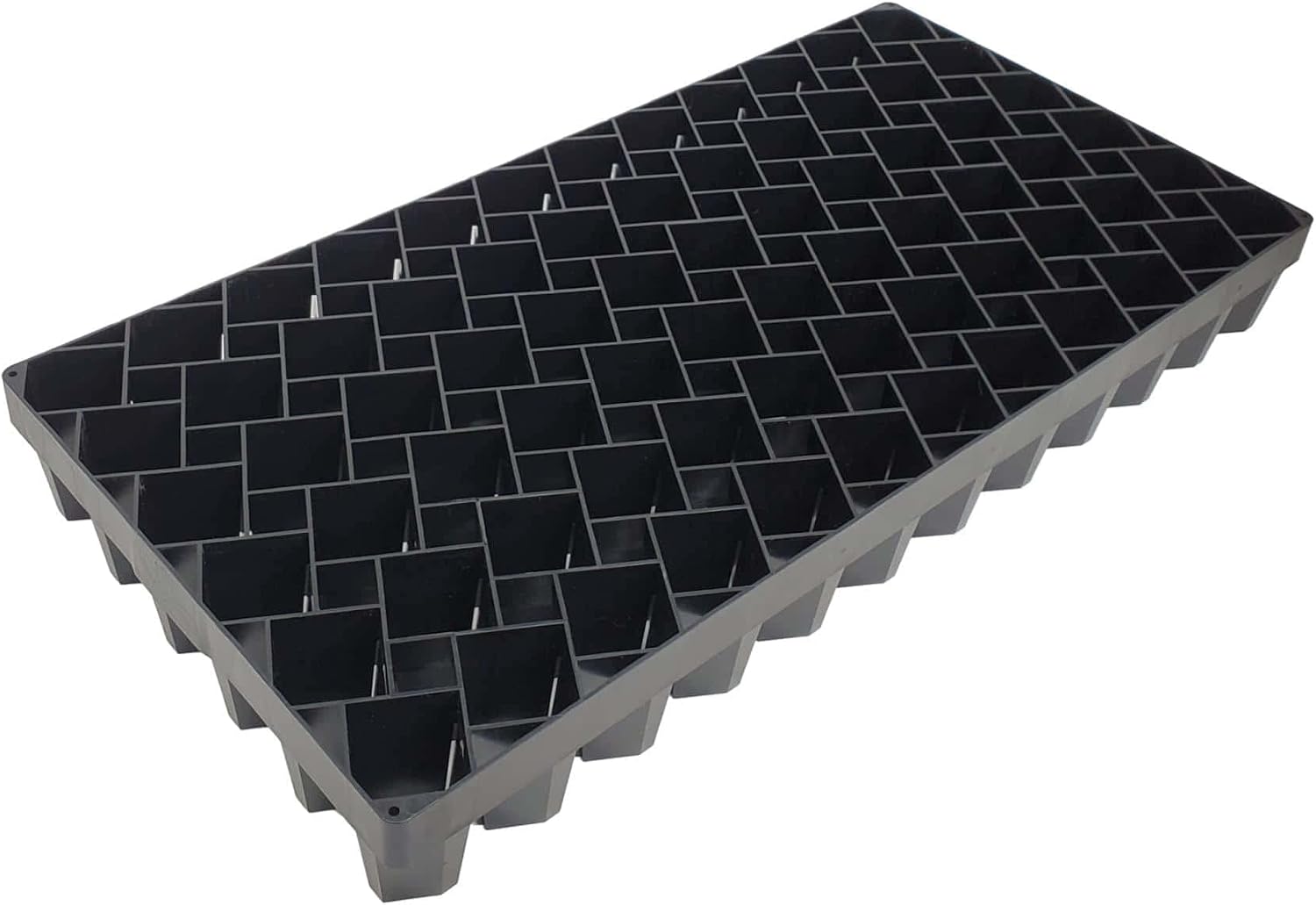 Check Bootstrap Farmer black 72-cell air-prune five-pack on Amazon
Choose the black five-pack air-prune trays when you specifically want cells with air channels and larger bottom openings. Bootstrap Farmer describes the air-strip design and compatible shallow or deep 1020 bottom trays for this product.
Skip it if you want the conventional combo’s included flats or do not intend to manage this insert arrangement. Compared with that combo, the air-prune model is a structural alternative, not simply another name for the same 72-cell tray.
Include compatible bottom trays, medium and any other required parts when assessing the delivered setup cost. Do not rank the insert by a claimed root improvement as though this article measured it against the other selections.
Before buying, verify black, five trays and the air-prune version, then check the maker’s actual fit information for the supporting components. The selected listing does not turn the bottom tray shown elsewhere in the product family into an included item.
Think through the removal and cleaning steps before choosing the open-cell structure. The useful question is whether that workflow suits your planting routine, not whether the product photograph looks more substantial than a simpler tray.
Tierra Garden 50-9000: opening deep-cell books
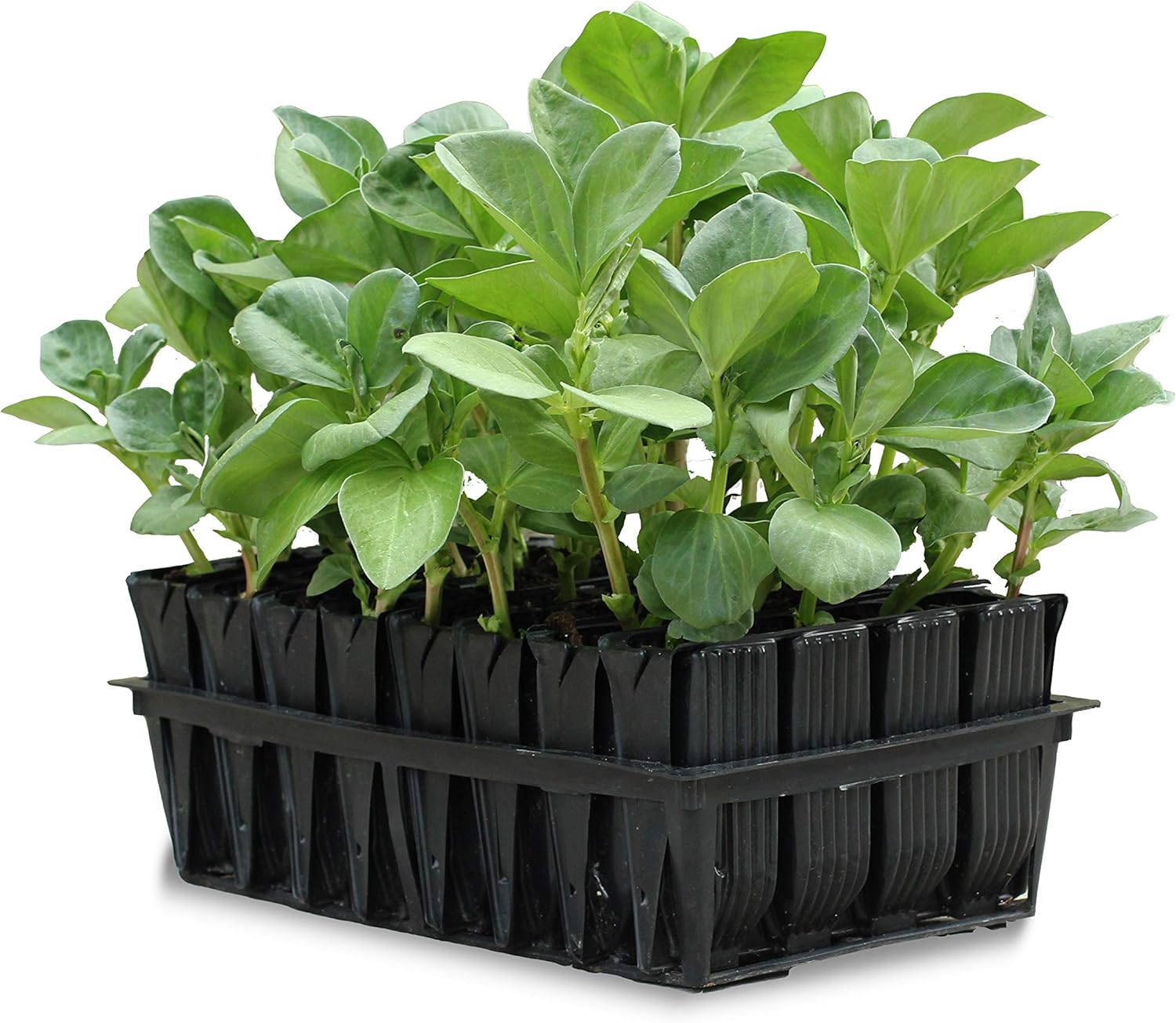 Check Tierra Garden 50-9000 Deep Rootrainers on Amazon
Choose the Deep Rootrainers kit when your selected crop and propagation plan call for its opening deep-cell structure. The U.S. site linked by Haxnicks describes 32 reusable cells with a holding tray and lid.
Skip it if you prefer flexible pop-out bottoms or a single linked insert. Compared with Burpee’s small tray, these cells open like books; that is a different removal method, not proof that a particular crop will avoid transplant stress.
Include appropriate medium, seeds and any other equipment your propagation plan requires in the cost. The first product photograph shows growing plants as an illustration; it is not an offer to deliver those plants with the tray kit.
Before checkout, verify Tierra Garden 50-9000 and Deep Rootrainers with the holding tray and lid. Keep cell depth separate from overall product dimensions, and do not substitute the Rapid, Maxi or refill-only versions because the family name looks familiar.
Plan where the opened books will go while you handle the transplants. Leave working room beside the growing footprint instead of using every available inch of the surface for unopened containers.
Compare the full station and the next container
Draw the chosen tray’s footprint, then leave room for the care you will actually perform: reading labels, handling water and removing a transplant. This is a planning exercise for your available space, not a claim that a particular shelf or surface has adequate load capacity.
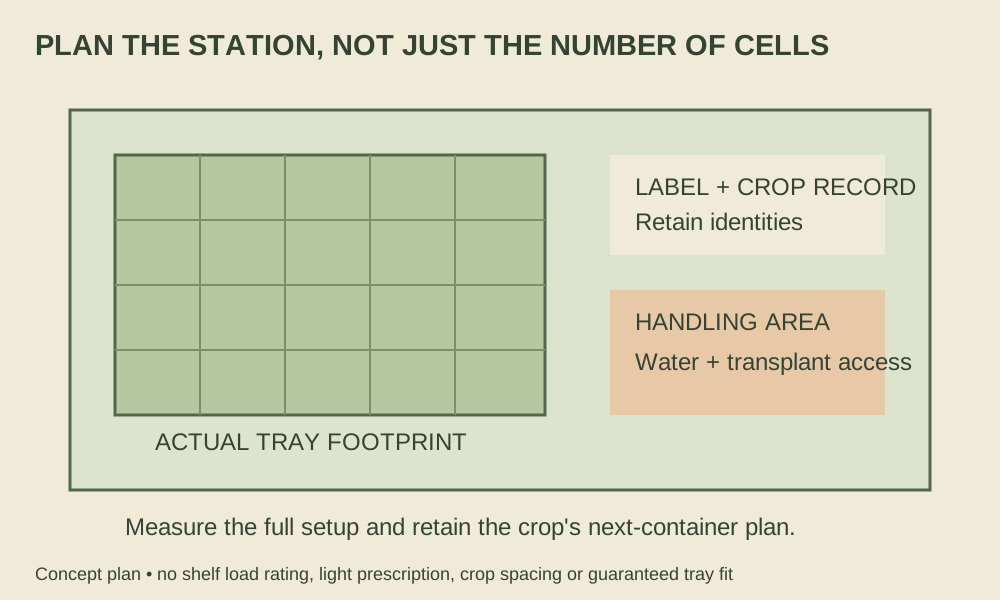
Keep a next-step entry with each crop so a successful start does not leave you without appropriate transplant space. You can use the indoor-space planning guide to connect the tray purchase with the rest of your setup.
Inspect the delivered parts and keep the exact care instructions before sowing. Choose the smallest complete arrangement that supports your actual plan, and let the crop’s requirements guide its use rather than treating the tray as a guarantee of successful seedlings.