The selection below focuses on reliable pre-emergent weed controls suited for fall applications. Each product is designed to prevent common lawn weeds, with clear guidance on usage, coverage, and compatible turf types. This guide emphasizes objective comparisons, application timing, and how these products pair with seasonal lawn care practices for American lawns.
| Product | Brand | Coverage / Size | Key Benefit |
|---|---|---|---|
| The Andersons Barricade Professional-Grade Granular | The Andersons | up to 5,800 sq ft / 18 lb | Professional-grade weed prevention |
| Quali-Pro Prodiamine, Pre-Emergent Herbicide | Quali-Pro | 5 lbs | Flexible spring & fall use |
| Scotts WeedEx Prevent with Halts | Scotts | 5,000 sq ft / 10.06 lb | Season-long crabgrass prevention |
| The Andersons Barricade Fertilizer with Pre Emergent Weed Control | The Andersons | 10,000 sq ft / 40 lb | Weed prevention plus feeding |
| 0-0-7 Granular Prodiamine Pre-Emergent (Yard Mastery) | Yard Mastery | 18 lb / 6,000 sq ft | Broad weed prevention for multiple grasses |
When choosing a fall pre-emergent, consider weed targets (crabgrass, Poa annua, goosegrass, etc.), your grass type, seasonal timing, and whether you want a fertilizer component. The following product-focused sections present objective overviews, usage notes, and how each option fits into a broader lawn care plan.
The Andersons Barricade Professional-Grade Granular Pre-Emergent

Product overview: The Andersons Barricade is a granular pre-emergent designed to prevent a broad spectrum of weeds while focusing on early season and fall applications. The product contains 0.48% prodiamine, a professional-grade active ingredient chosen for reliable pre-emergent weed suppression. It is explicitly designed to prevent grassy and broadleaf weeds such as crabgrass, Poa annua, goosegrass, henbit, and related species. The formulation is not intended to eliminate existing weeds; rather, it forms a barrier to stop germination. This makes it well-suited for pre-season planning, especially in cool-season regions where fall applications precede winter growth suppression.
Who should consider it: Homeowners and landscape managers seeking a robust, non-fertilizer pre-emergent option for fall or early-spring use. It pairs well with regular lawn maintenance programs where weed prevention is the primary goal rather than weed eradication. The large coverage area (up to 5,800 sq ft) suits mid-size lawns, while the 18 lb bag represents a practical, ready-to-deploy quantity for seasonal treatment.
How to apply: Apply evenly over a dry lawn, then water in to activate. Reapplication is typically aligned with annual fall and early spring windows, depending on climate and weed pressure. Avoid mixing with products that could cause phytotoxicity to stressed turf. Always follow label directions for best results and context-specific timing.
Pros: Reliable actives, clearly labeled seasonal windows, and broad weed coverage. The granular format simplifies application with standard spreaders. Cons: It should not be used to combat existing weeds; a separate approach is needed for weed removal.
Key features: Prodiamine-based protection, fall and early spring suitability, prevention of both grassy and broadleaf weeds, broad weed spectrum including crabgrass and Poa annua.
Quali-Pro Prodiamine, Pre-Emergent Herbicide
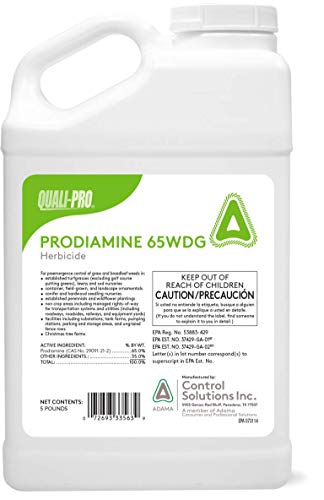
Product overview: Quali-Pro Prodiamine 65 WDG is a versatile pre-emergent that offers control over both grassy and broadleaf weeds. The product is intentionally flexible for spring and fall use, enabling season-long crabgrass control. It is available in a 5-pound bottle, making it a compact option for smaller lawns, landscape beds, or controlled test applications before broader deployment. Its formulation supports integration with fertilizers and iron solutions, and it is well-suited for nurse, landscape, turf, trees, and golf-course contexts where pre-emergent weed management is needed.
Usage considerations: This product is generally compatible with traditional lawn care rotations and can be integrated into existing fertilization schedules. It supports a broad range of sites, including nurseries and ornamentals, which makes it adaptable for varied turf environments. Always verify label details for specific weed targets and application rates, as these may vary by region and grass type.
Key benefits: Flexible spring and fall application, strong crabgrass control, compatible with common turf inputs, compact packaging that is easy to handle for small properties.
Limitations: Like many pre-emergents, it does not eradicate existing weeds; timing and coverage are critical for maximizing prevention. Proper application is essential to avoid gaps in protection.
Scotts WeedEx Prevent with Halts
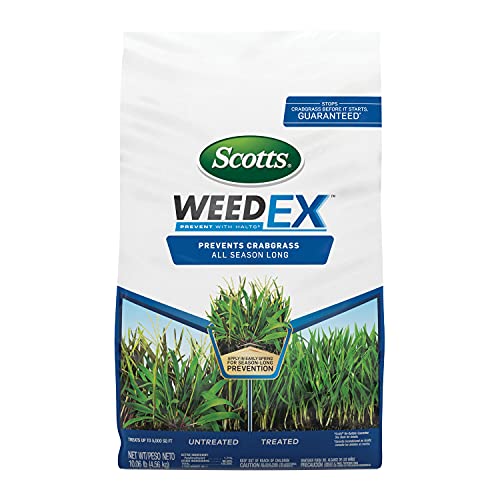
Product overview: Scotts WeedEx Prevent with Halts is designed to curb crabgrass and other grassy weeds before they establish. This pre-emergent is particularly noted for its seasonal versatility, supporting early spring and fall applications. In fall, it helps prevent winter annuals such as Poa annua, henbit, and chickweed from germinating. The product is part of Scotts’ broader weed control and lawn care line, making it a familiar option for many homeowners and garden centers.
Application guidance: Use in early spring for season-long crabgrass prevention, and in fall to protect against winter annuals. Maintain even coverage and water in after application to ensure the active ingredient reaches the soil profile where weed seeds germinate. The product is frequently paired with standard mowing and fertilization schedules for integrated lawn care.
Key benefits: Simple, broad-season approach to weed prevention; effective against common crabgrass; adds seasonal protection against winter annuals. Notes: It does not replace lawn fertilization or weed eradication strategies for existing infestations.
Usage considerations: Ensure your lawn is adequately watered after application and monitor soil temperatures to optimize timing. For fall, apply when temperatures consistently fall within recommended ranges to maximize seed germination prevention before winter dormancy.
The Andersons Barricade Fertilizer With Pre Emergent
Product overview: This product pairs a pre-emergent weed barrier with a supplemental fertilizer, delivering ongoing nutrition while preventing weed germination. It is designed for early spring and fall applications, providing a practical “weed and feed” approach. The formulation contains 0.426% prodiamine, enabling effective weed prevention across a broad spectrum of grasses and broadleaf species. It is labeled to prevent more than 30 weed types, making it a broad-use option for lawn care programs that aim to consolidate tasks.
Usage considerations: Because this product includes fertilizer, it can contribute to turf growth during the treatment window. Users should adjust mowing height and irrigation in line with fertilizer recommendations to avoid buildup or nutrient burn. It is well-suited for homeowners looking to streamline weed prevention with seasonal feeding.
Key benefits: Weed prevention plus feeding in a single product; professional-grade formulation; broad weed target list. Limitations: Fertilizer content means it may not be ideal for lawns that require precise nutrient management or those seeking only weed prevention without added fertilizer.
0-0-7 Granular Prodiamine Pre-Emergent (Yard Mastery)

Product overview: Yard Mastery’s 0-0-7 Granular Prodiamine Pre-Emergent offers a proactive approach to weed prevention with a focus on a broad range of grassy and broadleaf species. The formulation emphasizes efficacy against common germinating weeds such as crabgrass and Poa annua, and its packaging supports even distribution across multiple grass types. The product is designed for fall and spring use, enabling a flexible treatment plan for different climates and turf types.
Usage considerations: Suitable for all common grass types, including warm-season and cool-season varieties. The compatibility with various lawn ecosystems makes it a versatile option for homeowners managing diverse landscapes. Be sure to follow label directions for application rates and timing to ensure optimal soil coverage and weed prevention outcomes.
Key benefits: Broad weed protection across grass types; flexible seasonal use; straightforward application for homeowners and professionals.
Scotts Turf Builder WinterGuard Fall Weed & Feed

Product overview: Scotts Turf Builder WinterGuard Fall Weed & Feed combines weed control with fall fertilization to prepare the lawn for the next growing season. This product targets more than 50 listed lawn weeds, including clover, dandelion, plantain, and purslane. It is designed for use when weeds are actively growing and temperatures are within a specific range, typically between 60°F and 90°F. The fall application aims to reduce future spring weed pressure while supporting turf recovery after summer stress.
Usage considerations: Apply on a moist lawn to maximize uptake, ensuring even coverage. Pair with regular mowing and irrigation practices to optimize nutrient delivery and weed suppression. This product is a convenient option for homeowners who want a combined approach to weed prevention and lawn feeding during the fall season.
Key benefits: Broad-spectrum weed prevention alongside fall fertilization; supports lawn health as days shorten and temperatures cool. Limitations: As with other pre-emergents, it does not address existing weeds; removal should be addressed separately if needed.
Buying Guide: Key Considerations For Fall Pre-Emergents
Choosing the right fall pre-emergent involves balancing weed targets, turf type, climate, and integration with other lawn care steps. The following considerations help compare options and tailor a plan to your property.
- Weed targets: Identify the weeds you want to prevent (crabgrass, Poa annua, goosegrass, etc.). Look for products that list the primary targets on the label and marketing materials.
- Active ingredient: Prodiamine-based products are common for broad-spectrum prevention. Check label percentages to gauge strength and duration, and consider how it aligns with your lawn’s seasonal pressure.
- Fertilizer component: Some pre-emergents include fertilizer (weed and feed). Decide if you want an all-in-one solution or a dedicated weed preventer with separate feeding plans.
- Coverage and bag size: Match product coverage to your lawn size. Granular formulations are easier to apply with standard spreaders, but be mindful of uneven distribution on slopes or irregular areas.
- Application timing: Fall timing varies by region. Apply after soil temperatures fall to a level where weed seeds are germinating, but before weeds emerge, and adjust for spring use as needed.
- Lawn type compatibility: Confirm compatibility with warm-season or cool-season grasses and with ornamental or landscaped areas to prevent unintended damage or ineffective coverage.
- Mode of action: Pre-emergents generally form a soil barrier. They do not control established weeds. Plan for a separate post-emergent strategy if weed problems already exist.
- Reapplication window: Some products require reapplication every season or year, depending on weather and turf wear. Read label directions for reapplication intervals and safety.
- Safety and handling: Follow label instructions for storage, mixing (if any), and protective equipment. Keep pets and children away during application and drying times as recommended by the label.
In practice, a fall program often combines a pre-emergent with selective fertilization and mowing height adjustments. For larger properties, a professional-grade product may offer more robust weed prevention, while smaller lawns might benefit from consumer-grade formulations with straightforward application. Always perform a site check—including weed pressure history and soil temperature—to inform which product and timing will yield the best prevention results.
Finally, for those managing lawns in regions with distinct seasonal shifts, a layered approach—combining a fall pre-emergent with a spring follow-up and appropriate fertilization—tends to produce the most consistent weed control outcomes. The included products provide a spectrum of options, from granular to fertilizer-inclusive formulations, to help you build a fall weed prevention plan that aligns with your turf goals.