Mealybugs, a common garden pest, can weaken plants and spread disease. Selecting the right pesticide involves balancing efficacy against mealybugs with safety for humans, pets, and beneficial insects. The following picks are readily available on Amazon and offer a range of active ingredients, from ready-to-use sprays to concentrates and diatomaceous earth. This guide highlights five products with proven track records for reducing mealybug populations while supporting sustainable gardening practices.
| Product | Brand | Format | Key Benefit |
|---|---|---|---|
| Earth’s Ally Insect Control for Plants Ready-to-Use | Earth’s Ally | RTU spray (24 oz) | Organic-leaning oil blend, safe for harvest |
| AgroMagen, GrowSafe Bio-Pesticide | AgroMagen | Liquid (8.5 oz) | All-natural, non-toxic, plant-safe oils |
| Bonide Diatomaceous Earth Crawling Insect Killer | Bonide | Powder (5 lbs) | Physical mechanism, broad crawling-insect control |
| Monterey Take Down Garden Spray RTU | Monterey | RTU spray (32 oz) | Broad-spectrum, includes mealybugs among targets |
| Grandevo CG Bioinsecticide | Marrone Bio Innovations | Granular/Concentrate (1–4 lb options) | IRMs-friendly management of multiple pests including mealybugs |
Earth’s Ally Insect Control for Plants Ready-to-Use 24 oz

Overview: This Ready-to-Use insect control is designed to knock down common soft-bodied insects, including mealybugs, while remaining suitable for organic gardening due to its OMRI-listed status. The formula relies on essential oil blends to disrupt pests without leaving harmful residues. It is labeled for use on edible crops, herbs, and ornamentals, enabling spray programs from transplant to harvest.
Why it’s relevant: Mealybugs are targeted by the blend of rosemary, clove, and peppermint oils within Earth’s Ally. The product emphasizes safe usage up to harvest, which is valuable for home gardeners who want ongoing protection without sacrificing crop readiness. Reviews indicate reliable knockdown with repeated applications as part of an integrated approach.
How to use: Shake well, spray thoroughly on the undersides of leaves and infested stems, and reapply as directed on the label. For best results, pair with cultural controls such as pruning and improving air circulation to reduce pest buildup. Avoid applying in direct strong sunlight to minimize leaf stress.
AgroMagen, GrowSafe Bio-Pesticide

Overview: GrowSafe is an all-natural miticide, fungicide, and insecticide designed for organic gardens. It targets spider mites, whiteflies, aphids, and powdery mildew, with a non-toxic profile intended for frequent use on a range of edible and ornamental plants. The product emphasizes compatibility with beneficials and home-growing systems, aiming for safe, low-residue application.
Why it’s relevant: For mealybugs, the product provides a complementary mechanism by disrupting pest life cycles through integrated oil-based formulations. It’s suitable for ongoing management in greenhouses and home gardens where multiple pests may co-occur. The label supports use on indoor and outdoor plants with attention to crop safety.
How to use: Follow label directions for dilution and coverage. Apply to affected areas, ensuring thorough coating of leaves, stems, and the root zone if indicated. Repeat per the schedule to maintain suppression; avoid applying during extreme heat conditions to minimize leaf stress.
Bonide Diatomaceous Earth Crawling Insect Killer

Overview: This product uses diatomaceous earth to mechanically disrupt the exoskeletons of crawling insects, providing a non-chemical route to reducing pest populations. The 5-pound container offers broad coverage for gardens, greenhouses, and indoor spaces, with quick action as insects come into contact with the powder.
Why it’s relevant: Diatomaceous earth is particularly useful for mealybug hotspots on soil surfaces and on plant debris. It is a good option for gardeners seeking a non-residual, physical barrier that can be applied to potting mix, planter edges, and greenhouse floors as part of an integrated pest management plan.
How to use: Dust the affected areas, avoiding excessive inhalation. Reapply after rainfall or heavy irrigation. Maintain a dry application to preserve effectiveness and minimize clumping that can reduce coverage.
Monterey Take Down Garden Spray RTU

Overview: Monterey Take Down is a ready-to-use insecticide that provides quick knockdown of several pests, including mealybugs, aphids, caterpillars, and scale. The 32-ounce bottle is designed for ease of use in home gardens, on fruit trees, and in ornamental beds, with a broad-spectrum action that is suitable for seasonal treatment plans.
Why it’s relevant: For mealybug management, this product allows for rapid response to visible infestations. The spray format is convenient for targeted applications on infested leaves, stems, and clusters where mealybugs congregate. Consider rotating with other modes of action to minimize resistance risk.
How to use: Shake well and spray until foliage is thoroughly wet. Apply in early morning or late afternoon to reduce sun stress. Reapply as directed on the label, typically at intervals suited to pest pressure and plant tolerance.
Grandevo CG Bioinsecticide
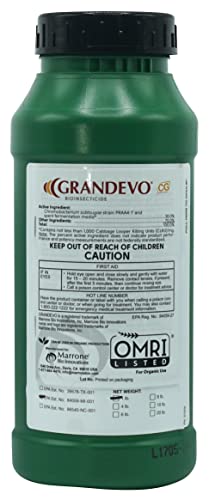
Overview: Grandevo CG is a bioinsecticide based on Pseudomonas chlororaphis, designed to manage a range of pests including mites and mealybugs. It supports integrated resistance management with a favorable PHI and REI, and it is OMRI-listed for organic use. The product is available in kilogram or pound-scale formats for different operation sizes.
Why it’s relevant: This option provides a microbial-based mechanism, reducing reliance on synthetic chemistries. It supports resistance management strategies and can be a fit for growers seeking OMRI-listed solutions for organic programs.
How to use: Apply according to label directions, usually with water as a carrier. Coverage should reach the underside of leaves and the root zone if indicated. Follow re-entry interval instructions and integrate with cultural controls to maximize impact on mealybugs.
Buying Guide
When choosing a pesticide for mealybugs, consider the following factors to optimize control and safety:
- Mode of action: Use products with different mechanisms to avoid resistance. Rotate among oils, microbial products, and physical mechanisms (like diatomaceous earth) when possible.
- Target range: Some products focus on mealybugs specifically, others are broad-spectrum. If you have multiple pests, a broader product or a combination approach may be beneficial.
- Plant compatibility: Check crop types and harvest timing. For edible crops, ensure the product’s residues are safe and suited for day-of-harvest use if desired.
- Formulation: Ready-to-use sprays are convenient for spot treatments; concentrates offer cost efficiency but require mixing. Consider indoor vs outdoor use, ventilation, and application equipment compatibility.
- Safety and OMRI/NOP status: Organic or OMRI-listed products are preferred for organic gardening. Always follow label directions for PPE and enclosure requirements in indoor spaces.
- Re-entry and pre-harvest intervals: Some products keep a short REI and PHI, enabling quicker re-entry and harvest, which matters for busy households and market operations.
- Environmental impact: Favor products with low residual risk and minimal impact on beneficial insects. Consider integrating cultural controls like pruning, improved air circulation, and sticky traps to reduce pest pressure.
- Cost per application: Evaluate how many uses you’ll get from each bottle or bag. Diatomaceous earth offers large coverage at a low price, while RTU sprays may be more expensive per treatment but easier to apply.
Across these options, for mealybug control, combining a contact killer with a systemic or microbial component often yields the best results. Maintain consistent monitoring, apply at the first signs of infestation, and adjust the regimen if pests persist or if plants show signs of stress. The included products offer a spectrum of options to fit different garden setups, from indoor houseplants to outdoor vegetable patches.