Maintaining a lush, weed-free lawn often hinges on selecting the right post-emergent weed killer. This guide reviews five well-regarded products designed to control a broad range of grassy and broadleaf weeds after they emerge, helping American homeowners keep turf healthy and aesthetically pleasing. Each option below targets common lawn invaders such as crabgrass, dandelion, clover, and more, while offering varying application windows and residual control. Consider your grass type, weed spectrum, and timing when choosing a product. This overview provides practical insights to aid an informed purchase decision.
| Brand | Key Benefit | |
|---|---|---|
| BASF | Drive XLR8 Crabgrass Killer | Fast knockdown with up to 30 days residual |
| Atticus | Torocity Herbicide | Flexible pre- and post-emergent control |
| Syngenta | Tenacity Herbicide | Broad-spectrum, seedling-friendly application |
| Ortho | WeedClear Lawn Weed Killer | Ready-to-use convenience with root-level kill |
| SEDGEHAMMER | Sedgehammer Herbicide | Targeted nutsedge control |
BASF Drive XLR8 Crabgrass Killer for Lawn & Turf

Overview: Drive XLR8 is a post-emergent herbicide with quinclorac as the active ingredient, designed to rapidly control crabgrass and a wide spectrum of broadleaf weeds. The product form is water-based, which can aid uptake and dispersal within turf systems. The label supports up to 30 days of residual control, reducing the frequency of applications and helping maintain weed-free turf between treatments. It is described as rainfast in under an hour, which can mitigate wash-off concerns after application.
Weed Spectrum: The formulation targets a broad array of annual grasses such as crabgrass and foxtail, along with several broadleaf weeds. This makes it suitable for lawns facing mixed weed pressure in warm-season and cool-season grasses, depending on turf tolerance and local climate. The compatibility with a range of grasses is a common consideration for homeowners seeking versatile post-emergent control.
Application Timing and Use: Drive XLR8 is used post-emergence, which means weeds must be actively growing. The fast-acting nature can yield visible results within days, helping homeowners assess effectiveness quickly. The product’s residual period provides ongoing suppression, which can reduce the need for frequent follow-up treatments in weed-prone seasons. As with all post-emergents, adherence to label directions is essential for safety and efficacy.
Application Notes: Use care around desirable ornamentals, and follow label guidelines regarding mixing, rate, and aeration. The water-based formulation is designed to facilitate plant uptake, but uniform coverage remains critical for consistent control. Weather conditions such as rainfall, irrigation, and temperature can influence performance and residual duration, so plan applications with local climate patterns in mind.
Atticus Torocity Herbicide (8oz)
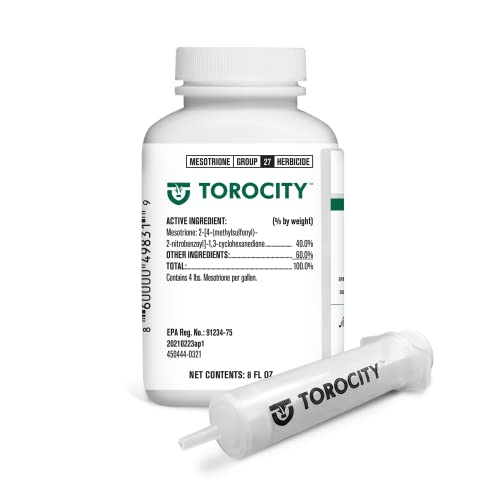
Overview: Atticus Torocity delivers a mesotrione-based solution marketed as a flexible weed control option for lawns and turf. The product is positioned as a dual-action herbicide with pre- and post-emergent activity, offering a broader application window for controlling existing weeds and preventing new ones from taking hold. The formulation is designed to be effective on a range of grassy and broadleaf weeds commonly found in home lawns.
Active Ingredient and Efficacy: Torocity relies on a high concentration of mesotrione, the same active ingredient found in established competitors. This composition has a long-standing track record in turf weed control, especially in newly seeded areas, but is also used in established turf under appropriate label allowances. The product emphasizes versatility in application timing, which can simplify seasonal weed management for homeowners balancing seeding and maintenance schedules.
Application Strategy: The double-hitter approach allows timing forgiveness by treating both pre- and post-emergent weeds. This expands the window for effective control, particularly in zones with inconsistent weed emergence. For optimal results, homeowners should verify compatible turfgrass species on the label and follow tank-mix or standalone guidelines to avoid potential injury to sensitive grasses.
Weed Coverage: Torocity targets broadleaf and grassy weeds, including crabgrass, ground ivy, clover, oxalis, and dandelion. This broad spectrum helps address common lawn invaders, though care should be taken with tender or recently seeded areas. As with all potent herbicides, initial weed stage and growth conditions influence performance and speed of visible outcomes.
Liquid Harvest Mesotrione – 8oz

Overview: This mesotrione concentrate is marketed for pre- and post-emergent weed control in lawns and turf. The product claims rapid uptake with results that may become visible within a couple of weeks, depending on environmental conditions and weed size. It is compatible with a range of cool- and warm-season grasses and is positioned as a versatile option for mixed weed pressures.
Weed Spectrum and Target: Mesotrione-based products commonly address a broad spectrum of broadleaf weeds and several grassy species. The label typically lists many target species, including crabgrass, dandelion, clover, and various other common lawn invaders. Homeowners should review the label for compatible grass species and observe any restrictions regarding dormant or stressed turf.
Environmental and Application Considerations: As with other post-emergent products, weather and irrigation influence performance. Adequate rainfall or supplemental irrigation after application helps activate mesotrione, supporting weed kill. Some lawns benefit from sequential applications to address different weed growth stages while avoiding potential resistance development.
Syngenta Tenacity Herbicide

Overview: Tenacity is a versatile herbicide labeled for pre-emergent and post-emergent control. It is designed to target a broad spectrum of weeds, including many broadleaf species and a variety of grasses. The product is noted for its compatibility with seeding and overseeding activities, enabling weed management even when establishing new turf. This flexibility makes Tenacity a widely chosen option for diverse lawn care scenarios.
Broad Weed Control: The product is labeled to address a wide array of weed species, including crabgrass, goosegrass, clover, dandelion, ground ivy, oxalis, and other common lawn intruders. The ability to affect both pre- and post-emergent stages is advantageous for homeowners wanting to protect and maintain established lawns while managing weed establishment during seeding programs.
Turf Compatibility: Tenacity has specific guidelines for different grass species, outlining tolerant and sensitive varieties. Before application, homeowners should consult the label to confirm whether their grass type is on the tolerant list. This helps prevent unintended turf injury while achieving effective weed suppression.
Ortho WeedClear Lawn Weed Killer Ready-To-Spray

Overview: Ortho WeedClear is a ready-to-spray solution designed for lawn application. It targets a variety of common lawn weeds such as crabgrass, dandelion, clover, and foxtail in a single treatment. The ready-to-use format offers convenience for homeowners who prefer a simple, on-the-go weed control option without mixing concentrates.
Convenience and Speed: The product is marketed for fast-acting results, with the potential to kill listed weeds down to the root after a single application when used as directed. It is designed to be safe for many cool- and warm-season grasses when applied according to label directions, which helps minimize turf damage and promote quicker recovery after treatment.
Weed Spectrum: Ortho WeedClear covers a range of common lawn weeds, including dandelion, clover, and crabgrass. Homeowners should consult the label for a complete list of targeted species and any grass-specific considerations to ensure compatibility with their existing lawn mix.
SEDGEHAMMER Herbicide

Overview: Sedgehammer is a post-emergent herbicide specifically designed to target nutsedges in established lawns and other non-crop areas. It is engineered to move through the plant to affect underground growth points, providing targeted control of nutsedge and suppression of related species such as green kyllinga. This makes it a specialized tool for lawns with persistent nutsedge problems.
Nutsedge Control: Nutsedge is notoriously difficult to manage due to its underground rhizomes and tubers. Sedgehammer’s mode of action focuses on these subterranean growth points, helping to reduce re-infestation when used correctly. For broader weed spectrums, homeowners may pair Sedgehammer with a broader-spectrum post-emergent as part of an integrated plan.
Usage Considerations: This product is intended for use in established lawns, ornamental turf, and landscape areas. It may be suitable for larger sites like golf courses or commercial lawns, depending on label directions. Always follow application rates, timing, and safety guidelines to minimize impact on non-target plants and beneficial organisms.
Buying Guide: Key Purchase Considerations for Post Emergent Lawn Weeders
Choosing the right post-emergent herbicide depends on several factors, including weed spectrum, grass type, application timing, and site conditions. The following considerations help homeowners compare products and select a solution aligned with their lawn goals.
- Weed Spectrum: Identify the main weed species present in your lawn. Some products target a broad range of broadleaf weeds and grasses, while others focus on specific invaders like nutsedge. A product with the right spectrum for your weeds yields better suppression and efficiency.
- Turf Compatibility: Check the label for compatible grass species. Some herbicides are safer for warm-season grasses (Bermudagrass, Zoysia) versus cool-season grasses (fescues, bluegrass). Ensure your grass type is listed as tolerant.
- Mode of Action: Post-emergent options vary in their active ingredients and action mechanisms. Mesotrione-based products (Tenacity, Torocity, Liquid Harvest) can provide broad control with pre- and post-emergent activity, while quinclorac-based products (Drive XLR8) emphasize rapid grassy weed control with residuals. Consider rotation to avoid resistance.
- Application Timing: Some products allow post-emergent use on actively growing weeds, while others offer pre-emergent flexibility for seeding periods. If you’re overseeding, prioritize products labeled for seeding compatibility (e.g., Tenacity).
- Residual Control: Residual duration affects how often you’ll re-treat. A longer residual can reduce maintenance but may increase the risk to non-target plants if misapplied. Read label-specific residual guidance and plan applications around seasonal weed pressure.
- Water and Weather Requirements: Several products require rainfall or irrigation to activate the herbicide. Be mindful of forecasted weather and irrigation needs to maximize efficacy while minimizing runoff.
- Application Method: Ready-to-use sprays offer convenience but can be pricier per acre; concentrates require mixing but may be more economical for larger lawns. Choose based on budget, space, and comfort with mixing.
When building a weed management plan, consider integrating a post-emergent with cultural practices such as proper mowing height, fertilization, and timely overseeding. An integrated approach often yields the best long-term lawn vigor and weed suppression. Always follow local regulations and label directions to protect the environment, pets, and non-target plants.