Choosing the right weed killer for landscaping helps maintain pristine borders, flower beds, and paths without harming desirable plants. This guide focuses on effective, safe options suitable for residential landscapes, including organic and synthetic formulas. Below you’ll find a concise starter table of five top products, followed by detailed reviews and a practical buying guide to help you decide based on your yard’s needs.
| Product | Type | Best For |
|---|---|---|
| Roundup Weed & Grass Killer₄ with Pump ‘N Go | Synthetic | Tough broadleaf weeds and grasses, beds and around trees |
| Natural Elements Weed Killer | Natural/Vinegar-based | Pet-safe, yards with kids and pets nearby |
| ECO Garden PRO Organic Vinegar Weed Killer | Organic/RTU | Gardens, driveways, sidewalks, and mulched areas |
| Spectracide Weed Killer | Synthetic | Driveways, walkways, and edging areas |
| Roundup Weed & Grass Killer₄ Refill | Synthetic | Repeat applications around beds, trees, and paths |
Introductory notes: All products have differing active ingredients, application guidelines, and safety considerations. Always read the label for recommended use, whether you are treating flower beds, pathways, or around trees, and follow any local regulations regarding herbicide use. The table above highlights a mix of synthetic and organic options to match various landscaping needs and safety preferences.
Roundup Weed And Grass Killer₄ With Pump N Go For Landscaping

Active ingredient performance targets a broad range of weeds down to the root, including dandelions, crabgrass, poison ivy, clover, and spotted spurge. The pump-‘N-Go sprayer offers easy on-the-go application in flower beds, around trees, and along hardscape edges. This product is designed for rapid weather resistance and quick visible results. It allows planting in 1 to 30 days post-application, depending on the plant species and soil conditions. For landscaping projects with mixed plant beds, this versatility can simplify weed management without long downtime before refreshing borders.
Key features: Kills weeds to the root; rainfast in about 30 minutes; visible results within hours; suitable around flower beds, trees, and other planting zones; 1–30 day replant window (refer to booklet).
Natural Elements Weed Killer Pet Safe 1 Gallon

This all-natural formulation emphasizes safety around children and pets while delivering broad weed control. Derived from vinegar, it avoids harmful herbicides yet remains effective on many broadleaf weeds and grasses. It is particularly suitable for lawn edges, garden beds, and landscaped areas where pet and family activity is a consideration. Note that it will kill grass if applied directly to lawns, so plan applications around specific targets like ornamental beds and non-turf areas.
Key features: All-natural, pet-safe; no harsh herbicides; effective against many broadleaf weeds and grasses; best used around beds, walkways, and landscaped zones; do not apply directly to lawns if you want to preserve grass.
ECO Garden PRO Organic Vinegar Weed Killer

Designed as a ready-to-use solution with organic ingredients, this formula targets weeds and grasses quickly, aiming for visible results within 24 hours. It emphasizes safety for households with pets and children, while explicitly warning against lawn application to avoid unintended grass kill. The product is positioned for residential, commercial, and industrial use across driveways, sidewalks, mulch beds, and more, making it a versatile option for mixed landscaping projects.
Key features: PET & KID SAFE; ORGANIC weed killer; fast-acting within 24 hours; suitable for diverse landscapes including driveways and beds; reactivity through a ready-to-use formula with natural components.
Spectracide Weed Killer, 10.8 lb, Clear
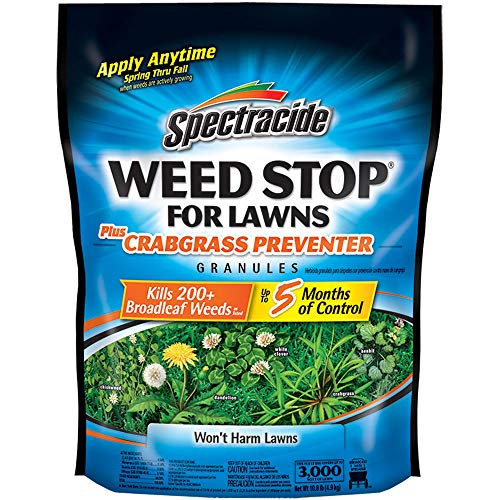
Designed to protect lawns when used as directed, this product targets more than 200 weed types and includes a pre-emergent option to curb crabgrass and other annual grasses. Its formulation supports extended control, with application guidance on the label for up to five months of weed suppression. Spectracide is commonly chosen for larger landscape margins, driveways, and edging where weed control needs to be consistent over time.
Key features: Won’t harm lawns when used as directed; broad weed spectrum (>200 types); pre-emergent crabgrass control; up to 5 months of control with proper application; suitable for driveways and walkways around landscape features.
Roundup Weed & Grass Killer₄ Refill For Landscaping

This refill option provides ongoing capability to treat a variety of weeds around flower beds, trees, driveways, and walkways. It mirrors the core Roundup efficacy, designed to kill weeds to the root and provide a timely rainproof window for reliable post-application weather resistance. It is best used as part of a broader landscaping plan where repeated treatments are anticipated as weeds re-emerge across seasonal cycles.
Key features: Root-level weed kill; rainproof in about 30 minutes; quick visible results; compatible with multiple landscape edges; allows flexible re-application planning across beds and pathways.
Buying Guide: Key Considerations For Weed Killers In Landscaping
When selecting a weed killer for landscaping, consider these factors to match product performance with your yard goals:
- Target weeds: Identify common weeds in your landscape (broadleaf, grasses, crabgrass) and choose a formula designed to suppress or eradicate those species.
- Safety and surroundings: If pets, children, or pollinators frequent the area, prefer pet-safe and environmentally friendlier options, or apply during times when the area is unoccupied.
- Site conditions: Evaluate whether weed control is needed on lawns, mulched beds, rock gardens, or along hardscape edges. Some products are optimized for concrete and gravel, others for lawns.
- Application method: Sprayers with adjustable nozzles or AccuShot systems help target pests precisely. Consider ease of use for extended areas like borders and pathways.
- Timing and rotation: For annual weed suppression, some products offer pre-emergent or rapid post-emergent action. Rotation can reduce resistance and improve long-term control.
- Impact on desirable plants: Ensure the product is labeled for use near ornamentals and avoid drifting onto flowers or sensitive shrubs. Always treat only the intended targets.
- Replanting windows: If you plan to replant after treatment, check the recommended soil or ground cover re-entry intervals to avoid damage to newly planted species.
- Organic vs synthetic: Organic options (like vinegar-based formulas) may offer safety advantages but can require repeated applications. Synthetic formulas often provide stronger immediate control but require careful handling.
In landscaping, using a combination approach can be effective: a fast-acting synthetic product for initial clearance, followed by an organic or barrier strategy to reduce reinfestation. Always store products securely and dispose of empty containers according to local regulations.