The ideal mowing height for Bermuda grass depends on climate, usage, and variety. For warm-season Bermuda, a practical range generally lies between 0.5 to 2.5 inches, with higher cuts during extreme heat or high shade and lower cuts when the lawn is actively growing and needs a denser appearance. Selecting the right seed or plugs can influence how quickly your lawn establishes at the desired height and how well it tolerates traffic and drought. Below are five Bermuda-focused options and practical considerations to help you choose the best height strategy for your yard.
| Product | Brand | Highlights |
|---|---|---|
| The Andersons Rio Bermuda Premium Grass Seed – 2lbs | The Andersons | Fast germination, high traffic tolerance, good cold tolerance |
| Pennington Sahara II Bermuda Grass Seed – 50 Lbs. | SeedRanch | Excellent sun and traffic tolerance, vibrant color |
| Giant Bermuda Grass Seed (Coastal Bermuda Alternative) (5 lbs.) | Dibbs Farms | Dense growth, suitable for coastal conditions |
| Latitude 36 Bermuda Grass Plugs | Latitude 36 | Low mowing height, early green up, water-efficient |
| Barenbrug Wonderlawn Bermuda Unhulled Grass Seed (1 lb) | Barenbrug | High purity seed, versatile for climates |
The Andersons Rio Bermuda Premium Grass Seed – 2lbs

Overview: The Andersons Rio Bermuda Premium Grass Seed is a top-rated option for establishing a fast-germinating Bermuda lawn in full sun. It is designed for high-traffic areas and exhibits strong turf quality. This seed has notable cold tolerance and early spring green-up, which helps lawns recover quickly after winter dormancy. For mowing strategy, aim for a shorter cut during peak growth to encourage a dense sward, and adjust height seasonally to maintain resilience and color.
What to expect: Germination is typically rapid, and the resulting turf is suited for warm-season locations with ample sunlight. When planning height, consider starting around 1 to 2 inches during establishment, then gradually reduce to 0.75–1.5 inches as the stand fills in and traffic demands increase. Regular mowing at the lower end of your chosen range enhances a neat appearance, while slightly higher cuts reduce stress during heat waves.
Pros: Quick germination, strong turf quality, high traffic tolerance, early green-up. Cons: May require precise irrigation during establishment to avoid drought stress.
Pennington Sahara II Bermuda Grass Seed – 50 Lbs.
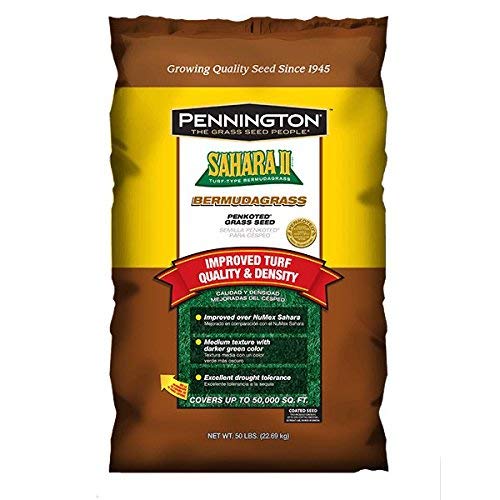
Overview: Pennington Sahara II Bermuda Grass Seed emphasizes both sun tolerance and traffic resilience, delivering a versatile option for warm-season lawns with varying sun exposure. A larger 50-pound bag supports sizable reseeding or full lawn replacements, making it suitable for mid- to large-area projects. For mowing height, Sahara II typically performs well at a range of 0.5 to 2 inches depending on application and mowing frequency.
What to expect: The blend is designed for robust color and wear resistance, ideal for busy outdoor spaces. Early establishment requires consistent moisture and gradual mowing height reductions as the turf gains density. For best results, monitor soil conditions to prevent crowding and disease pressure when mowing taller during initial growth phases.
Pros: Excellent sun tolerance and traffic resilience, strong color. Cons: Requires proper irrigation during establishment to ensure even germination across large areas.
Giant Bermuda Grass Seed (Coastal Bermuda Alternative) (5 lbs.)

Overview: This Giant Bermuda Grass Seed from Dibbs Farms positions itself as a coastal Bermuda alternative with a focus on density and resilience. Suited for warmer climates, it supports a thick ground cover that resists wear and tear. When planning mowing height, a typical target of 0.75 to 1.5 inches keeps the lawn looking compact while preserving turf vigor, especially in coastal environments where salt spray and wind can stress grass.
What to expect: Growth tends to be vigorous, requiring regular mowing to maintain a uniform blade height. The seed mix is chosen to establish quickly with a dense root network, aiding soil stability and weed suppression. Maintain consistent moisture during establishment and adjust height as the new stand strengthens.
Pros: Dense pasturay-like growth, good coastal adaptability. Cons: May require frequent mowing at lower heights for the best appearance.
Latitude 36 Bermuda Grass Plugs

Overview: Latitude 36 plugs offer a plug-and-play approach to achieving a low mowing height with a quick green-up. They are designed to reach dormancy later in the season and promise lower water use, making them attractive for regions with hot summers and limited irrigation. For mowing planning, these plugs support low-height maintenance and rapid establishment to a neat lawn shoulder height in the first growing season.
What to expect: Expect a quicker ground cover than seed-based approaches, with a strong, uniform blade height once established. To preserve vigor, follow a consistent mowing regime and adjust height according to seasonal growth rates, heat stress, and soil moisture availability.
Pros: Early green up, low water usage, scalable density. Cons: Higher initial cost per square foot than seed, ongoing care to avoid thinning at plug boundaries.
Barenbrug Wonderlawn Bermuda Unhulled Grass Seed (1 lb)

Overview: Barenbrug’s Wonderlawn Bermuda is an unhulled seed option designed for robust germination and dependable performance across weather conditions. It is positioned as a versatile choice for homeowners seeking resilience in various climates. When considering mowing height, aim for an initial establishment at slightly higher cuts to promote root development, then gradually reduce to the target 0.75–1.5 inches as the stand fills in.
What to expect: The seed’s purity and quality support consistent germination, reducing variability in stand density. Regular mowing at the recommended height helps create a uniform blade texture and minimizes weed competition. Monitor heat and drought stress to maintain turf health.
Pros: High seed purity and adaptability. Cons: Availability may vary by season and region.
Buying Guide: Key Considerations For Bermuda Grass Height And Establishment
When selecting Bermuda grass materials and setting mowing targets, consider these factors to optimize height, health, and appearance:
- Climate and heat tolerance: Warmer regions benefit from slightly higher mowing during peak heat to reduce stress, while cooler nights can support lower heights as growth accelerates.
- Lawn usage: High-traffic Areas often require a slightly higher mowing height to protect stolons and roots, whereas ornamental or low-traffic lawns can tolerate lower cuts for a tidy look.
- Establishment method: Seed-based lawns may need a longer establishment window and more precise moisture management, while plugs or sod can reach mowing heights faster.
- Soil and irrigation: Adequate moisture supports uniform germination and steady growth. Avoid water stress during establishment, which can cause uneven height and density.
- Water conservation: Some varieties and plug options are designed for lower water use, aligning with drought-tolerant maintenance at reduced heights.
- Fertility and weed management: A regular fertilization plan helps the turf reach and maintain desired height with even color and texture. Mowing height can influence weed suppression by controlling shade and turf density.
For best results, select a seed or plug type matched to your climate and sun exposure, then align mowing height with the season, traffic level, and irrigation plan. Consistency in mowing — both in frequency and height — is a key driver of turf density and health. Monitor the lawn after reseeding or plug installation, and adjust the height gradually rather than making abrupt changes.