Choosing the right soil meter helps protect houseplants from overwatering and underwatering. The following selections focus on accuracy, ease of use, and battery-free operation—ideal for indoor gardeners who want quick insights without guesswork. Below, you’ll find five dependable options, each with its key features, so you can pick the right tool for your plant collection.
| Product | Brand | Type | Key Benefit |
|---|---|---|---|
| XLUX Soil Moisture Meter | XLUX | Analog Hygrometer | Accurate deep moisture readings |
| Censinda Soil Moisture Meter | Censinda | Analog Hygrometer | No battery; quick dry/moist/wet read |
| XLUX Long Probe Deep Meter | XLUX | Analog Hygrometer | Meets moisture at pot bottom with long probe |
| apine Soil Moisture Meter | apine | Analog Hygrometer | Battery-free, fast readings |
| DAQVQ 2-in-1 Soil Tester | DAQVQ | Dual-Screen pH & Moisture | Simultaneous moisture and pH readings |
Note: All products listed are designed for indoor plant care and provide quick moisture assessments. Battery-free options avoid interruptions, while dual-function meters offer broader soil insights for more advanced setups.
XLUX Soil Moisture Meter
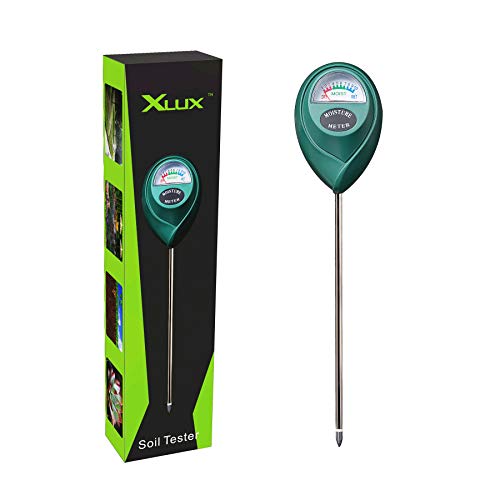
The XLUX Soil Moisture Meter offers an immediate reading of soil moisture with a large dial that shows three zones across ten scales. Its probe reaches deep into potting soil, allowing you to distinguish dry, moist, or wet conditions beyond the surface. This model is designed for quick, on-the-spot decisions about watering, which helps prevent root rot or dehydration in indoor plants. It is noted for minimal maintenance, though users should avoid leaving the metal tip in soil for extended periods to prevent corrosion. Ideal for standard-size pots and mixed indoor plant collections.
Censinda Soil Moisture Meter
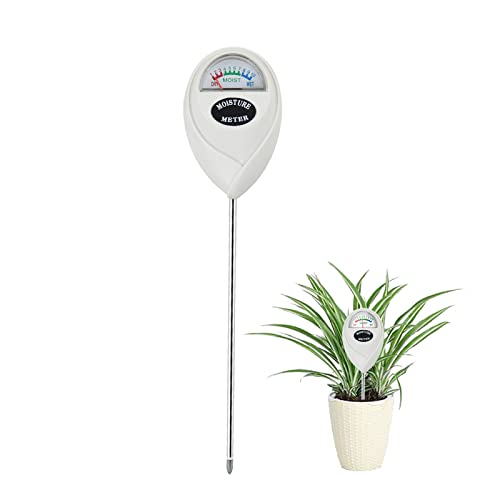
The Censinda meter emphasizes a no-battery design, making it straightforward to use for quick checks. It measures whether soil is dry, moist, or wet and provides fast readings by inserting the probe into the root zone. The device is especially user-friendly for beginners and for households that want a simple, plug-and-read tool to prevent overwatering. No power source is required, and the probe is designed to reach the plant’s root area for an accurate moisture snapshot.
XLUX Long Probe Deep Meter

This XLUX model features a 5.5-inch (14 cm) longer probe, enabling accurate measurements at the bottom of larger or deeper pots. The large dial and ten-scale zones simplify interpretation, with immediate readings once the probe is inserted. The extended probe makes it a strong choice for indoor plants kept in deep pots or those with dense root systems. As with other analog meters, avoid prolonged soil contact with the metal tip to prevent corrosion.
apine Soil Moisture Meter
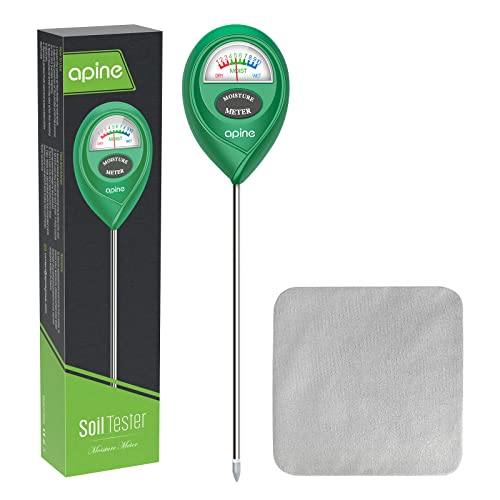
apine’s meter emphasizes quick, battery-free readings with a simple two-to-four inch insertion into soil. The dial uses color divisions for easy interpretation, and a supplied wiping cloth helps maintain probe sensitivity for accurate results. It’s particularly handy for households with many houseplants, letting you quickly assess watering needs without hunting for batteries or power sources. The device emphasizes straightforward use and rapid decision-making for plant care.
DAQVQ 2-in-1 Soil Moisture Meter

The DAQVQ 2-in-1 meter combines moisture and pH readings on a larger dual screen, offering a more comprehensive soil assessment. It is designed to be battery-free, relying on a single soil sensor probe for both measurements. The unit provides moisture levels in roughly 10 seconds and pH levels in about five minutes, making it a practical option for more advanced indoor gardeners who want to monitor both water availability and soil acidity for optimal plant health. The design supports easy plug-and-read usage for beginners and experienced DIY gardeners alike.
Buying Guide: Key Purchase Considerations
When selecting a soil meter for indoor plants, consider these factors to ensure you get accurate readings and reliable performance:
- Measurement scope: Decide whether you need only moisture readings or also soil pH, light, and nutrients. Dual-function meters save buying multiple tools but may trade some precision for breadth.
- Battery-free models: For consistent use and minimal maintenance, battery-free meters reduce downtime and prevent sudden readings from dead batteries. These are ideal for frequent checks across many plants.
- Probe length and design: For deep pots or dense root zones, longer probes reach moisture deeper in the soil. Short probes may work for small pots but miss readings at the root level.
- Dial readability: Large, clearly labeled dials with multiple scales simplify interpretation, especially for beginners. Check for zones like dry/moist/wet and distinct numeric ranges.
- Root safety: Some meters use a single probe or dual probes. A single-probe design can reduce root damage when inserting into soil, which is beneficial for delicate plants.
- Calibration and maintenance: Look for devices that include cleaning cloths or easy maintenance tips to keep readings accurate over time. Periodic cleaning helps maintain sensitivity.
- Indoor suitability: Choose meters designed for potted indoor plants, where soil types and pot sizes vary. Some meters perform better in loamy mixes, while others work well with clay soils.
- Durability and build: Metal probes and sturdy casings extend the life of meters used around pets, children, or busy households.
Buying considerations should align with your plant collection size, pot types, and how often you water. For beginners, a simple, battery-free moisture meter with a clear dial is often the best starting point. For more experienced indoor gardeners, a 2-in-1 meter that also tracks pH can provide deeper insights and help fine-tune watering schedules for sensitive varieties.