Choosing the right portable air conditioner for a camper van involves balancing compact size, cooling capacity, energy efficiency, noise levels, and ease of installation. This guide highlights five top options commonly recommended for RVs, vans, and other confined travel spaces. Each product is evaluated on cooling power, installation practicality, and special features that help keep you comfortable on the road. Use the quick summary table below to compare core specs at a glance.
| Product | BTU / Heating (if any) | Best For | Notable Feature |
|---|---|---|---|
| Ivation 6,500 BTU Camper AC | 6,500 BTU | Quiet, window-sill installation | Over-the-sill design, digital display |
| RV Air Conditioner by Outequip | 10,000 BTU | Rooftop setup for mid-size RVs | Low-profile, durable build |
| DOMANKI 12,000 BTU Portable AC | 12,000 BTU (ASHRAE) | Large spaces in vans or campers | Energy-efficient, comprehensive kit |
| Air Future 10,000 BTU Portable AC | 10,000 BTU | General-use rooms and vans | 3-in-1 cooling, dehumidification, remote |
| Countrymod 11,000 BTU RV AC | 11,000 BTU | Quiet, inverter-driven cooling | Low-noise operation, energy efficiency |
Ivation 6,500 BTU Camper Air Conditioner
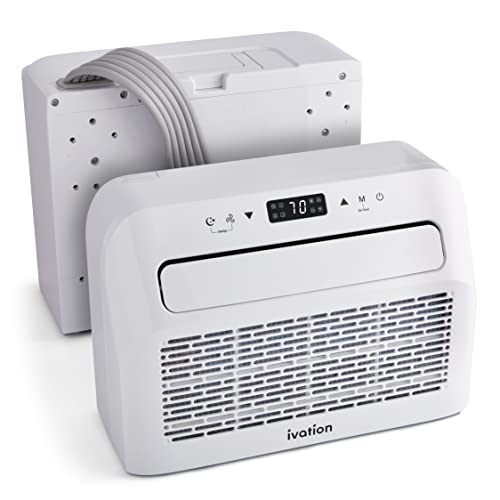
The Ivation 6,500 BTU camper model is designed for over-the-sill installation, offering a compact cooling solution for RVs, caravans, and small motorhomes. The unit combines cooling with dehumidification and a fan, providing a versatile climate control option for confined spaces. A key feature is the saddle-mount design that sits on the windowsill, reducing interior noise by keeping major noise-generating components outside the living area. The split design keeps the compressor external, preserving the interior window view and providing stability to prevent accidents. The digital display offers straightforward temperature and timer control, with a broad temperature range (60°F-86°F) and sleep mode to minimize energy use during the night.
In practice, this model aims to minimize disruption in open-plan camper interiors. The combination of dehumidification and cooling helps manage humidity, which is particularly helpful in warm, coastal or tropical travel destinations. The unit supports multiple modes including a dedicated sleep mode, which can be a big win for light sleepers. While the 6,500 BTU rating is modest, it is generally well-suited for smaller campers or as a supplemental unit in larger vans. Installation ease is a recurring advantage, though compatibility with existing windows and mounting hardware should be verified for every vehicle.
Key Pros: Quiet operation, space-saving over-the-sill design, integrated dehumidifier, user-friendly digital controls. Considerations: 6,500 BTU may be limited for very hot, humid days in larger interiors; ensure window compatibility before purchase.
RV Air Conditioner, 12V 10000 BTU Rooftop by Outequip

This rooftop unit delivers 10,000 BTU of cooling for RVs, trucks, vans, and campers, with an emphasis on a low-profile footprint that suits smaller roof spaces. The builder highlights a durable, weather-resistant construction with UV-stabilized ABS materials and a zinc-coated condenser, designed to endure outdoor exposure common in travel environments. The included 4,500 BTU PTC heater provides supplemental warmth, adding year-round versatility in mild climates and shoulder seasons. This model is well-suited for users who want a single, rooftop solution to handle warm days while maintaining a compact external profile.
Performance-wise, the unit aims for quick cool-downs and consistent climate control, though noise levels and energy draw depend on fan speed and operational settings. The heater provides a modest extension for chillier periods, but it should not be viewed as a primary heat source in very cold conditions. For camper owners who value a robust, all-weather exterior unit with a straightforward install, this option offers a practical balance between cooling performance and rugged durability.
Key Pros: Quick cooling, durable exterior, integrated heating; Considerations: Heater is supplemental, not primary heat; rooftop installation may require structural checks.
DOMANKI 12,000 BTU Portable AC

The DOMANKI model offers 12,000 BTU (ASHRAE) cooling with an energy-efficient design intended for spaces up to about 500 square feet. The unit is positioned as a multi-function portable AC with cooling, dehumidification, and fan modes, along with a 24-hour timer and sleep mode for added convenience. It ships with a complete installation kit suitable for various window configurations, including vertical and horizontal sliding windows. The compressor and refrigerant system are designed to deliver stable cooling performance across a wide operating temperature range, and the unit includes an easy-to-clean, removable filter to maintain indoor air quality.
In terms of usability, a key benefit is the inclusion of casters for easy maneuverability within a home or camper and a remote control for hands-free operation. The 12,000 BTU rating makes this model a strong option for larger campers or when cooling a wider living area is a priority. Potential downsides include higher energy use and the need for a window with sufficient clearance for installation. Prospective buyers should verify that their van or motorhome can accommodate the external exhaust and condensate drainage requirements.
Key Pros: Strong cooling for larger spaces, complete installation kit, easy maintenance. Considerations: Higher energy consumption; window and exhaust requirements must be met.
Air Future 10,000 BTU Portable AC

The Air Future 10,000 BTU portable air conditioner is marketed for rooms up to about 450 square feet, making it a versatile option for a van or small camper living area. It functions as a 3-in-1 system—cooling, dehumidifying, and a fan—giving users flexibility across seasonal conditions. A key attraction is its remote-controlled operation and a user-friendly control panel with multiple modes and timer settings. The unit emphasizes portability with caster wheels and a compact form factor, supporting use in living rooms, bedrooms, or camper interiors where space is at a premium.
Performance-wise, the unit’s cooling capacity is solid for mid-sized spaces, and the 24-hour timer helps with overnight energy management. The included remote enhances convenience for sleeping or lounging. Considerations include ensuring electrical capacity to support continuous operation, as well as evaluating whether 10,000 BTU aligns with your van’s interior volume and insulation levels. This model provides a balanced blend of performance and ease of use for travelers seeking straightforward climate control on the move.
Key Pros: Versatile 3-in-1 function, remote control, portable design. Considerations: May be overkill for ultra-compact vans; power usage should be considered for long trips.
Countrymod 11,000 BTU RV Air Conditioner

The Countrymod 11,000 BTU RV air conditioner is designed for non-ducted, rooftop installation with inverter-ready operation. It emphasizes a low-noise profile (45-55 decibels) to minimize disruption inside the camper, even during extended cooling periods. The product description notes an intelligent variable-frequency design that adjusts compressor speed to meet cooling demand, which can improve energy efficiency and comfort in fluctuating outdoor temperatures. A compact, two-piece design facilitates installation and service, though it requires rooftop mounting and adequate space on the vehicle roof.
In practice, this unit targets travelers who want a robust, quiet solution with energy-conscious operation. The inverter-style dynamic control helps match cooling output to comfort needs, potentially reducing runtime and energy draw during hot days. Prospective buyers should ensure compatibility with their roof structure and electrical system, as well as confirm that the vehicle battery and charging setup can sustain extended cooling cycles when off-grid.
Key Pros: Quiet operation, inverter-driven efficiency, straightforward installation. Considerations: Rooftop installation requires appropriate clearance and mounting considerations.
Buying Guide
When selecting a portable air conditioner for a camper van, consider the following factors to ensure a good fit for your vehicle and travel style:
- Cooling capacity vs. space—Match BTU output to your van’s interior volume. Smaller vans may only need 6,000–8,000 BTU for effective cooling, while larger campers can benefit from 10,000–12,000 BTU units. In hot climates, reserve extra capacity to avoid running continuously.
- Installation type—Over-the-sill, rooftop, and portable window configurations each have trade-offs. Over-the-sill and rooftop units save interior space but may require permanent mounting and roof or window modifications. Portable window units can be easier to install but may protrude into living areas or require a larger window opening.
- Energy efficiency—Look for energy-efficient compressors and inverter-driven designs where available. Inverters can save battery life when camping off-grid, especially on longer trips.
- Noise levels—Quiet operation improves comfort, particularly during sleep. Check decibel ratings if available and consider units with noise-dampening features or quieter compressor models.
- Humidity control—A dehumidification feature can dramatically improve comfort in humid climates by reducing the perceived temperature and preventing dampness inside the cabin.
- Power source—Most portable units run on standard AC power, but some rooftop or off-grid options may be designed for 12V operation or battery integration. Verify compatibility with your power setup, including any inverter capacity and shore power availability.
- Ventilation and exhaust—Ensure proper venting for exhaust and condensate drainage. Some units require window or roof configurations; others include installation kits for easier venting and drainage management.
- Maintenance—Removable filters and washable components simplify upkeep. Regular cleaning preserves efficiency and air quality inside the van.
To maximize performance, pair your air conditioner with smart shading, insulation upgrades, and proper ventilation strategies. Rooms that are well-insulated and fans for air circulation reduce the load on the AC, helping you achieve comfortable conditions with lower energy consumption during travel.
Always verify compatibility with your specific vehicle model, roof structure, and window dimensions before purchasing any portable AC unit. Reading user reviews and installation guides can provide practical insights into fit and ease of use in real-world camper scenarios.