Indoor plants bring life to homes and offices, but small pests can derail their health quickly. This guide highlights top pest control options designed for indoor plants, covering ready-to-use sprays, natural plant-based repellents, contact killers, traps, and multifaceted solutions. Each product is chosen for effectiveness, ease of use, and safety around households. Read on to compare options and find the best fit for your plant collection.
| Product | Brand |
|---|---|
| Bonide Systemic Houseplant Insect Control, 8 oz | Bonide |
| Mighty Mint Peppermint Oil Insect Repellent Spray – 16 oz | Mighty Mint |
| BioAdvanced Houseplant Insect & Mite Control, 24 oz | BioAdvanced |
| Fruit Fly Traps Fungus Gnat Traps 36 Pack | Mosqueda |
| Bonide Insecticidal Soap, 32 oz | Bonide |
Bonide Systemic Houseplant Insect Control

Bonide Systemic Houseplant Insect Control uses a systemic granule approach that moves into the plant to protect against chewing and sucking insects. The ready-to-use formula is designed for containerized indoor plants and lasts up to eight weeks after application. Its root absorption provides ongoing protection against pests such as mealybugs, aphids, and scale, while remaining ineffective against insects that do not feed on plants. The product is formulated to be low-odor and user-friendly for indoor use, offering a convenient option for routine plant maintenance without harsh sprays in living spaces.
This solution is best for homeowners who prefer a long-acting, systemic protection that minimizes repeated applications. It is particularly useful for plants with persistent pest issues or for households seeking a low-maintenance approach. The protective effect is achieved through root uptake and translocation, reducing the need for frequent topical spraying on foliage.
Considerations: Verify compatibility with your plant species and monitor soil moisture after application. Avoid applying during periods of stress or high heat, and follow label guidance for safe handling indoors.
Mighty Mint Peppermint Oil Insect Repellent Spray
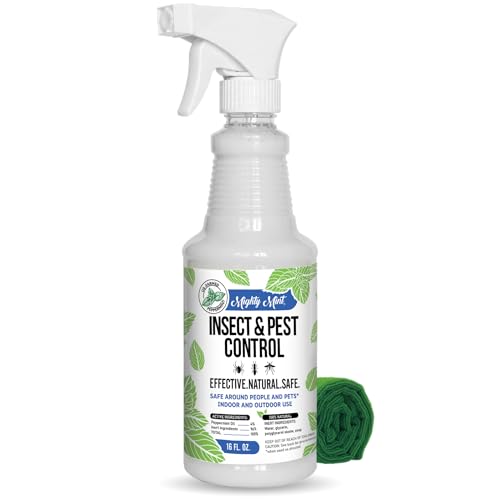
Mighty Mint offers a plant-based, extra-strong peppermint oil spray designed for both indoor and outdoor use. The formula emphasizes safety around pets, families, and kids when used as directed, making it a popular choice for homes with children and animals. The peppermint oil acts as a powerful deterrent against a range of pests, including spiders, ants, and roaches, and is suitable for application on baseboards, entryways, patios, and other high-traffic areas. The product is fragrance-forward but formulated to avoid harsh fumes or synthetic pesticides.
Effectiveness is tied to regular reapplication and thorough coverage of areas where insects congregate. It provides a non-residual barrier that can complement other pest control strategies. This option is especially appealing to households seeking an all-natural solution without synthetic chemicals.
Considerations: Peppermint oil can be potent and may affect some sensitive plants or surfaces. Always test on a small area first and follow label directions to avoid over-application or staining on porous materials.
BioAdvanced Houseplant Insect & Mite Control
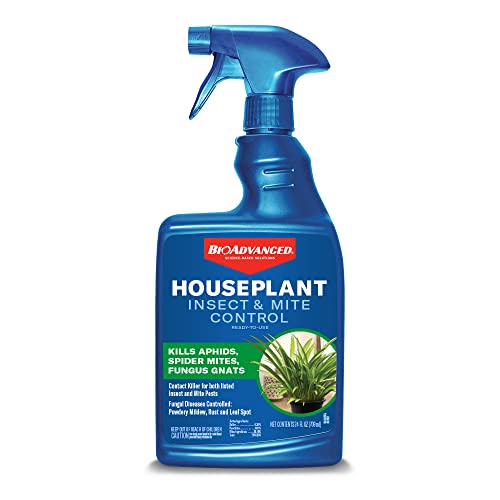
BioAdvanced Houseplant Insect & Mite Control is a ready-to-use spray designed to kill on contact and protect against common pests and diseases. It targets listed insects such as aphids, fungus gnats, whiteflies, and lace bugs, and also defends against mites, including spider mites. The product emphasizes comprehensive coverage, including the undersides of leaves and new growth, to maximize pest control. It is positioned as a broad-spectrum solution suitable for a variety of houseplants and environments, emphasizing flexible usage in homes, offices, and greenhouses.
In addition to insect control, the formula is presented as helping to prevent certain fungal diseases that can accompany pest infestations. For best results, thorough spray applications to both foliage and stems are recommended, with attention to contact exposure and residue recognition. Suitable for use on a wide range of plant types, this product can simplify pest management when multiple pests are present.
Considerations: Always follow label instructions for safe use indoors, and avoid simultaneous application with incompatible products. Test on a small plant area when using new plant varieties or sensitive specimens.
Fruit Fly Traps Fungus Gnat Traps 36 Pack
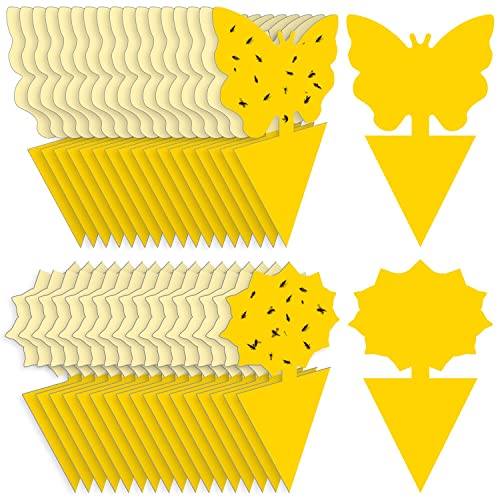
These yellow sticky traps from Mosqueda provide a non-toxic, odorless approach to capturing flying plant pests such as fungus gnats and fruit flies. The bright yellow color attracts pests, and the glue holds them securely, reducing adult populations and interrupting the reproduction cycle. The traps are designed for indoor and outdoor use and work well around potted plants, kitchen spaces, and garden areas. They offer a simple, low-maintenance method to supplement other pest control strategies, particularly for monitoring and reducing flying insect activity without chemical sprays.
Considerations: Sticky traps are most effective when used as part of an integrated plan. They capture adults but do not kill eggs or larvae, so combining with other preventive measures improves results. Ensure proper placement to maximize visibility and effectiveness without interfering with plant care routines.
Bonide Insecticidal Soap
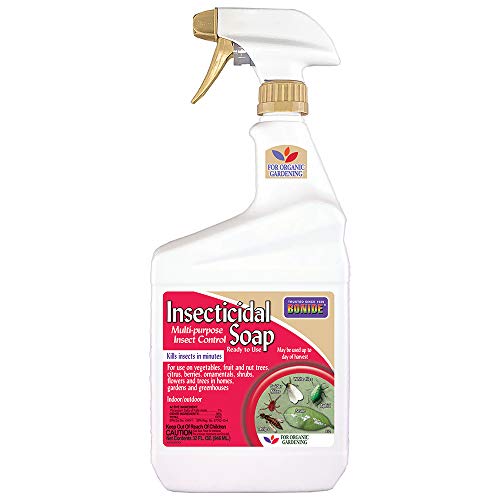
Bonide Insecticidal Soap is a versatile, ready-to-use spray designed for organic gardening and indoor/outdoor use. It targets a broad range of soft-bodied pests, including adelgids, aphids, whiteflies, scale, and spider mites, among others. The product operates via contact kill and spray-on application, making it suitable for direct treatment of leaves, stems, and plant surfaces. It is described as effective for both houseplants and garden plants, with compatibility for a variety of herbs, fruits, and ornamentals when used according to label directions. The spray can also be used to address biting or piercing-sucking insects that disrupt plant health.
Considerations: Insecticidal soaps are generally gentle on most plants but can cause leaf burn on some species if applied under high heat or direct sun. Always perform a patch test and follow dilution guidance for optimal results. Regular applications may be necessary for ongoing pest pressure.
Buying Guide: Key Purchase Considerations
- Target pests: Identify the most common pests on your plants (aphids, whiteflies, mites, fungus gnats, etc.) and choose products with proven efficacy against those species.
- Mode of action: Decide between systemic solutions (uptake through roots) and contact sprays or traps. Systemics provide long-lasting protection but may affect beneficial insects if used outdoors; indoors, they’re often preferred for low-maintenance care.
- Safety and suitability: Prioritize products labeled for indoor use and check compatibility with your plant varieties. Consider pet and family safety, especially for households with children or animals.
- Ease of use: Ready-to-use sprays and granules reduce preparation time, while traps and natural repellents offer low-odor, low-toxicity options that can complement other methods.
- Coverage and longevity: Look at application duration (weeks to months), coverage per bottle, and whether multiple applications are needed. For busy homes, longer-lasting options may be preferable.
- Integrated approach: Combine options—such as neater traps for monitoring, soaps for soft-bodied insects, and a systemic or natural repellent—to address multiple pest stages and life cycles.
- Plant sensitivity: Some products can cause leaf burn or stress on sensitive species. Always test on a small area first and follow label directions for irrigation, temperature, and sunlight conditions.
- Environmental impact: Favor formulas with lower environmental impact and avoid broad-spectrum pesticides when possible, especially in homes with beneficial insects or edible plants.
The right combination of products depends on your plant collection, space, and tolerance for maintenance. For most households, starting with a non-toxic repellent for general deterrence, a targeted contact spray for immediate pest relief, and a few monitoring traps provides balanced control. If persistent pests appear, a systemic option can offer longer-term protection without frequent spraying, particularly for containerized indoor plants.