Choosing the right fertilizer for rose bushes can boost blooms, improve overall plant vigor, and support pest and disease resilience. The following picks reflect widely available formulations that feed roses effectively, with options for continuous release, all-in-one care, and soil boosters. This guide compares benefits, pest protection, and soil compatibility to help you select the best fertilizer for your rose garden.
| Product | Brand | Type | Key Benefit |
|---|---|---|---|
| Scotts Rose & Bloom Continuous Release Plant Food, 3 lb | Scotts | Continuous-release granules | Steady feeding up to 2 months |
| BioAdvanced All-In-One Rose and Flower Care Fertilizer, Granules, 4 lb | BioAdvanced | All-in-one with insect and disease control | Roots, blooms, pest and disease protection |
| BioAdvanced All-In-One Rose and Flower Care I, Granules for Insects 4 lb | BioAdvanced | Granules with insect control | Eradicates pests and supports disease control |
| Great Big Roses – Soil And Rose Fertilizer Booster, 32 Oz | Great Big Plants | Soil booster with compost extract | Improves soil and uptake of nutrients |
| Miracle-Gro Water Soluble Rose Plant Food, 1.5 lb | Miracle-Gro | Water-soluble | Instant feeding for rapid bloom response |
| Rose Bush Fertilizer, Complete Liquid Rose Bush Plant Food, 8 oz | TPS NUTRIENTS | Liquid | Easy-to-follow care and vibrant blooms |
Introduction note: The selections here emphasize strong roots, extended feeding, pest and disease management where available, and soil health. Each product is suitable for typical home rose beds and containers, with practical guidance on application and seasonality. Below you’ll find dedicated sections for five top options, followed by a practical buying guide that explains what matters most when choosing fertilizer for rose bushes.
Scotts Rose & Bloom Continuous Release Plant Food

Scotts Rose & Bloom Continuous Release Plant Food provides steady nutrition to support ongoing bloom production. The formulation feeds roses, annuals, and perennials, with a guaranteed release period of up to two months. Its targeted design favors flowering plants, helping roses maintain vibrant blooms and healthy foliage between feedings. Growers appreciate a simple, low-oversight approach to fertilizer timing, especially in beds with multiple flowering species. Use in early spring as new growth appears and reapply according to label guidance for season-long performance.
BioAdvanced All-In-One Rose And Flower Care Fertilizer
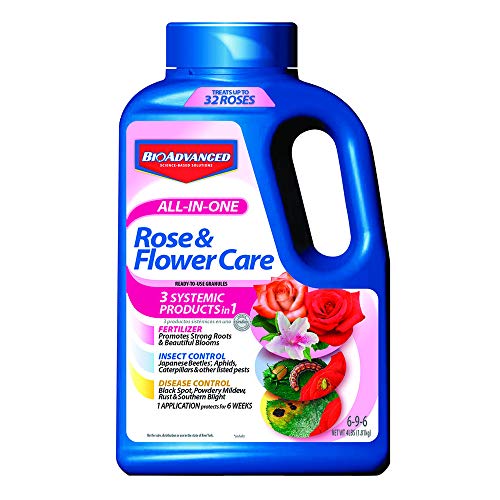
This all-in-one rose and flower care product combines fertilization with pest and disease control. It’s designed to promote strong roots and robust blooms in roses, hibiscus, irises, and other listed flowers. The included protection targets common rose pests such as aphids and whiteflies, and the disease-control component helps mitigate problems like Black Spot and Powdery Mildew. This option is well-suited for gardeners seeking a single product to handle feeding and protection in one package, reducing the need for separate sprays or amendments.
BioAdvanced All-In-One Rose And Flower Care I

This variant focuses on plant fertilizer with integrated insect killer and disease control. It promotes strong roots and abundant blooms while providing protection against pests like Japanese Beetles and aphids. The fungicidal component helps to manage diseases such as Black Spots, Powdery Mildew, and Rust. For rose enthusiasts dealing with persistent pests or disease pressure, this product offers a consolidated approach to care.
Great Big Roses – Soil And Rose Fertilizer Booster

This booster focuses on soil health as a foundation for rose performance. It uses a compost-extract-based formula with bioavailable humic acids, chelated trace minerals, and seaweed to improve soil structure and nutrient uptake. The result is enhanced uptake of existing fertilizers, leading to more efficient feeding in the root zone. It’s best used as a supplement to regular feeding, particularly in soils that are compacted or nutrient-poor. Gardeners should apply according to the product’s mixing instructions to ensure proper dilution and absorption.
Miracle-Gro Water Soluble Rose Plant Food

Miracle-Gro’s water-soluble rose plant food provides rapid availability of nutrients, resulting in quicker responses in growth and flowering. It’s designed for frequent feeding every 7 to 14 days during the growing season, allowing gardeners to tailor nutrition to weather and bloom cycles. This option is especially convenient for containers or raised beds where precise feeding intervals can be maintained. It pairs well with regular watering routines and can be used to support lush foliage and larger, brighter blossoms when applied as directed.
TPS NUTRIENTS Rose Bush Fertilizer, Complete Liquid

This complete liquid rose plant food is designed for easy use, with clear care instructions. It promotes vibrant blooms and lush foliage, supporting a thriving rose garden with straightforward application. Liquid formulas enable quick nutrient availability, which can help roses respond to nutrient needs during peak growth or after pruning. Regular use can help maintain consistent flowering performance and plant health through the growing season.
Buying Guide: Key Purchase Considerations
When selecting a rose fertilizer, several factors influence outcomes. First, consider the rose bed’s age and soil quality. New plantings may benefit from balanced N-P-K ratios that support root establishment and steady bloom development, while established beds may tolerate higher phosphorus for dense flowering. Second, decide between granular and liquid formats. Granules provide slower, longer-lasting nutrition ideal for low-maintenance feeding, whereas liquids offer rapid uptake and precise dosing, which is helpful for containers or stressed plants. Third, pest and disease components can save time. All-in-one products streamline care, but dedicated pest or disease controls may be necessary in humid climates or where Black Spot and Powdery Mildew are common. Fourth, soil health matters. Soil amenders like compost extracts and seaweed-based boosters can enhance nutrient availability and root uptake, especially in poor or compacted soils. Finally, follow label directions for application timing. In most temperate regions, feeding begins in early spring after the last frost and continues through midsummer, with adjustments for local climate and rose variety.
Beyond product choice, consider your garden’s layout. For rose borders with multiple varieties, a single all-in-one product may simplify care, while a mix of soil boosters and targeted feeds can optimize soil structure and nutrient flow. Containers or small plots may benefit from liquids for faster results, while larger established beds often suit slow-release granules for consistent feeding. Regardless of the option, regular monitoring for signs of nutrient deficiency, pests, or disease will help you adjust feeding plans to maintain robust, blooming roses throughout the growing season.