Finding the right soil pH is essential for tomato health and fruit quality. This guide highlights practical pH management products that help tomatoes absorb nutrients more efficiently, promote disease resistance, and encourage bountiful harvests. Below are five well-regarded options, each chosen for relevance to tomato growth and pH adjustment. A concise buying guide follows to help you compare choices based on soil type, growing method, and organic preferences.
| Product | Brand | Key Benefit |
|---|---|---|
| Burpee Organic Tomato & Vegetable Granular Plant Food, 4 lb | Burpee | Balanced nutrition with long-lasting release for up to 3 months |
| Miracle-Gro Water Soluble Tomato Plant Food | Miracle-Gro | Fast-acting formula for bigger, more abundant vegetables |
| Organic Dolomite Lime 5LB | Cz Garden Supply | Raises and stabilizes pH while supplying calcium and magnesium |
| Espoma Organic Tomato! Plant Food | Espoma | Organic liquid fertilizer tailored for tomatoes and vegetables |
| True Organic Prilled Sulfur | True Organic | Lower soil pH naturally to improve nutrient availability |
Burpee Organic Tomato & Vegetable Granular Food

Burpee’s Organic All Purpose Granular Plant Food provides a steady nutrient stream that supports tomato growth through the season. The granules release nutrients quickly and sustain up to three months, helping plants establish and fruit consistently. While not labeled as a pH adjuster, it supports overall plant vigor, which can indirectly improve nutrient uptake whenever soil pH is near optimal levels. This product is suited for organic gardeners seeking natural, long-lasting fertilizer with broad nutrient coverage for tomatoes and vegetables.
Miracle-Gro Water Soluble Tomato Plant Food
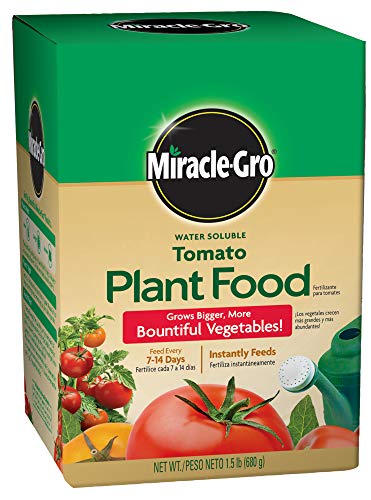
Miracle-Gro’s water-soluble formula delivers quick-feeding for tomatoes and vegetables, promoting bigger and more abundant yields. The product is designed for regular feeding every one to two weeks during the growing season. This option is ideal for gardeners who want a reliable, fast-acting nutrient boost that complements pH management strategies. It’s compatible with various growing setups, including containers and traditional garden beds.
Organic Dolomite Lime 5LB

This OMRI-listed dolomite lime from Cz Garden Supply is a natural mineral additive that raises and stabilizes soil pH while delivering essential calcium and magnesium. It’s particularly valuable for container gardens and Earthboxes where acidity or high sodium content can hinder nutrient uptake. By adjusting pH gradually, it helps tomato plants access micronutrients and supports robust fruit development. It’s a good match for organic setups seeking a pH adjustment with organic certification compatibility.
Espoma Organic Tomato! Plant Food

Espoma’s Tomato! Plant Food is a liquid fertilizer designed for all types of tomatoes and other vegetables. It’s certified organic and easy to apply, typically used every 2–4 weeks for best results. The product provides essential nutrients to support plant health, flowering, and fruiting while remaining gentle for households with kids and pets. Its liquid form allows quick uptake and precise application in containers or in-ground beds.
True Organic Prilled Sulfur

True Organic Prilled Sulfur is designed to lower soil pH naturally, improving micronutrient availability for many plants, including tomatoes when soil is too alkaline. This 5-pound bag covers a substantial area, and its gradual effect reduces the risk of shocking the soil ecosystem. It’s especially useful for acid-loving adjustments and can be paired with calcium sources when soil pH planning calls for both elevation and balance of nutrients.
Buying Guide: pH and Tomato Growing Considerations
Soil pH affects the availability of essential nutrients to tomato plants. The ideal pH range for most garden tomatoes is roughly 6.0 to 6.8. Outside this range, nutrients such as calcium, magnesium, iron, and phosphorus may become less accessible, leading to growth issues or fruit problems. When choosing a product, consider the following factors:
- Soil test results: A baseline pH reading helps determine whether you need a pH adjuster, a nutrient booster, or both.
- Growing method: Containers often require more frequent adjustments and careful water management, while garden beds may have more buffering capacity.
- Organic vs. synthetic: Organic options like dolomite lime and sulfur support organic gardening, but may act more slowly than synthetic products.
- Form factor: Granular fertilizers provide slow release, liquid formulas offer rapid uptake, and soil amendments (like lime or sulfur) adjust pH directly.
- Compatibility with existing nutrients: If applying a dedicated tomato fertilizer, ensure pH adjustment aligns with nutrient timing for best uptake.
- Frequency and dosage: Follow label directions based on plant age, soil type, and container size. Over-adjusting pH can stress plants as much as under-adjusting.
- Safety and labeling: For organic systems, prioritize products with OMRI or equivalent certifications. Always read safety instructions for handling and application.
Glossary of Key Terms
- pH: A measure of soil acidity or alkalinity, influencing nutrient availability.
- Dolomite lime: A calcium magnesium carbonate compound used to raise soil pH and supply minerals.
- Sulfur: A mineral that lowers soil pH over time, improving access to certain micronutrients in alkaline soils.
- Organic fertilizer: Nutrient sources derived from natural materials, often preferred in organic gardening.
- OMRI: Organic Materials Review Institute, which certifies products for organic use.
In summary, achieving the right pH for tomato plants involves a combination of soil testing, careful selection of pH-adjusting amendments, and compatible fertilizers. The five products highlighted above offer a spectrum of options to fit different gardening styles, from quick-acting liquid feeds to long-lasting granular formulas and soil amendments. Use them in conjunction with monitoring and adjusting soil pH to optimize tomato health, flowering, and fruit production.