Choosing the right bagged compost can dramatically improve soil structure, moisture retention, and nutrient availability for raised beds. This guide highlights top bagged compost products ideal for raised-bed gardening, with a focus on organic blends that support healthy root growth, good drainage, and long-term soil vitality. Each option reviewed below is suitable for vegetables, herbs, and flowers, helping you create productive, low-maintenance raised-bed plots.
| Product | Brand |
|---|---|
| Espoma Organic Raised Bed Mix | Espoma |
| Coast of Maine Castine Blend | Coast of Maine |
| True Organic Raised Bed Food | True Organic |
| Organic Mechanics Planting Mix | Organic Mechanics |
| Charlie’s Compost Odor Free | Charlie’s Compost |
Espoma Organic Raised Bed Mix

Espoma Organic Raised Bed Mix is designed specifically for raised beds and outdoor containers. Its organic composition blends earthworm castings, alfalfa meal, kelp meal, and feather meal to enrich soil biology and structure. The MYCO-TONE proprietary mycorrhizae helps establish robust root systems, supporting steady germination and healthy growth in vegetables and herbs. This mix is ready to use straight from the bag, reducing preparation time for new plantings in raised beds.
Key considerations: ideal for vegetable beds, supports sustained nutrient release, and contains natural ingredients that improve soil texture. Users appreciate the balanced blend that enhances drainage while retaining adequate moisture, helping crops weather dry spells without constant irrigation. For organic gardeners, this is a reliable foundation mix that reduces the need for synthetic inputs.
Coast of Maine Castine Blend
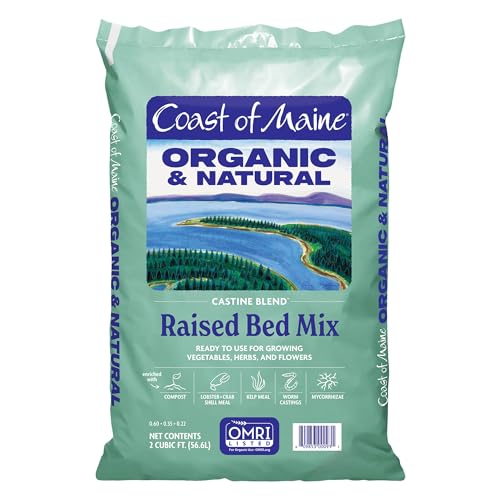
The Castine Blend is a premium raised bed mix featuring worm castings, mycorrhizae, biochar, green sand, kelp meal, and shell meals. This nutrient-rich blend is ready to use without mixing and is designed to promote better drainage and aeration while retaining moisture. The added biochar and kelp provide slow-release nutrients and trace minerals that encourage steady plant growth in vegetables, herbs, and flowering plants within raised beds and containers.
Buying considerations: the blend emphasizes water management and soil life, which can reduce irrigation needs and improve resilience during heat waves. Some gardeners may prefer its premium ingredients for long-term soil health, while others appreciate its ready-to-use convenience for quick bed setup.
True Organic Raised Bed Food

True Organic Raised Bed Food is an organic fertilizer blend crafted for raised beds and large containers. It features seabird guano, shrimp and crab shell meal, and other proven components that nourish soil and promote healthy growth. The formula is easy to apply every two months during the growing season, delivering steady nourishment for herbs, flowers, vegetables, and fruits in raised beds.
Considerations: this product focuses on sustained nutrient release with a simple application schedule. It’s well-suited for gardeners who prefer organic inputs and want predictable feeding intervals. The blend’s marine-derived components can contribute minerals that support robust fruiting and flowering in a wide range of crops.
Organic Mechanics Planting Mix

Organic Mechanics Planting Mix is a peat-free, nutrient-rich blend designed for raised beds, containers, and planting holes. This 2 cu ft bag includes compost, aged pine bark, coconut coir, and worm castings to improve moisture retention and soil structure. The peat-free formulation aligns with sustainable gardening practices while offering a robust base for seed starting and transplant growth.
Usage notes: peat-free mixes are valued for long-term soil health and better root development. This product is especially appealing to gardeners seeking a balanced, organic-influenced medium that supports both water retention and aeration without relying on peat-based components.
American Compost Hydra-Hume Enriched Manure

American Compost Hydra-Hume Enriched Manure blends cow manure compost with Hydra-Hume to boost soil organic matter, nutrient cycling, and water retention. Marketed for raised beds, this 1.5 cu ft bag can be used as a soil amendment or as a soil improvement layer to enrich garden beds and containers. The product emphasizes a natural approach to improving soil biology and nutrient mobility, supporting healthy plant growth with less irrigation stress.
Key points: this option is positioned as a nutrient-dense amendment with water-saving properties. It provides a practical alternative for gardeners seeking a compost-based product that enhances soil structure and moisture management, especially in climates with periodic drought or high heat.
Buying Guide: Key Purchase Considerations And Comparisons
Selecting the right bagged compost for raised beds involves balancing ingredients, sustainability, and how you plan to use it. Consider these perspectives to choose the best fit for your garden:
- Organic certification and inputs: If you garden for food or children’s safety, prioritize certified organic blends and inputs free of synthetic chemicals. Look for mycorrhizae to boost nutrient uptake and overall soil health.
- Texture, drainage, and moisture retention: Raised beds benefit from blends that balance drainage with moisture retention. Coarser blends with biochar or perlite improve aeration; finer mixes with compost retain moisture for drought-prone areas.
- Long-term soil health: Peat-free formulations and those including organic matter like worm castings, coconut coir, and pine bark contribute to soil structure over multiple seasons. This is especially important in shallow raised beds where root growth needs encouragement.
- Nutrient delivery and application schedule: Some products are ready to use with no mixing, while others require periodic feeding. Decide whether you want a one-step mix or a multi-component feeding plan aligned with your crops’ growth stages.
- Grocery vs. specialty blends: Premium blends with biochar, kelp, and shell meals support soil biology and resilience but may be pricier. Simpler blends work well for beginners or quick bed setups.
- Container and bed compatibility: If your raised beds are small or portable, compact blends with good drainage and manageable weight are preferable. For larger plots, multi-bag purchases and consistent texture help maintain uniform soil quality.
- Incorporating amendments: Some blends are designed to be used as base soil only, while others are intended for ongoing top-dressing or soil conditioning between crops. Consider how you plan to rotate crops and amend soil over time.
Across these options, the best choice depends on your climate, crop selection, and maintenance style. For organic gardeners seeking ready-to-use convenience, Espoma and Coast of Maine offer balanced, nutrient-rich blends. For peat-free enthusiasts, Organic Mechanics provides a robust, soil-building alternative. True Organic and Charlie’s Compost give organic-focused pathways with periodic feeding or odor-conscious performance, while American Compost adds a nutrient-dense, humic-enhanced option for soil resilience.