Looking for an effective way to prevent soil loss and keep your pots tidy? Flower pot hole mesh pads are a simple, reusable solution that protects plant roots while ensuring proper drainage. This guide highlights five options best suited for common pots, from bonsai to indoor planters. Whether you need small 2-inch inserts or larger 4-inch grids, these picks help minimize mess and promote healthy growth. The following summary table shows the chosen products and their ideal use cases to help you decide quickly.
| Product | Best For | Size | Key Benefit |
|---|---|---|---|
| GREGICH Bonsai Mesh | Bonsai, succulents | 2–4 inches (assorted) | Dense mesh to prevent soil loss |
| LE TAUCI 2-Inch Mesh Pads | Indoor/outdoor planters | 2 inches | Keep soil in place, reusable |
| SISABAMA 11.8×7.8 Inch Pads | Varied pots; cut-to-fit | 11.8 x 7.8 inches | Universal fit, durable |
| LE TAUCI 4-Inch Mesh Pads | Larger planters | 4 inches | Anti-slip, prevents soil loss |
| EsyHocm Cone Mesh Pads | Bonsai, decorative pots | 1.8 inches | Cone design, strong fixed wing |
GREGICH Bonsai Mesh for Plant Pot Drainage

Best for: Bonsai and succulent planters that require strong soil retention with dependable drainage. This set includes 100 pieces in 2, 3, and 4 inch sizes, ideal for mixed pots. The polyester mesh is flexible, corrosion-resistant, and odor-free, designed to reduce soil loss through drainage holes. It’s a practical choice for those who regularly repot or maintain varied pot sizes.
Why chosen: Dense 0.04″ mesh keeps soil from washing out while still allowing water to pass. The assortment covers common bonsai and small-to-medium pots, simplifying stock management for hobbyists or small studios. A note: larger pots may require cutting to fit accurately, and some users may prefer pre-cut sizes for convenience.
LE TAUCI 2-Inch Hole Mesh Pads

Best for: Small indoor pots and beginner setups where easy placement matters. The 2-inch pads fit snugly over drainage holes, reducing soil loss without adding bulk. They’re lightweight, flexible, and designed for reuse, making them an economical and eco-friendly option for hobby gardeners.
Why chosen: Durable polyamide construction offers tear-resistance and color retention across seasons. Users benefit from straightforward cleaning and reshaping when pot sizes change. A limitation: the small size may not suitable for larger pots or those with irregular drainage patterns.
SISABAMA 11.8×7.8 Inch Mesh Pads

Best for: A versatile long pad that can be cut to fit many pot shapes, from small succulents to larger bonsai containers. These pads offer a universal fit and robust durability for ongoing use.
Why chosen: The large sheet area makes it easy to adapt to multiple pots without needing many different sizes. The material is designed to resist wear, extending the life of the pad. Caution: precise trimming is required for non-standard pot shapes to ensure full coverage.
LE TAUCI 4-Inch Mesh Pads
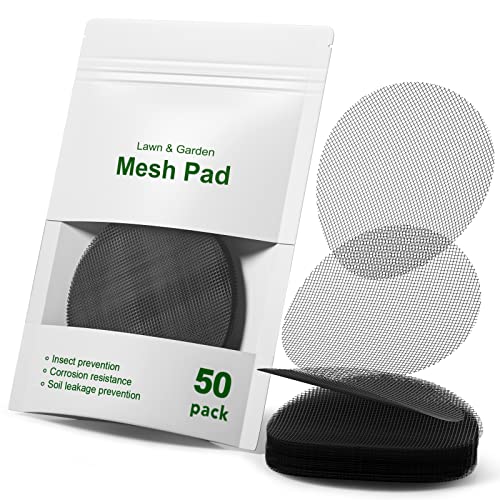
Best for: Larger planters where climate or pot size increases risk of soil migration. The 4-inch diameter offers stronger coverage on bigger drainage holes, helping to keep potting mix contained while preserving drainage.
Why chosen: Anti-slip feature reduces shifting, improving stability on slick or windy patios. A possible limitation is that the pads may be too large for very small pots, requiring trimming or alternative sizing.
EsyHocm Cone Mesh Pads

Best for: Bonsai pots with small drainage holes where a cone design offers enhanced anchoring and breathability. The 40-pack includes a mix of small and larger cones for flexible arrangement.
Why chosen: The fixed-wing design helps position the pad securely at the bottom of the pot, reducing movement during watering. It’s a strong choice for decorative or ceramic pots. Limitation: the cone shape may require trimming for non-standard pot bottoms to ensure full drainage access.
Buying Guide
What size should I choose?
- Small pots: 2-inch pads are usually sufficient; they fit most compact planters and ensure soil stays in place during watering.
- Medium to large pots: 4-inch or larger pads provide better coverage and reduce soil loss in bigger pots.
What material matters?
- Polyester and polyamide blends offer corrosion resistance and durability, with easy cleaning between uses.
- Fiberglass options are durable but may show wear faster in some environments; check for odor neutrality and ease of trimming.
Can I reuse these?
- Yes. Most pads are designed for multiple seasons with proper cleaning and storage. Look for reusable pads with tear-resistant materials for best long-term value.
- Consider the ease of trimming for irregular pots if you have non-standard shapes.
How should I install them?
- Place pads directly over drainage holes or cut to fit the pot’s base. Ensure the mesh gap is small enough to prevent soil from escaping yet large enough to allow drainage.
- For larger pots, you may combine multiple pads or use a larger sheet and trim to fit to avoid gaps around the edge.
Comparison Snapshot
- Best for bonsai: GREGICH Bonsai Mesh — dense 0.04″ mesh for soil retention.
- Best for tight spaces: LE TAUCI 2-Inch Pads — snug fit, easy cleanup.
- Best for flexible fit: SISABAMA 11.8×7.8 — cut-to-fit versatility.
- Best for larger pots: LE TAUCI 4-Inch Pads — anti-slip, strong coverage.
- Best design for secure placement: EsyHocm Cone Mesh Pads — fixed-wing, cone shape.
FAQ
- Q: Are these pads suitable for outdoor use?
A: Yes, most pads are designed for indoor and outdoor planters. Check for UV resistance if leaving pads exposed to sun. - Q: Will mesh pads affect drainage?
A: No. Pads are designed to allow water to pass while preventing soil from washing out through drainage holes. - Q: Can I trim pads to fit odd pot shapes?
A: Yes. Many pads are easily trimmed with scissors to match non-standard pots. - Q: Do pads prevent root rot?
A: By maintaining proper drainage and preventing soil loss, they help reduce conditions that contribute to root rot, when used with appropriate soil and watering habits. - Q: How many pads come in a typical pack?
A: Pack sizes vary; most listings offer 50–100 pieces per pack, with some larger sheets or mixed assortments for different pot sizes.