Answering the question “which koi pond test kit should I buy?” this guide highlights the best options for keeping koi ponds safe and water-balanced. Each product is chosen for reliability, ease of use, and relevance to koi-pond needs. The top picks cover pH, ammonia, nitrite, nitrate, hardness, and chlorine, helping prevent invisible water problems that stress fish or harm pond plants. The buyers who will benefit most are hobbyists building or maintaining a koi pond, beginners testing at home, and avid hobbyists wanting quick daily checks.
Summary of chosen products
| Product | Best For | Key Benefit | Typical Use |
|---|---|---|---|
| API POND MASTER TEST KIT 500-Test | All-in-one pond monitoring | Comprehensive testing for pH, ammonia, nitrite, phosphate | Regular water quality checks |
| API POND 5 IN 1 POND TEST STRIPS | Quick daily checks | Simple strips for pH, nitrite, nitrate, carbonate hardness, general hardness | On-the-spot readings |
| AQUAVERITY 7-in-1 Pond Test Strips | Balanced pond chemistry | Measures pH, nitrate, nitrite, carbonate, hardness, total & free chlorine | Frequent monitoring with clear results |
| API POND WIDE RANGE pH TEST KIT 160-Test | Accurate pH management | Reads pH 5.0–9.0 accurately | pH-focused maintenance |
| AAwipes 8-in-1 Aquarium Test Kit | Versatile home testing | 8 parameters including ammonia, pH, nitrate/nitrite, chlorine, alkalinity, hardness | Combined pond and aquarium use |
API POND MASTER TEST KIT Pond Water Test Kit 500-Test

Best for: Pond keepers seeking a complete test solution. This kit measures pH, ammonia, nitrite, and phosphate, providing a full view of water quality for koi ponds. It includes six testing solutions, three color cards, and four test tubes with caps for organized testing. Choose this if you want a traditional, all-in-one test kit with a broad energy of tests in one package. Limitation: Slightly larger upfront investment than single-parameter strips.
API POND 5 IN 1 POND TEST STRIPS 25-Count
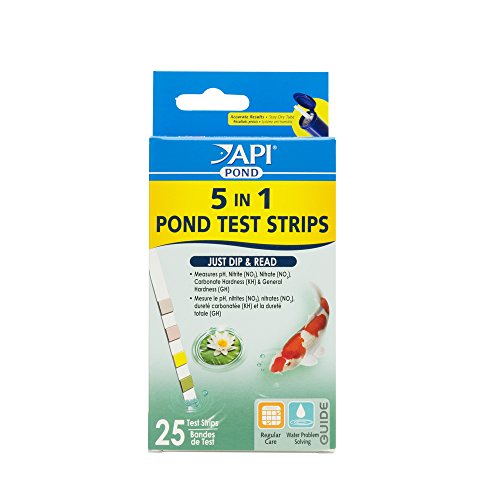
Best for: Quick, routine checks. These 5-in-1 strips cover pH, nitrite, nitrate, carbonate hardness, and general hardness in pond water. They’re ideal for hobbyists who want fast results and easy readings without handling liquids. Better for: busy or beginner pond owners who test often but prefer a simple color-chart interpretation. Caution: Strips are less precise than liquid kits, so use them for trend spotting and follow-up tests when readings are unusual.
Pond Test Strips – 7-1 Pond Kit by JNW Direct

Best for: All-around pond health monitoring with a wider parameter set. The 7-in-1 kit tests hardness, carbonate, chlorine (free and total), pH, nitrate, and alkalinity. Choose this if you want a single kit that covers the most commonly tested water parameters for koi ponds. Limitation: Requires careful interpretation of color charts; slight color variation can occur under different lighting conditions.
AQUAVERITY 7-in-1 Pond Test Strips

Best for: Pond owners who want precise, reliable results across multiple metrics with a simple process. This kit measures pH, nitrate, nitrite, carbonate, hardness, and both total and free chlorine. It’s designed for quick readings within 60 seconds and includes a resealable 50-strip container for long-term use. Better for: regular monitoring and long-term koi health management. Caution: As with all strips, ensure strips are within their shelf life for accurate results.
API POND WIDE RANGE pH TEST KIT 160-Test

Best for: Precise pH management in ponds. This kit focuses on maintaining proper pH levels with readings from 5.0 to 9.0. It’s a straightforward choice for koi ponds that require careful pH stabilization to prevent stress and disease. Limitation: Focused on pH; integrate with other parameter tests for comprehensive water quality management.
AAwipes 8-in-1 Aquarium Test Kit

Best for: Versatile at-home testing for both ponds and aquariums. This kit tests eight parameters, including free chlorine, nitrate, nitrite, hardness, carbonate, total alkalinity, pH, and ammonia nitrogen. It’s suitable for koi ponds and other freshwater setups where a broad set of metrics is helpful. Limitation: Designed primarily for home use; may be less suitable for large pond facilities needing industrial-grade tests.
Buying Guide: Key Purchase Considerations
- Test scope: Decide between single-parameter focus (pH-only) or multi-parameter kits that cover ammonia, nitrite, nitrate, hardness, chlorine, and pH.
- Test method: Liquid reagent kits tend to be highly accurate but require more handling, while test strips offer speed and convenience at a potential trade-off in precision.
- Ease of use: For beginners, kits with color charts and straightforward step-by-step instructions reduce guesswork.
- Frequency of testing: Regular testing favors strips with long shelf life and a resealable container, or liquid kits with multiple tests.
- For koi-specific needs: Prioritize kits that include ammonia, nitrite, and pH readings, as these are critical indicators of koi stress and water quality.
- Maintenance plan: Combine a primary kit (for routine checks) with a secondary kit for confirmatory testing if readings suggest a problem.
Frequently Asked Questions
- What is the most important test for koi ponds?
Ammonia and pH are commonly the most critical indicators. High ammonia can rapidly stress koi, while incorrect pH levels can affect overall fish health and biological filtration.
- How often should I test koi pond water?
Most hobbyists test weekly, and more often during new pond setup or after water changes or rainfall. In warmer months, more frequent testing helps track accelerated chemical changes.
- Are test strips reliable for koi ponds?
They provide quick trend readings and are useful for routine checks. For precise management, confirm unusual results with a liquid test kit.
- Should I test both pond water and filter water?
Testing pond water gives a direct view of what koi experience, while testing filter effluent can help verify the effectiveness of your filtration system.
- How do I interpret color changes on test strips?
Compare strip colors to the provided color chart under consistent lighting. Record results and adjust water treatment steps accordingly.
- What should I do if ammonia is high?
First, perform a water change, then check your filtration, aeration, and feeding practices. Re-test after changes to confirm improvement.