Answering the question: if you want a safe outdoor home for small birds while keeping raccoons at bay, choose predator‑guarded bird houses and robust deterrents. This guide highlights five options that balance protection, durability, and bird‑friendly design. Best fits include backyard enthusiasts, condo dwellers with limited space, and those needing year‑round performance. The table below compares targeted uses and key features to help you decide quickly.
| Product | Best For | Why |
|---|---|---|
| UUMENHA Bird Houses For Outside | Bluebird and wrens lovers | Carbonized wood with predator guard around the entry; easy to clean. |
| 2 Pack Cedar Bluebird Houses (Fitraho) | Small‑bird families and multiple nest sites | Metal predator guard, durable cedar, good ventilation. |
| Kingsyard Recycled Plastic Bird House | Low maintenance, year‑round use | Durable recycled plastic, predator guard, clear viewing panel. |
| EcoCycle Bluebird Bungalow (Recycled Plastic) | Eco‑mocused buyers | Predator guard, easy installation, recycled materials. |
| Queension 4×4 Post Squirrel Baffle | Preventing access to feeders and houses | Sturdy metal construction and 4×4 post mount, all‑weather. |
UUMENHA Bird Houses For Outside

Officially designed to attract bluebirds, wrens, tree swallows, and chickadees, this bird house uses a carbonized wooden shell for durability and a stainless steel predator guard around the entrance. The predator guard helps reduce predation when nests are most vulnerable. The enclosed design supports safe fledgling development and easier cleaning for the caretaker.
Best for: backyard setups with small bird populations that need extra protection from ground or entryway predators. Choose this if you want a traditional wooden look with enhanced protection and easy maintenance.
Caution: The wood’s natural finish may weather with prolonged exposure; consider periodic touch‑ups or mounting in a sheltered location.
2 Pack Bird Houses For Outside – Cedar Bluebird Houses
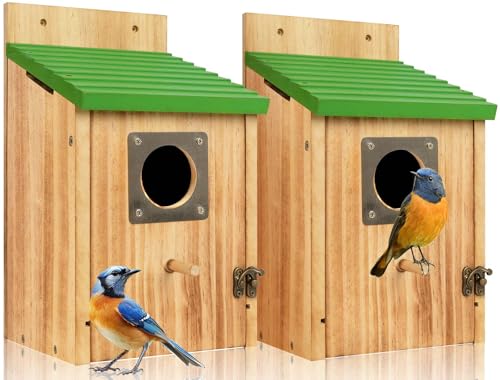
These cedar bird houses feature metal predator guards and carbonized surfaces, combining natural insulation with protection. The interior grooves act like a small ladder to assist fledglings when exiting. Each is sized for bluebirds, wrens, and other small birds, with a 1.5‑inch entrance that balances accessibility and safety.
Best for: households needing multiple nesting options and straightforward installation with built‑in predator protection. Ideal for bluebird and wren entries in a shared yard.
Caution: Cedar colored finish may vary by batch; if you need a uniform look, match with other cedar items or seal unpainted surfaces to extend life.
Kingsyard Recycled Plastic Bird House

This durable recycled plastic house resists rain, snow, and sunlight, offering year‑round use with minimal maintenance. It includes a predator guard to help keep young birds safe inside. The clear viewing panel on the side door allows observers to watch the nest without disturbing the birds.
Best for: eco‑conscious buyers who want longevity and a clean modern look with practical observation features. Better for climates with significant weather exposure where wood would require more upkeep.
Caution: Plastic construction can feel less traditional to some buyers; ensure it fits your yard aesthetic and mounting needs before purchasing.
EcoCycle Bluebird Bungalow Recycled Plastic Bird House

This recycled plastic home includes a predator guard and a simple installation process, offering a clean aesthetic for modern yards. The product emphasizes eco‑friendly materials while maintaining practical protection for bluebirds, wrens, and other small species.
Best for: buyers seeking an environmentally friendly option that still prioritizes nest security. Choose this if you value low upkeep and a sleek look.
Caution: As with most plastic houses, ensure adequate ventilation and avoid overly bright sunlight exposure that could overheat the interior in hot climates.
Queension Metal Squirrel Baffle for 4×4 Post

Designed to mount on 4×4 posts, this square metal baffle provides an all‑weather barrier that deters raccoons, squirrels, and other climbers from reaching feeders or bird houses. Its robust construction aims to prevent access from multiple angles and protect nests below.
Best for: selecting a dedicated barrier above or around a bird feeder post or nesting post to reduce climbing access by predators. Use as a complementary deterrent with predator guards on houses.
Caution: Proper installation is critical; ensure the baffle sits at the correct height and encircles the post completely to be effective.
Buying Guide
What should you look for in a raccoon‑proof bird house?
- Predator protection: Look for metal predator guards around entrances and secure mounting to deter climbers.
- Materials: Wood for a natural look and good insulation, or recycled plastic for durability and low maintenance.
- Ventilation and drainage: Adequate airflow and drainage holes prevent overheating and moisture buildup.
- Entrance size: 1.25–1.5 inch openings suit small songbirds while reducing larger predators’ access.
- Cleaning access: Removable or hinged panels help you clean nests safely between seasons.
What are the practical installation tips?
- Place houses at a height that’s safe from typical ground predators but accessible for monitoring by you.
- Mount away from dense shrubs where raccoons can le a climb; provide open space around the house for escape routes.
- Rotate or stagger house locations if you manage multiple units to prevent predator focus on a single site.
FAQ
- Q: Do predatory guards deter all predators? A: Guards reduce predation risk, especially from raccoons and larger mammals, but no guard is foolproof.
- Q: How often should I clean bird houses? A: Clean annually or between nesting seasons to prevent mold and parasites.
- Q: Are plastic bird houses safe for birds? A: Yes, when designed for birds, with proper ventilation and no sharp edges.
- Q: Will raccoons still climb if I use spikes alone? A: Spikes help deter climbing but are most effective when combined with guards and proper placement.
- Q: Which material lasts longest outdoors? A: Recycled plastic tends to resist weathering better than untreated wood, depending on finish and exposure.
- Q: Can I install these on a deck or fence directly? A: Yes, with appropriate mounting hardware and distance from predator access points.