If you’re tackling dim rooms, you don’t need complex lighting setups to keep greenery thriving. This guide highlights low-maintenance plants and practical grow-light options that perform well in low-light spaces. Read on to compare simple, beginner-friendly choices and discover how to optimize light, water, and placement for healthy indoor foliage.
Summary of Selected Products:
- Thorsen’s Greenhouse Live Peace Lily Plant — Low light tolerance with air-purifying benefits.
- PLANTVERS Live Calathea Burle Marx — Striking foliage, thrives in low to medium light.
- GooingTop LED Grow Light, Halo Plant Lamp — Compact, adjustable spectrum and timer for small plants.
- GooingTop LED Grow Light, 6000K Full Spectrum Clip Lamp — Clip-on flexibility with auto timing.
- yadoker Plant Grow Light — Height-adjustable full-spectrum solution for larger setups.
Peace Lily: Classic Low-Light Houseplant

The Peace Lily (Spathiphyllum) is a durable option for rooms with limited light. It features glossy green leaves and white blooms that brighten indoor spaces. Peace Lilies are known for their low-maintenance care and can tolerate shadows, making them popular for offices, bedrooms, and living areas. Regular watering and occasional feeding support steady growth, while their subtle fragrance adds a gentle scent to interiors.
Key points: adaptable to low light, attractive foliage and blooms, air-purifying qualities. This plant is a practical choice for beginners seeking evergreen greenery without demanding light or frequent pruning.
Calathea Burle Marx: Zebra Leaves, Low Light

The Calathea Burle Marx is prized for its bold zebra-like leaf patterns. It performs well in low to moderate light and benefits from consistent moisture and humidity. While not a high-light plant, it brings dramatic visual interest to dim corners and works well in home offices or living rooms that lack strong sun. Regular misting or a humidity tray helps maintain leaf color and vitality.
Considerations: distinctive foliage requires steady moisture and humidity; not as forgiving as some hardier houseplants but rewarding with striking contrast in low-light environments.
GooingTop Halo Plant Lamp: Mini Grow Light For Small Plants

This compact desk lamp-style grow light is designed for small potted plants and succulents. It offers flexible height, a 180-degree adjustable light board, and three color modes: 3500K white, 5000K white mixed with red/blue, and a version with full spectrum. The built-in timer supports 4, 8, 12, or 18 hours per 24-hour cycle, making it easy to simulate natural daylight for short daytime plants or seeds. The lightweight, portable design suits apartments, desks, and windowless corners.
Guidance: ideal for succulents and small houseplants; helps extend daylight exposure in weakly lit rooms with a simple control panel and remote-like timer options.
GooingTop Clip Grow Light: Full Spectrum, Clip-On
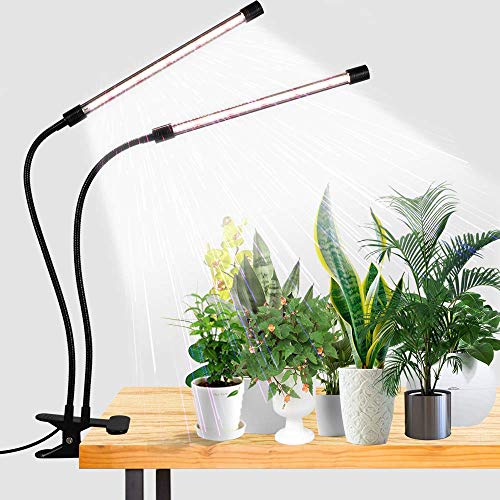
This clip-on grow light delivers a 6000K full spectrum with a combination of white and red LEDs that mimic noonday sun. The high color rendering index (about 95) helps plants photosynthesize efficiently while offering a pleasant reading or desk lamp function. A simple 3-step timer supports 4, 8, or 12 hours in a daily cycle, and the flexible gooseneck plus sturdy clamp lets you aim light exactly where it’s needed, whether on seed trays or individual pots.
Considerations: strong option for larger planters or multiple small plants in proximity; power source via USB or AC plug provides flexible installation.
yadoker Grow Light: Height Adjustable, Full Spectrum

The yadoker grow light is designed for larger plant setups, offering full-spectrum LED lighting (including 380nm-800nm) to support growth in indoor environments. The height can telescope from about 13.7 inches to 61.1 inches, allowing you to elevate the light as plants mature or as you add more pots. Ten brightness levels give you control from seedlings to mature foliage, and the design accommodates a broad lighting footprint for several plants at once.
Notes: suitable for home gardens or offices with multiple plants; provides a scalable solution as your indoor garden expands or changes layout.
Buying Guide: Key Purchase Considerations For Low-Light Indoor Gardening
- Light requirements: Low-light plants typically tolerate shade but still benefit from supplemental light. Look for soft, diffuse light with a color spectrum leaning toward red and blue for steady growth. For larger or more demanding setups, full-spectrum options help cover all growth stages.
- Lighting type and placement: Choose between dedicated grow lights, clip-on lamps, or plant stands with adjustable height. Clip-ons and goosenecks offer flexible positioning, while floor or tall stands support larger plant clusters.
- Spectral quality and intensity: A higher color rendering index (CRI) around 85–95 helps plants photosynthesize efficiently and keeps foliage true to color. For seeds and young plants, higher intensities can accelerate healthy development, but avoid scorching tender leaves.
- Timers and automation: Built-in timers simplify daily cycles, aligning light exposure with your plant’s needs. Shorter cycles work for seeds and cuttings; longer cycles suit established plants in dim rooms.
- Energy efficiency: LED options deliver strong performance with lower energy use. Compare wattage to brightness (lumens) to estimate running costs and ensure the light won’t generate excess heat in small spaces.
- Space and aesthetics: Consider the room’s layout, available outlets, and décor. Small, unobtrusive lamps fit apartments and offices, while telescoping or height-adjustable models accommodate growing plants.
- Maintenance and humidity: Most low-light plants tolerate typical indoor humidity, but some species appreciate higher humidity. Grouping plants can help with microclimates near lighting sources.
Choosing the right combination of a hardy low-light plant and a suitable light source can extend the usefulness of indoor spaces without requiring frequent repotting or chemical interventions. Balancing light, water, and air circulation supports healthier foliage and longer lifespans for beginner-friendly selections.