The top picks below target deer and other nocturnal visitors with humane, non-chemical deterrents designed for outdoor use. They’re best for homeowners, small farms, and backyard keepers seeking solar, motion-activated, or eye-detection deterrents to protect gardens, poultry, and landscaping without constant maintenance.
Summary table of chosen products:
| Product | Best For | Key Feature |
|---|---|---|
| Olson Products Inc. Deer Guard Ribbon 150 Foot | Long-term, spray-free deterrence | No spray required; lasts months; outlasts other deterrents |
| CXIENAOY 8 Pack Solar Nocturnal Animal Repeller | Solar-powered versatility for large areas | Red predator eyes with solar charge; weatherproof |
| Triumpeek Animal Repeller | Easy setup with auto dusk-to-dawn | Solar powered; red LED eyes deter most invaders |
| Nite Guard Solar NG-001 Predator Control Light | Constant night-time coverage | Solar powered; light sensitive; dusk to dawn |
| JahyElec Solar Nocturnal Animal Repellent (Pack of 8) | Wide coverage for yard and garden | Dual red LEDs; solar powered; long outdoor life |
Olson Products Inc. Deer Guard Ribbon 150 Foot

Features: No spray required, lasts for months, outlasts all other deer deterrents.
Best for: Users who want a simple, non-chemical deterrent that provides long-lasting protection and doesn’t require power or maintenance beyond placement. Choose this if you prefer a ribbon-style deterrent that remains effective through seasons without replacements.
Limitations: Requires physical placement along fences or perimeters; effectiveness depends on proper positioning and deer pressure; not a motion-activation solution.
CXIENAOY 8 Pack Solar Nocturnal Animal Repeller
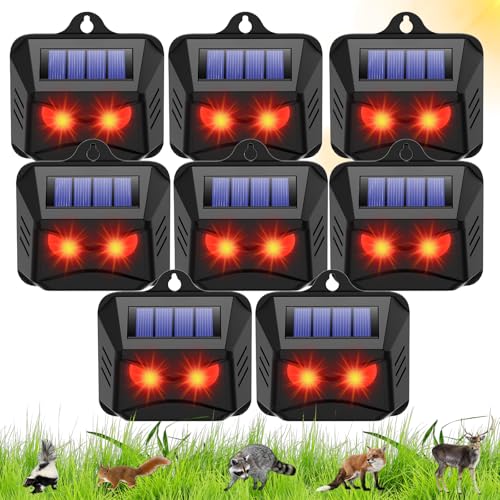
Features: Animal Deterrent with Red LED Predator Eyes; solar-powered; weatherproof design for all seasons.
Best for: Medium to large properties needing solar-powered, maintenance-free deterrents that create a visible predator-eye scare at night. Choose this if you want multiple units for broader coverage or a higher deterrence effect.
Limitation: Requires sunlight to recharge; effectiveness can decline in consistently overcast conditions or shade-heavy areas.
Triumpeek Animal Repeller

Features: Solar powered; red LED lights; dusk-to-dawn auto operation.
Best for: Gardeners seeking a simple, solar-powered deterrent with a reliable dusk-to-dawn cycle that discourages a wide range of nocturnal intruders.
Limitation: The device may not operate at full strength in prolonged cloudy periods; placement height affects detection range.
Nite Guard Solar NG-001 Predator Control Light

Features: A constant flash of light to all animals that hunt or feed at night; solar powered; dusk-to-dawn operation.
Best for: Users who need a reliable single-pack deterrent that creates a visible presence at night for gardens, poultry, and livestock areas.
Limitation: One unit may have limited coverage; multiple units may be required for larger properties.
JahyElec Solar Nocturnal Animal Repellent (Pack of 8)

Features: Effective night-time protection with dual red LED predator eye deterrents; solar-powered; wide detection range.
Best for: Homeowners with larger yards or multiple perimeters needing repeated deterrence across an extended area, including chicken coops and gardens.
Limitation: Requires sun to recharge; ensure units are placed to receive adequate daylight for maximum nightly performance.
Buying Guide
What should I consider when choosing a night guard deer repellent?
Property size and layout affect deterrent choice. For long perimeters, a ribbon or large-pack solar deterrents can cover more space with less maintenance. For scattered or smaller areas, single units with dusk-to-dawn or motion activation can be more efficient.
What power options work best?
Solar-powered devices are popular for outdoor use because they require no wiring or ongoing electricity costs. They’re ideal for locations with ample sun. For shaded areas, consider devices with larger solar panels or multiple units to maintain coverage.
How important is the deterrent type?
Eye- or predator-based deterrents rely on visual scares to deter wildlife. They are humane and non-lethal. Ensure the deterrent’s range matches your property size and the typical activity of deer or other nocturnal visitors.
Where should I place deterrents for maximum effect?
Place deterrents at likely deer entry points, along fences, garden borders, and chicken coops. Elevate units where possible to improve line of sight and detection range, and avoid placing directly beside reflective surfaces that could obscure the intended effect.
What are common limitations to watch for?
Weather can affect performance. Solar devices require sun exposure; cloudy days reduce charging. Ribbon-based deterrents may require strategic placement to maintain visibility. Multiple devices can offer more consistent protection for larger properties.
How should I use multiple deterrents together?
Combine different deterrent types to create layered protection. For example, pair solar predator-eye devices with a non-spray deterrent along a boundary fence. This approach can reduce wildlife pressure by presenting multiple, non-harmful cues at night.
Maintenance tips
Regularly inspect units for obstructions, cleaning lenses or solar panels if needed, and ensure batteries or charging components function properly. Reposition perimeters after seasonal changes to maintain effectiveness.
Best practices by situation
- Small yard with a chicken coop: Use 1–2 solar deterrents near the coop and along the garden perimeter.
- Medium farm with multiple fenced areas: Deploy an 8-pack solar deterrent system to cover perimeters and critical access points.
- Year-round deer pressure: Combine a long ribbon deterrent with supplemental solar lights for year-round coverage.
FAQ
- Do deer become accustomed to deterrents?
Humane visual deterrents rely on occasional novelty; rotating positions or combining deterrents can help maintain effectiveness over time.
- Will these deter other animals?
Yes. Many models deter raccoons, foxes, skunks, and coyotes in addition to deer, depending on the design and range.
- Are these safe for pets and humans?
Yes. They use light and distance-based deterrents without chemicals, traps, or poisons.
- How long do solar-powered devices last between charges?
Most provide multiple nights of protection on a full charge, with performance depending on sun exposure and weather conditions.
- Can I install these indoors or near windows?
Best used outdoors in open spaces; proximity to windows may affect visibility and effectiveness.
- What if it rains for several days?
Weatherproof units are designed to withstand rain; however, solar charging may be reduced in extended cloudy periods.