When choosing a 4 ft galvanized fence, you want durability, corrosion resistance, and a design that fits your space. This guide highlights five top options and explains who each is best for. The selections vary in gauge, mesh size, and length, so you can match fencing to ranches, gardens, or poultry enclosures. The buyer profile for these fences includes small to midsize rural properties, hobby farms, and backyard projects where livestock or pets require reliable containment.
Summary table of selected products:
- Falanava Farm Fence: 4 ft x 164 ft galvanized wire fencing for goats, sheep, deer; heavy zinc coating; durable field use
- YESON Farm Fence: 4 ft x 164 ft long field fencing with 14‑gauge wire; reinforced for livestock protection
- T Toriexon Farm Fence: 4 ft x 100 ft galvanized cattle fence; 14‑gauge heavy wire; gradient mesh design
- YARDGARD 2 in. x 4 in. mesh fence: 48 in x 50 ft; versatile for enclosures, gardens, and boundaries
- YANSERY 4’×50′ Welded Wire Mesh: 15GA, 2″ x 4″ mesh; chicken and small animal barrier options
Falanava Farm Fence 4ft x 164ft

The Falanava 4 ft by 164 ft galvanized wire fence is described as durable and suitable for goats, sheep, and deer. It is hot-dip galvanized for long life and uses a rolling process for the wire weave. Best for large livestock containment on farms or multiple yard sections, where a long, continuous run is preferred. Limitations may include the need for corner posts and assembly hardware not shown in the listing.
Best for: Ranchers and farmers who need a long, continuous field fence for goats, sheep, or deer and who value heavy zinc coating for outdoor longevity.
TONGMO 4 ft x 50 ft Galvanized Welded Chicken Wire Fence
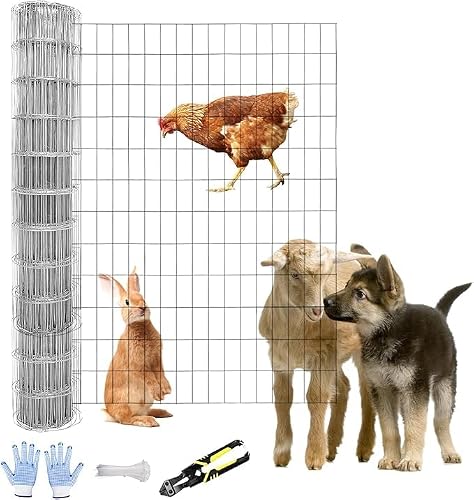
The Tongmo 4 ft by 50 ft fence uses a 16-gauge wire with 2″ x 4″ mesh, welded for strength. This roll is suited for garden borders, poultry netting, and small enclosures. It’s best for yards needing quick, flexible fencing to create or reconfigure chicken runs, rabbit-proof garden beds, or temporary barriers. A limitation is that it is a smaller roll, so longer spans require multiple pieces.
Best for: Gardeners and poultry owners who need a versatile, cost-effective barrier that’s easy to cut and install in sections.
YESON Farm Fence 4ft x 164ft Heavy Zinc Coating

YESON’s 4 ft by 164 ft cattle fence uses 14-gauge steel wire with a hot-dip galvanized finish and a twisted weaving technique. It aims at durability, low maintenance, and long-term field use. The mesh design gradually tightens toward the bottom to deter small animals from slipping through. Choose this if you need a robust, continuous field fence for larger livestock and rough terrain. Limitation: the mesh size change may require precise post spacing to maintain tension over time.
Best for: Livestock operators prioritizing high-strength wire and bottom-row protection against small animals, with long, uninterrupted field coverage.
Toriexon Farm Fence 4FT x 100FT

Toriexon offers a 4 ft by 100 ft galvanized cattle fence using high-strength 11- and 14-gauge steel wire with a twisted weaving process. The mesh is designed to narrow from top to bottom, preventing dogs and other small animals from squeezing underneath. Best for modest acreage where a gradient mesh supports better containment. A potential limitation is that the upper sections can be more fragile if subjected to heavy impact near corners.
Best for: Property owners needing a sturdy, gradient mesh fence that excludes small intruders and accommodates diverse livestock on moderate land.
YARDGARD 2 in. x 4 in. Mesh Welded Wire Fence
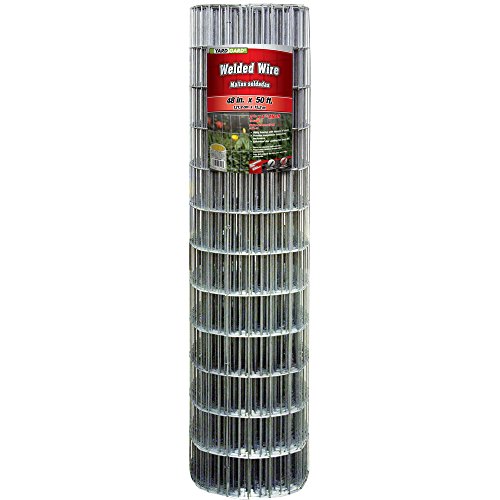
YARDGARD’s welded wire fence features a 2″ x 4″ mesh in a 48 in by 50 ft roll, with a 14-gauge galvanized steel construction. It’s designed for reliable animal enclosures, garden protection, and general fencing. This option is best when you need a versatile boundary or barrier that can be cut to fit irregular spaces. Limitation: the 50-ft length may require multiple rolls for larger projects.
Best for: Homeowners and small farms needing a dependable, easy-to-install enclosure with a classic welded wire look and good rust resistance.
LOVEERCT Farm Fence 4ft x 100ft

LOVEERCT’s 4 ft by 100 ft fence uses 13-14 gauge galvanized steel wire with hot-dip galvanizing and a twisted weaving method. The mesh steps smaller toward the bottom to reduce small animal entry, and the design emphasizes impact resistance. Best for farms needing a resilient, budget-conscious barrier for larger animals like cattle or horses. A limitation is that the tighter bottom mesh may be less effective for very tall small animals passing low undergrowth.
Best for: Budget-minded farms that require strong, long-lasting fencing capable of withstanding livestock pressure and weather exposure.
Buying Guide: Key Considerations for 4 ft Galvanized Fencing
- Material and gauge: Higher gauge numbers indicate thinner wire. For stronger containment of cattle or horses, look for 11–14 gauge wire with hot-dip galvanization to resist rust and corrosion.
- Mesh size and pattern: A 2″ x 4″ mesh is common for livestock enclosures and gardens. A gradient or decreasing mesh toward the bottom helps prevent small animals from slipping through.
- Roll length vs. project size: 50 ft, 100 ft, and 164 ft rolls are common. Plan post spacing, gates, and corner support to avoid gaps or sagging.
- Installation and maintenance: Welded wire fences are generally rigid and easy to install but may require occasional tension adjustments. Galvanized coatings reduce maintenance needs but inspect joints for corrosion over time.
- Intended use: For poultry or small pets, lighter mesh on shorter spans may suffice. For larger livestock, prioritize sturdier wire and a deeper post system.
- Durability in local climate: Hot-dip galvanized fences perform well in humid and coastal areas. Consider shade, wind exposure, and soil type for optimal post depth and spacing.
Frequently Asked Questions
- What is the best fence height for livestock containment?
Four feet is a common height for goats, sheep, and smaller livestock, while larger cattle or horses may require taller options or additional containment features.
- Should I choose a gradient mesh fence?
A gradient mesh helps prevent small animals from passing under the fence, offering extra protection in mixed livestock environments.
- Is galvanized fencing maintenance-heavy?
Galvanized fencing is designed to resist rust, reducing maintenance. Periodic inspection for damaged spots and joints is still recommended.
- Can I install 4 ft fencing in windy areas?
Yes, but ensure proper post depth, secure anchoring, and appropriate tension to combat wind shear and maintain straight lines.
- What mesh size is best for poultry?
For poultry, 2″ x 4″ mesh is common, providing a barrier while allowing visibility and ventilation.
- Do I need different fencing for garden borders vs. pasture?
Yes. Garden borders often need shorter sections with decorative appeal, while pastures require stronger, larger-scale fencing for livestock containment.
| Product | |||
|---|---|---|---|
| Falanava Farm Fence | Galvanized Wire Fence | Heavy gauge; unspecified mesh | Goats, sheep, deer containment |
| Tongmo 4×50 Fence | Welded Chicken Wire | 16 GA; 2″ x 4″ mesh | Poultry protection and garden borders |
| YESON Farm Fence | Galvanized Field Fence | 14 GA; gradient bottom | Livestock containment on fields |
| Toriexon Farm Fence | Galvanized Cattle Fence | 11–14 GA; gradient mesh | Livestock protection and pest deterrence |
| YARDGARD Welded Wire Fence | Mesh Welded Wire Fence | 14 GA; 2″ x 4″ mesh | Enclosures, gardens, property boundaries |