Choosing the right plastic nursery pots helps seedlings establish quickly, saves space, and makes transplanting easier. This guide highlights five practical options, showing who each pot is best for and why. It’s ideal for home gardeners, classroom projects, greenhouse setups, and small urban gardens needing lightweight, reusable containers.
| Product | Size / Capacity | Quantity Included | Best For |
|---|---|---|---|
| JERIA 200-Pack 4 Inch Plastic Nursery Pots | 4″ opening, 3.3″ tall | 200 pots + 200 labels | Medium starter projects; large seedling batches |
| JERIA 100-Pack 4 Inch Plastic Nursery Pots | 4″ opening, 3.3″ tall | 100 pots + 100 labels | Small-to-mid scale seed starting; classroom kits |
| JERIA 50-Pack 1 Gallon Pots | 1 gallon; 6.7″ opening | 50 pots + 50 labels | Transplant-ready seedlings; larger greens or ornamentals |
| Augshy 110 Pcs 4″ Nursery Pots | 4″ opening, 3.2″ tall | 110 pots + 110 labels | Home gardening and small projects; durable and reusable |
| WandaQueen 30 Packs Clear Nursery Pots | 3.5–5″ sizes; assorted | 30-pack set + 20 labels | Monitoring and scaling by plant size; ideal for visual watering checks |
Buyer profiles these pots suit: hobbyist gardeners needing lightweight, stackable containers; teachers or makers assembling seed-start kits; small greenhouse operators seeking expandability; and apartment gardeners who value space-saving, reusable options. The following sections detail each selected product, with practical notes on who benefits most and what to watch out for.
JERIA 200-Pack 4 Inch Plastic Nursery Pots
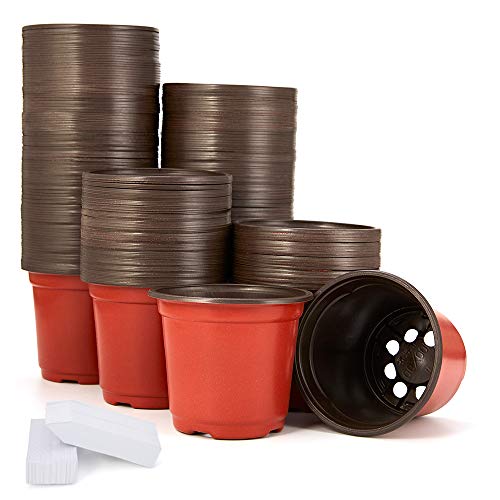
Overview: A large bulk option designed for bigger seedling runs. Each pot measures 4 inches at the top and 3.3 inches tall, with eight drainage holes at the bottom. This set also includes 200 plant labels to help mark varieties.
Best for: Large-scale seed starting, schools, or community gardens that need many identical pots at once. The included labels simplify labeling during early growth.
Why selected: The high quantity and lightweight, reusable design support efficient setup and reuse across cycles.
Caution: The catalog notes a drain hole design; ensure labeling remains legible when pots are stacked or stored.
JERIA 100-Pack 4 Inch Plastic Plant Nursery Pots

Overview: A mid-size option with the same 4-inch opening and 3.3-inch height as the 200-pack, but in a more compact quantity. The set also includes 100 plant labels.
Best for: Educational settings or home gardeners who want to start smaller batches without purchasing in bulk.
Why selected: It offers a balance between cost and scale, while maintaining the same build quality and drainage features.
Caution: While reusable, the softer plastic can warp if overhandled during heavy stacking.
JERIA 50-Pack 1 Gallon Flexible Pots

Overview: This set switches to larger 1-gallon pots, suitable for transplanting sturdy seedlings and accommodating bigger root systems. Includes 50 pots and 50 plant labels.
Best for: Gardeners who want a smooth transition from starter pots to larger containers without moving plants too soon.
Why selected: The thicker, softer plastic supports repeated use and easy reshaping after compression.
Caution: Bulky pots take more storage space; plan for storage when not in use.
Augshy 110 Pcs 4″ Nursery Pots
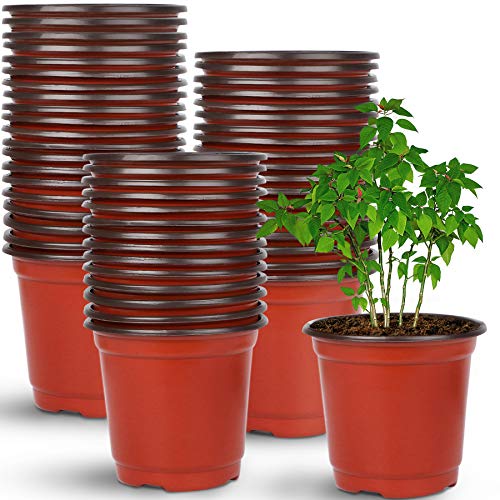
Overview: A versatile 4-inch pot bundle with 110 pots and 110 plant labels. This set emphasizes durability and reuse, with pots made to regain shape after deformation.
Best for: Home gardeners who want a practical, ready-to-use option for a variety of plants, including succulents and herbs.
Why selected: Strong flexibility and break resistance make it suitable for frequent transplant cycles.
Caution: The pots should be washed between cycles to maintain label readability and pot longevity.
WandaQueen 30 Packs Clear Nursery Pots

Overview: A mixed-size set featuring clear plastic pots in multiple standard diameters, plus 20 labels. Clear pots make it easy to monitor soil moisture and root development at a glance.
Best for: Enthusiasts who want to visually monitor plant health and hydration levels, or classrooms experimenting with plant growth stages.
Why selected: The transparency provides an advantage for beginners learning watering schedules and transplant timing.
Caution: Clear plastic may heat up more quickly in direct sun; consider placing in partial shade or using trays to prevent overheating of roots.
Buying Guide
What size should I choose?
- 4-inch pots are ideal for starting many herbs, flowers, and small vegetables. They balance space efficiency with root growth potential.
- 1-gallon pots are better for larger plants or when transplanting-to-bed is planned sooner, reducing handling stress on roots.
What material and features matter?
- Flexible, lightweight plastic is easy to reuse but may deform if treated roughly. Look for pots with a reinforced rim if you plan frequent stacking.
- Drainage holes are essential for soil aeration; ensure the bottom has enough holes to prevent waterlogging for your plant type.
- Labels included with pots help keep varieties organized, especially in larger seed-start projects.
Which set is best for my situation?
- Large batches or classroom kits: choose bulk options (like 200-pack) to minimize reordering frequency.
- Small projects or beginners: consider 100-pack or 110-count bundles with labels for easy organization.
- Transplant-focused gardeners: pick 1-gallon pots to reduce root disturbance during relocation.
Storage and reuse considerations
- Compressed pots can be restored to shape; store flat or nested to save space between seasons.
- Wash pots between cycles to extend life and ensure healthy seedlings in subsequent seasons.
Frequently Asked Questions
- Q: Are these pots reusable after transplanting? A: Yes, most listed sets are designed to be reusable and resume their shape after deformation with proper handling.
- Q: Do all pots include plant labels? A: Several options include labels; check the product description for the exact quantity.
- Q: Will these pots fit standard seed trays? A: Many 4-inch pots stack or fit into standard seedling trays; confirm tray dimensions before purchasing in bulk.
- Q: Are clear pots better for monitoring moisture? A: Clear pots allow visibility of soil conditions, which can help schedule watering more accurately.
- Q: What is the advantage of a 1-gallon pot? A: A 1-gallon pot accommodates larger transplants, reducing the number of repotting steps.
- Q: What should I consider for storage? A: Look for pots that compress or nest well and consider a dedicated bin or rack to keep them organized and accessible.