Answer: A push garden seeder planter makes seed placement quick, accurate, and less labor-intensive for home gardeners. This guide highlights five top models that suit different needs—from simple, budget-friendly options to feature-rich planters for larger beds. Ideal buyers include beginners seeking easy operation, compact-garden owners needing precise spacing, and seasoned planters needing durability for multiple seed types.
| Product | Best For | Key Benefit |
|---|---|---|
| Chapin 8701G | General home gardens | Six seed plates, rust-resistant hopper |
| EarthWay 10001 | Precision planting | Seven plates, extensive seed compatibility |
| Agri-Fab 45-0640 | Budget-conscious growers | Seven plates, lightweight aluminum frame |
| John Deere 3lb Seeder | Medium-sized gardens | Wide rear wheel, adjustable row marker |
| Chapin 8701B | Color-coded options | Six seed plates, durable red/black model |
Chapin 8701G Garden Push Seeder Planter

Features: 1.5 liter rust-resistant poly hopper; six interchangeable seed plates; simple push-to-mark, plow, dispense seeds, and cover. The durable powder-coated steel frame supports long-term use. Best for small to medium home gardens that grow multiple vegetables.
Best for: Gardeners who want an all-in-one, easy-to-use seeder that covers multiple seed types with minimal setup. Choose this if you value a robust metal frame and a reliable hopper that resists corrosion.
Caution: The 1.5-liter hopper may require refilling during larger beds; plan seed loads accordingly to avoid frequent stops.
Chapin 8701B Garden Push Seeder Planter

Features: 6 seed plates—supports up to 20 seed types; 1.5 L hopper; powder-coated steel frame; cushioned handle grips; zinc plow blade for row marking and planting. Best for: Gardeners who plant a wide variety of vegetables and want a clearly identifiable seed type system.
Why chosen: This model emphasizes versatility in seed types and a comfortable push experience. Better for multispecies beds than single-crop setups.
Caution: Some users may require a bit more space to maneuver due to plate changes; ensure adequate bed width for turning.”
EarthWay 10001 Precision Garden Seeder

Features: 7 seed plates; precise plant spacing and seed depth; durable aluminum with rustproof hopper; one-year limited warranty and lifetime technical support. Best for: Homeowners and gardeners seeking highly accurate spacing across a variety of crops, including corn, peas, and more.
Why chosen: The 7-plate system expands crop compatibility significantly, making it a solid choice for gardeners with diverse beds.
Caution: As with all precision seeders, correct plate selection is essential; misalignment can affect spacing accuracy.
Agri-Fab 45-0640 3lb Push Seeder

Features: 3 lb poly hopper; seven interchangeable seed plates; aluminum frame; rust-resistant components. Best for: Gardeners who want a lightweight, budget-friendly option with a good range of seed compatibility for small to medium plots.
Why chosen: The combination of lighter weight and multiple plates makes it easy to handle for beginners and casual gardeners.
Caution: The smaller hopper capacity means frequent refilling for large beds; plan storage and refilling intervals.
John Deere 3lb Garden Seeder
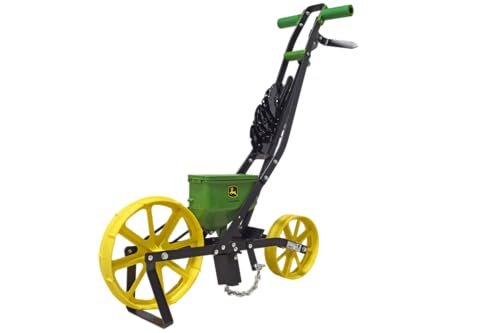
Features: 3 lb hopper capacity; wide rear wheel for soil contact; rust-resistant plow blade; adjustable row marker for spacing. Best for: Gardeners with prepared soil who want dependable, straightforward seed placement with clear row alignment.
Why chosen: The wide wheel and adjustable marker provide stable performance on cultivated beds, making it a practical all-around option.
Caution: For very small seeds, plate selection and depth control are critical; improper settings may affect germination rates.
Charles Walters CWSRS Single Row Seeder

Features: Hopper lid to keep seeds dry; dragging chain helps cover seeds; wider rear wheel aids soil compaction for consistent rows. Best for: Gardeners who want uniform single-row planting across multiple seed types and want row coverage assistance.
Why chosen: Emphasizes row uniformity and seed protection, making it a reliable option for meticulous row planting.
Caution: May require more space to operate smoothly due to the dragging mechanism; ensure bed width accommodates the seeder width.
Hoss Garden Seeder

Features: Versatile walk-behind design; adjustable planting depth from 1/4″ to 1-1/2″; removable hopper for easy seed emptying. Best for: Gardeners who plant a wide range of seed sizes and want flexible depth control in a single machine.
Why chosen: The depth adjustment and hopper removal offer practical versatility for diverse crops and seasons.
Caution: Heavier models may require more effort on hills; consider garden terrain before purchase.
zyiesrsq Seed Sower & Fertilizer Applicator

Features: Dual storage for seeds and fertilizer; corrosion-resistant construction; semi-automatic planter for digging, transplanting, and covering. Best for: Gardeners who want to combine sowing with fertilizer placement in one pass.
Why chosen: Combines seeding and fertilization in a single tool, reducing trips across beds and optimizing seed-to-soil contact.
Caution: This model’s fertilizer feature may require careful calibration to avoid over-fertilizing young plants; follow recommended application rates.
Buying Guide: Key Considerations For Your Garden Seed Push Planter
- Seed variety compatibility: How many seed plates are included, and what seed sizes do they support?
- Hopper capacity: Do you plant small beds or large plots? Bigger hoppers reduce refill frequency but add weight.
- Row spacing and depth control: Is there an adjustable marker and depth setting to match your crops?
- Frame durability: Aluminum vs. steel, rust resistance, and overall build quality for long-term use.
- Ergonomics: Handle comfort, grip design, and weight distribution for extended planting sessions.
- Maintenance: Ease of cleaning, plate replacement, and hopper care to prevent seed jamming or corrosion.
- Terrain suitability: Flat beds vs. uneven soil; wheel design and plow blade type influence maneuverability.
Frequently Asked Questions
- What is a seed plate in a push planter used for? – Seed plates determine seed spacing and which seeds are dispensed per push, enabling consistent rows across crops.
- How much seed can a typical hopper hold? – Hopper capacity varies; common hoppers range from about 1 to 3 pounds, affecting refill frequency.
- Is a row marker necessary? – A row marker helps maintain uniform planting rows, especially on larger beds or multi-row gardens.
- Can these planters plant tiny seeds like carrots? – Some planters offer small-seed plates, but very tiny seeds may require specialized devices or manual seeding.
- Do these planters work in prepared soil only? – Most models perform best in well-prepared soil; very rocky or hard-packed ground may affect seed placement.
- Are there safety considerations when using a push seeder? – Always follow manufacturer instructions, keep hands clear of moving parts, and wear gloves for grip.