What to buy if you need clear, sturdy, and versatile plastic nursery pots for seedlings, cuttings, or transplanting? This guide features five well-rounded options that suit indoor starter setups, classrooms, or home gardens. Each choice is evaluated for best use cases, ease of use, and practical limits so you can pick confidently. The top picks are ideal for gardeners who want good drainage, clear visibility, and flexible sizes to match plant growth.
| Product | Sizes Included | Best For | |
|---|---|---|---|
| WandaQueen 30 Packs Clear Nursery Pots | 3.5/4/5 inch | Small to medium seedlings | Visible water and soil moisture; lightweight |
| FUIJOL 4/5/6/7 Inch Clear Nursery Pots | 4/5/6/7 inch | Mixed plant sizes; seedling to young plants | Includes matching saucers for neat drainage |
| RAOOKIF 100 Pack Nursery Pots | 4/5/6 inch | Large transplant projects | High quantity and reusable |
| June Fox Square Nursery Pots | 3.3 inch (square) | Space-efficient seedling setup | Square design saves flat space |
| SupKing Clear Nursery Pots | 5/4/3.5 inch | Varied starter batches | Includes 15 plant labels |
WandaQueen Clear Nursery Pots — 30 Pack

Best for visibility and quick watering checks. WandaQueen’s clear pots let you monitor soil moisture and root development at a glance. The set includes 30 pots in 3.5, 4, and 5 inch sizes plus 20 plant labels, making it suitable for classrooms, home gardeners, and amateur planters who like organized labeling. The lightweight design reduces hand fatigue during repotting tasks and helps prevent overwatering by showing water levels easily. A potential limitation is that the material is lightweight and might be less durable under heavy handling or stacking for long storage.
FUIJOL Clear Nursery Pots — 20 Pack (4/5/6/7 Inch)

Best for mixed-size plant projects. FUIJOL provides a 20-pack set with 4, 5, 6, and 7 inch pots, plus matching saucers to catch drainage. This makes it ideal for experiments with multiple plant types or staggered transplant schedules. The drainage holes help prevent waterlogging, reducing the risk of root rot. A caveat is that the set emphasizes variety over extreme durability; use for seasonal cycles and reuse where possible to maximize value.
RAOOKIF 100 Pack Nursery Pots — 4/5/6 Inch

Best for large batch transplanting and repeated use. RAOKKIF’s 100-pack includes 4, 5, and 6 inch pots, each with drainage features suitable for seedlings, cuttings, and starter beds. The pots are described as deformable but return to shape, which can help with storage efficiency between planting seasons. Best for growers who need many identical containers quickly. A limitation is that the description emphasizes reusability but does not provide long-term durability data; plan for periodic inspection and replacement if reused frequently.
June Fox Square Nursery Pots — Pack of 100
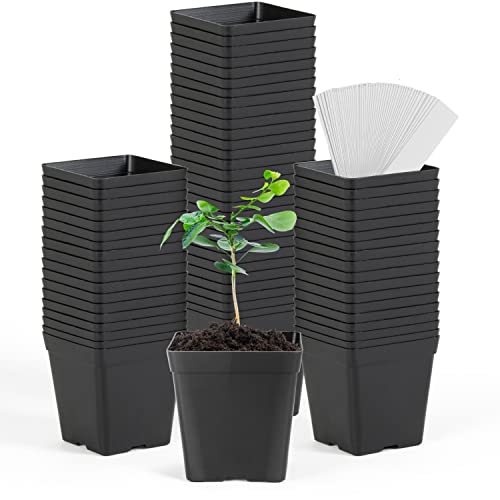
Best for maximizing space in flat setups. June Fox offers 100 square pots with matching plant labels, designed to fit neatly in a 1020 standard flat. The square design helps crowd plants more efficiently, making it ideal for seedling trays, cuttings, or small container gardens. The included labels support easy seed tracking. A caution is that square pots may require more careful drainage management to avoid water pooling in corners; ensure saucers are appropriate for the layout.
SupKing Clear Nursery Pots — 12 Pack (5″/4″/3.5″)

Best for compact starter sets with a focus on transplant readiness. SupKing’s 12-pack includes three sizes (5, 4, and 3.5 inches) and 15 plant labels. The pots feature drainage holes and a squeeze-to-remove design that helps lift seedlings with minimal root disturbance. This makes it suitable for quick cycle experiments and education settings. A limitation is the smaller total count than some other bundles, which might require more frequent replenishment for large projects.
Buying Guide — Key Considerations For Plastic Nursery Pots
Size range and plant compatibility. Choose a mix of sizes that covers seedling stages, cutting propagation, and early transplanting. If you grow a variety of crops, a combination of 3.5–5 inches or 4–7 inches is typically sufficient.
Drainage and aeration. Look for pots with drainage holes and consider whether you need matching saucers or trays to manage excess water. Proper drainage reduces root rot and helps roots develop more robustly.
Visibility vs. durability. Clear pots provide quick moisture checks and root inspection, but they can be more fragile than solid-color pots. Decide whether longevity, stacking capability, and reusability are more important than visibility for your operation.
Labeling and organization. Labels or plant tags can streamline seed tracking, especially in classrooms or mixed-species setups. Consider pots that either include labels or are compatible with durable plant labels.
Storage and reuse. Some pots are described as deformable or compressible, which helps with storage. If you plan multiple seasons, favor reusable pots that maintain shape after compression and cleaning well.
Project scale and budget. For large projects or classrooms, a high-quantity bundle is cost-effective and minimizes replenishment. For hobbyist use, smaller sets may suffice and reduce waste.
Frequently Asked Questions
- Are clear nursery pots better than opaque pots? Clear pots allow quick visual checks of soil moisture and root growth, but they may be less durable. Use clear pots when observation matters and consider opaque options if you transport or store pots often.
- What size should I choose for starting seeds? A mix of 3.5 to 4 inch pots is usually enough for most seedlings. For larger starters or transplanting, include 5 to 7 inch options.
- Do nursery pots come with drainage holes? Most sets include drainage holes. If not, you should drill or choose pots with pre-made holes to prevent waterlogged roots.
- Can these pots be reused after transplanting? Many are designed to be reusable, especially those made from durable plastic. Inspect for cracks or warping after each use and clean thoroughly between cycles.
- Should I buy a matching saucer or tray? Yes, if you need to manage overflow or keep growing spaces clean. Saucers help collect excess water and prevent damp floors or surfaces.
- What is the best option for classrooms? A larger bundle with multiple sizes and plenty of plant labels is ideal for teaching, demonstrations, and student projects.