When you need reliable, mobile water transfer or drainage, a small gasoline-powered pump is often the best choice. These pumps are ideal for farm irrigation, flood drainage, construction sites, and emergency water removal. The top five options below are selected for portability, power, and practical use across common scenarios. They are best for users who require on-site pumping without relying on electricity and who value quick priming, solid head, and durable construction.
| Product | Engine Type | Best For | Key Benefit |
|---|---|---|---|
| IOENC 43cc Gas Water Pump | 2-stroke | Heavy-duty drainage, high-lift transfer | High lift and fast flow |
| JLYNOWPT 212cc 2″ Trash Pump | 4-stroke | Debris-filled liquids, farm irrigation | High efficiency with long run time |
| Gosangom 4-Stroke 1″ Water Transfer Pump | 4-stroke | Irrigation and small-scale transfer | High head, durable build |
| LTIGOAW 212CC 2″ Gas Pump | 4-stroke | Heavy-duty dewatering, construction sites | Large solids handling |
| XtremepowerUS 79cc Gas Pump | 4-stroke | Garden, pool, general irrigation | Lightweight and portable |
IOENC 43cc Gas Water Pump

Brand: IOENC. This 43cc gas-powered pump delivers about 1.25KW (1.7HP) with a lightweight yet durable construction of carbon steel and aluminum alloy. It features a 98.43 ft maximum head and a 35.66 GPM flow rate, making it suitable for rapid water transfer, irrigation, and drainage. The self-priming capability (≤8 seconds) supports quick setup on job sites. Best for: contractors and farmers who need a compact, high-lift solution for quick water movement. Caution: fuel economy is important; ensure proper storage and secondary refueling practices to minimize downtime between tasks.
- Powerful 43cc engine
- 1-inch inlet/outlet
- Self-priming in ~8 seconds
- Corrosion-resistant durable materials
JLYNOWPT 2″ Trash Pump

Brand: JLYNOWPT. This 2″ trash pump uses a 212cc 4-stroke engine and can handle rough irrigation and drainage tasks with a 22.97 ft suction height and 98.43 ft maximum head. A 0.95-gallon fuel tank supports up to about 5 hours of operation, reducing refueling interruptions. Best for: large-acreage irrigation and sites with debris or dirt-laden water. Caution: ensure solids containment compatible with the 1/3 inch particle tolerance to avoid clogs.
- 7.5HP equivalent power
- Max flow up to 882.87 ft³/h
- Long runtime between fills
- Good for debris-laden liquids
Gosangom 1″ High-Pressure Transfer Pump
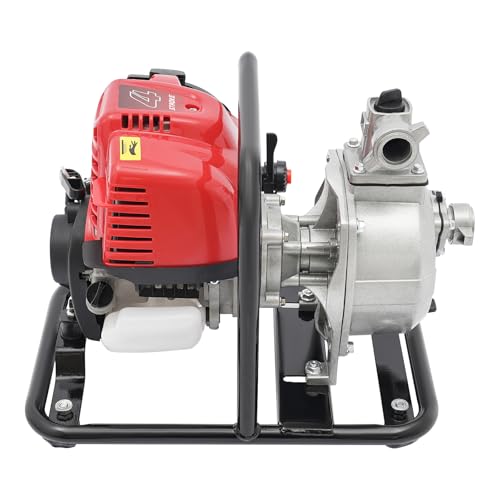
Brand: Gosangom. A 4-stroke gasoline water pump with 1″ inlet/outlet and a maximum head around 98.43 ft. It emphasizes a balance of durability and portability with corrosion-resistant construction and a compact profile. Best for: homeowners and small farms needing a dependable, easy-to-move unit for irrigation or drainage. Caution: data notes a compact size; check fit for large debris before selecting for muddy water tasks.
- 1-inch inlet/outlet
- High-Pressure capability
- Durable carbon steel and aluminum alloy build
LTIGOAW 2″ Gas Pump (212CC)

Brand: LTIGOAW. This 212cc, 4-stroke engine powers a true 2″ trash pump. It delivers up to 26m³/h (918 ft³/h) and a total head of 30m (98 ft). Its robust build uses aluminum alloy and steel for improved longevity in challenging environments. Best for: construction dewatering and large-area irrigation where solids and mud are present. Caution: heavier than smaller units; plan for transport on-site.
- 2-inch inlet/outlet
- 7.5HP gasoline power
- High head and solid handling
XtremepowerUS 79cc Water Pump

Brand: XtremepowerUS. A lightweight 79cc, 3HP engine powers a 1″ inlet/outlet pump designed for garden, pool, and general irrigation. It combines portability with a reasonable flow rate for smaller jobs and quick transfers. Best for: homeowners and small-scale gardeners who need a compact, easy-to-move gasoline pump. Caution: lower power compared to mid-sized units; best for lighter workloads and shorter runs.
- 1-inch inlet/outlet
- Lightweight at under 28 lbs
- Good for household irrigation and pool maintenance
Buying Guide: How To Choose The Right Small Gasoline Water Pump
What should I consider before buying?
Key factors include pump size (flow rate and head), engine type, durability, and the ability to handle solids if you deal with muddy water. For large irrigation or flood drainage, a 2″ trash pump with a high head and big fuel tank tends to perform best. For small garden tasks, a 1″ pump may suffice and offer superior portability.
How much head do you need?
Head is the height the pump can lift water. If you’re draining a flooded area or moving water to a distant location, aim for a head around 90-100 feet (27-30 meters) or more. Pumps in this range maintain strong performance for routine backyard and farm tasks.
What about debris and solids?
For irrigation channels and drainage with sediment, choose a trash pump with a larger inlet and a robust impeller. This helps prevent clogs and maintains continuous operation during heavier tasks.
Operational and maintenance considerations
Look for a long-running fuel tank and efficient fuel consumption. Check if the unit has a low-oil warning, easy-start features, and a durable base. Regularly inspect seals and gaskets to minimize leaks and wear during frequent use.
Portability and setup
Consider overall weight, whether a wheel kit is available, and how easy it is to prime and start the engine. Self-priming capabilities reduce setup time, which is helpful on busy job sites.
Safety considerations
Gas-powered pumps require proper ventilation and safe handling of gasoline and exhaust. Always operate outdoors or in well-ventilated spaces, and store fuel away from heat sources and sparks.
FAQ
- Q: Which pump is best for muddy water?
- Q: Do these pumps require regular maintenance?
- Q: Is a 1″ pump enough for irrigation?
- Q: Can I use these pumps for pool water transfer?
- Q: What is self-priming and why does it matter?
- Q: Are these pumps noisy?
A: A 2″ trash pump with a solid impeller, such as the LTIGOAW 212CC model, is well-suited for debris-filled liquids due to its larger intake and higher head.
A: Yes. Regularly check oil, fuel, seals, and air filters. Keep a fresh fuel mix as required by the engine, and clean the intake screen after use.
A: For small gardens and light irrigation, a 1″ pump like the XtremepowerUS model can be sufficient. For larger areas, consider 2″ units for better flow and head.
A: Yes, many models are suitable for pool water transfer and general irrigation, but verify debris tolerance and the pump’s materials to avoid corrosion or clogging.
A: Self-priming means the pump can evacuate air and start pumping liquids quickly without manual priming. This reduces setup time and is valuable on job sites.
A: Gasoline pumps generate more noise than electric models. Some units operate around 90-95 dB; use hearing protection and operate in open outdoor spaces when possible.