Top picks for removing pond and lake muck use slow-dissolving pellets that deliver enzymes and beneficial bacteria to break down organic buildup. This guide helps buyers choose the right pellets for different pond sizes, muck levels, and maintenance goals. Best suited for homeowners, small commercial properties, and wildlife-friendly water gardens seeking clearer water and easier shoreline access.
| Product | Brand | Size | Why This Might Be Right |
|---|---|---|---|
| Muck Remover Pellets 10 lb | Natural Waterscapes | 10 lb | Effective for mid-sized ponds; balanced price and coverage |
| Muck Remover Pellets 5 lb | Natural Waterscapes | 5 lb | Compact option for small ponds or spot treatments |
| LMJP Muck Reducer – 15 lb | LMJP | 15 lb | Strong enzyme action; good for larger lagoons or lake edges |
| Muck Reducer – 16 lb | DrPetum | 16 lb | Deep sludge cleanup with safe use around recreation areas |
| Shore-Tech Black Label Muck Pellets – 50 lb | Shore-Tech Industries | 50 lb | Commercial-grade, best for larger lakes or frequent muck buildup |
Note: Choose products with slow-release pellets and enzymes. For ponds up to 0.25 acres, smaller bags may suffice; for larger ponds or ongoing muck, larger packs or multi-bag programs can offer better long-term value and fewer deliveries.
Muck Remover Pellets 10 lb – Natural Waterscapes

The 10 lb size is designed to treat about 5,000 square feet per 8 oz scoop, with recommended dosing of 2 scoops per 1/4 acre and 8 scoops per 1 acre. Best for moderate muck levels along shorelines or small-to-mid sized ponds. The pellets sink to the bottom to target leaf litter, fish waste, and organic debris. Choose this for clearer water near shorelines and easier shoreline access. Caution: dosing should follow water temperature guidance—best results when water is above 38°F.
Muck Remover Pellets 5 lb – Natural Waterscapes

The 5 lb option targets smaller ponds or lighter muck loads. Each 8 oz scoop treats 5,000 square feet, with the same 2 scoops per 1/4 acre and 8 scoops per acre guidance. Best for owners who need a compact, manageable solution or who want to trial pellet treatment before committing to larger sizes. Use every two weeks when water is warmer for best results. Limitation: smaller bag means more frequent purchases for larger ponds.
LMJP Muck Reducer – 15 lb Natural Sludge Solution

LMJP’s 15 lb tablets emphasize reducing pond muck by up to 2 inches per month. The tablets settle to the bottom and release enzymes that digest organic waste, with benefits extending to odor reduction and improved water quality. Best for medium-to-large ponds, or areas with persistent muck and odor issues. Replace or supplement with periodic treatments. Caution: ensure restrictions allow for safe use around wildlife and recreational activities.
Muck Reducer – 16 lb Natural Sludge Solution Tablets

DrPetum’s 16 lb tablets offer a bottom-up enzyme release that targets pond sludge and reduces murky water and odors over time. It is marketed as safe for fish, pets, and recreational use, making it suitable for multi-use ponds near shorelines and docks. Best for homeowners with larger projects or frequent muck issues. Limitation: as with any biological treatment, results depend on ongoing maintenance and consistent dosing according to guidance.
Shore-Tech Black Label Muck Pellets – 50 lb
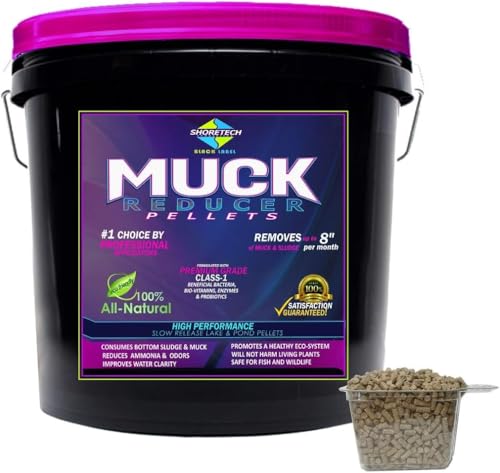
This 50 lb bag is a commercial-grade option designed for larger bodies of water. It uses high-performance beneficial bacteria and enzymes to break down organic sludge and floating algae mats, helping restore oxygen levels. Best for large lakes, commercial ponds, or properties with substantial muck buildup. Choose this if you need a long-term, heavy-duty solution. Caution: follow label dosage rates for dispersal to avoid over-application and ensure safe water use during treatment.
Buying Guide
What size should you buy?
- Small ponds (up to 1/4 acre): 5 lb or 10 lb options can work well, with more frequent dosing.
- Medium ponds (1/4 to 1/2 acre): 10 lb to 15 lb bags give balanced coverage and fewer shipments.
- Large ponds and lake edges: 16 lb to 50 lb bags provide robust cleansing and longer intervals between applications.
How to choose between enzyme-based vs bacteria-based pellets?
- Enzyme-dominant formulas focus on breaking down organic matter and reducing odors quickly. Good for initial cleanup and odor control.
- Bacteria-enriched formulas focus on sustained breakdown of sludge and ongoing water quality improvement. Ideal for ongoing management.
How often should you apply?
- Most products recommend every two weeks when water temperature is above 38°F for best results.
- In colder months, reduce frequency or pause until temperatures rise to maintain effectiveness and avoid unnecessary dosing.
Where should you apply?
- Target areas with visible muck buildup, near shorelines, and along deeper pond edges where sludge accumulates.
- Apply evenly across the water body according to label instructions to prevent localized pockets of untreated muck.
Safety and compatibility considerations
- All products noted are described as safe for fish, birds, wildlife, and recreational use on label guidance.
- Check local environmental guidelines and ensure proper dispersion to protect aquatic life and water quality.
- Consider nearby plants and shallow areas where dosing could impact sensitive ecosystems; follow label directions precisely.
Frequently Asked Questions
- What is muck in ponds and lakes?
- Do these pellets work for ponds with fish and wildlife?
- Will pellets eliminate all muck quickly?
- How do I decide between a 5 lb bag and a 50 lb bag?
- Are there any downsides to pellet treatments?
- Can I use these products in color-treated or irrigated water?
Muck consists of decomposed organic matter such as leaves, fish waste, and algae that settles at the bottom, often leading to foul odors and reduced water clarity.
Yes, most products advertise safety for fish, birds, and recreational use when used as directed. Always follow label instructions and monitor water conditions after application.
Pellets gradually reduce muck over weeks to months. They are part of ongoing pond maintenance rather than a single quick fix.
Choose based on pond size, muck severity, and treatment frequency. Start with smaller bags for testing or small ponds; move to larger bags for larger bodies or persistent muck.
Overuse can lead to temporary imbalances or unnecessary costs. Always follow dosing instructions and temperature guidance for optimal results.
Use only as directed by the product label and local regulations. If you irrigate areas adjacent to treated water, ensure compatibility with your irrigation plan.