Whether you’re running a small home hydroponic setup or a larger nutrient-film technique (NFT) garden, reliable air pumps keep roots oxygenated and roots healthy. This guide highlights five top options chosen for steady airflow, low noise, and durability. It’s ideal for hobbyists, step-up growers, and those expanding to larger reservoir systems. The following table summarizes the five selected pumps, helping you compare capacity, outlets, and suitability at a glance.
| Product | Best For | Airflow / Outlets | Notes |
|---|---|---|---|
| AQUANEAT Aquarium Air Pump 300GPH | Medium to large hydroponic setups | 300 GPH total; 4 outlets | Quiet operation, adjustable airflow |
| VIVOSUN Commercial Air Pump 634GPH | Systems needing steady, strong aeration | 40 L/min; 6 outlets | Aluminum heat-dissipating plates; durable |
| hygger 8W Aquarium Air Pump | Compact to medium hydroponics | 180 GPH; dual outlets | Low energy use; noise-reducing design |
| AQQA Powerful Aquarium Air Pump | Large systems with multi-outlet needs | 237 GPH (12W) / 356 GPH (18W); 4 outlets | Individual outlet regulators for fine control |
| AquaMiracle Aquarium Air Pump | Hydroponic setups requiring high output | 600 GPH; single high-output unit | Aluminum housing for heat dissipation |
Note: All pumps listed have adjustable airflow (where noted) and multiple outlets, making them suitable for running several aeration components like air stones, sponge filters, and tubing configurations in hydroponic systems.
AQUANEAT Aquarium Air Pump 300GPH

Best For: Medium to large hydroponic reservoirs that require robust aeration without excessive noise. This pump can drive multiple sponge filters, air stones, and decorative bubblers through its four outlets. The adjustable airflow lets you dial in the precise oxygen level for your plant roots.
Why selected: It combines high output (300 GPH) with a compact footprint and four outlets, enabling flexible configuration for various hydroponic components. Rubber feet help minimize vibration for quieter operation, which is beneficial in indoor grows.
Limitations: While powerful, the unit’s noise level may increase if mounted directly on a shared wall or surface without proper isolation. Ensure you place it on a stable surface with adequate ventilation.
VIVOSUN Commercial Air Pump 634GPH
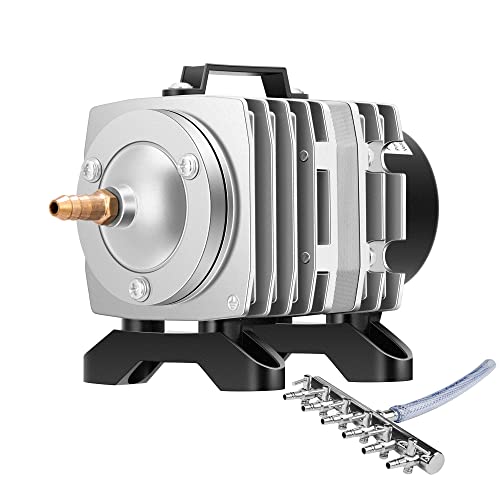
Best For: Larger hydroponic systems or tanks that require continuous, high-volume aeration. Six outlets allow multiple lines to feed different zones, filters, or air stones in a single setup.
Why selected: This pump uses aluminum heat-dissipating plates and a copper outlet nozzle to sustain performance and reduce heat buildup. Its 0.03 MPa output and 24/7 capability make it suitable for ongoing operation in demanding environments.
Limitations: Higher power and weight mean it’s less ideal for very compact setups. Check your reservoir layout to accommodate the size and noise potential.
hygger 8W Aquarium Air Pump

Best For: Medium to large freshwater or marine hydroponic setups requiring reliable oxygenation with energy efficiency. The 8W motor delivers up to 180 GPH and features dual outlets for flexible placement of aeration devices.
Why selected: It combines a pure copper motor for stable airflow with a quiet, multi-layered noise-reduction design. The energy-efficient operation helps keep running costs down over time.
Limitations: The maximum flow is lower than some larger units, so it’s best for systems that don’t require extremely high air volume in one chamber. Larger setups may still need additional pumps or pumps with higher outputs.
AQQA Powerful Aquarium Air Pump

Best For: Large fish tanks and hydroponic systems that require strong air flow across multiple outlets. The option to operate at 12W or 18W with corresponding GPH makes it adaptable to different reservoir sizes.
Why selected: It provides adjustable flow with individual regulators on each outlet, allowing precise balancing of air to multiple lines. The dual power settings enable scaling from moderate to high aeration as your system grows.
Limitations: The pump’s higher pressure may necessitate careful tubing selection and regulator tuning to avoid overly aggressive aeration in sensitive plant root zones.
AquaMiracle Aquarium Air Pump
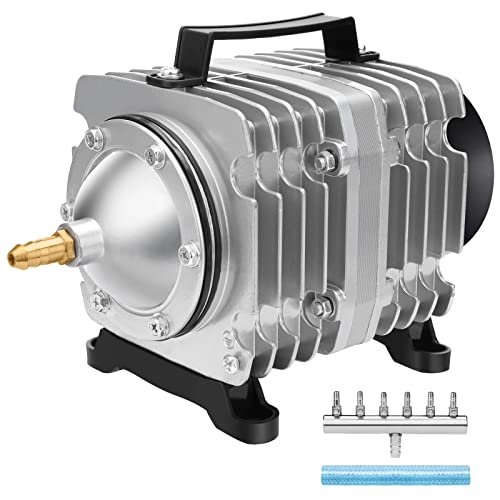
Best For: Hydroponic setups and small to medium aquariums that benefit from high output and robust heat dissipation. The 600 GPH rating suits larger grow beds or multiple reservoir zones needing ample oxygen delivery.
Why selected: Aluminum housing provides good heat dissipation, which can extend pump life in enclosed grow spaces. The 600 GPH output enables strong aeration without requiring multiple units.
Limitations: Aluminum housing is great for cooling but may still require placement with adequate airflow in tightly sealed grows rooms. Place away from heat-producing equipment when possible.
Buying Guide: Air Pumps For Hydroponics
What capacity do I need?
Capacity depends on reservoir size, number of growing channels, and plant oxygen demand. For a 20–40 gallon system with a few air stones, a pump in the 150–300 GPH range is often sufficient. Larger systems with multiple zones may benefit from 600 GPH or higher, especially when running several outlets.
How many outlets should I look for?
Multiple outlets enable independent control of aeration in different zones. If you plan to run several air stones or sponge filters, choose a pump with at least 4 outlets. More outlets provide flexibility for expansion without buying another unit.
What about noise and energy use?
Quiet operation matters in home grows. Look for pumps with rubber feet and vibration-damping construction. Energy-efficient motors reduce running costs, particularly for 24/7 operation in hydroponic systems.
What materials affect durability?
Pumps with aluminum heat-dissipating plates and copper components tend to be more durable and dissipate heat better, which supports longer runtimes in demanding environments. Lubricant-free designs or sealed motors can also extend life.
Are there any sizing caveats?
Over-sizing a pump can cause excessive aeration or pressure, which may stress certain hydroponic setups. Under-sizing leads to insufficient oxygenation. When in doubt, start with a pump that offers adjustable flow and plan for future scaling with additional outlets or outlets regulators.
Installation tips
Place pumps on a stable surface away from direct water exposure and ensure good ventilation around the unit. Use appropriate airline tubing and check valves to prevent backflow. Regularly inspect seals and hoses for signs of wear or leaks.
Safety considerations
Follow manufacturer instructions for electrical use near water, and never submerge the pump. Use GFCI outlets in wet locations and ensure cords are organized to avoid tripping hazards.
Summary of buyer considerations
- Reservoir size and number of zones
- Required air volume per zone
- Desired noise level and energy efficiency
- Number of outlets and adjustability
- Future expansion plans
FAQ
- What is the best pump for a 20–40 gallon hydroponic system?
Look for a pump around 150–300 GPH with multiple outlets to allow future expansion without a second unit.
- Do I need a pump with adjustable airflow?
Yes. Adjustable airflow helps tailor oxygen delivery to plant needs and can conserve energy during lower demand periods.
- Can I run multiple aeration devices from one pump?
Yes, if the pump has multiple outlets and sufficient total output. Use regulators if needed to balance flow to each line.
- Is aluminum housing better than plastic?
Aluminum housing typically offers better heat dissipation and durability, beneficial for longer runtimes in warmer environments.
- How often should I inspect hoses and fittings?
Check monthly for signs of wear, leaks, or cracking. Replace aging tubing to prevent failures in the system.
- Can I use these pumps for both aquariums and hydroponics?
Yes. The listed pumps are suitable for hydroponic aeration as well as aquarium setups that require robust oxygenation.