Answering the growing demand for space-smart indoor farming, this guide highlights top vertical garden systems designed for compact living spaces. The selected products suit apartment dwellers, urban gardeners, and anyone seeking fresh herbs, vegetables, or flowers without soil. Each option emphasizes water efficiency, easy setup, and scalable design. Read on to compare best-for scenarios, setup ease, and what to watch for in a vertical garden kit.
Summary table of chosen products:
| Product | Best For | Key Benefit |
|---|---|---|
| Gardyn Home 4 Vertical Hydroponics | Larger, multi-plant indoor gardens | 30 plants in 2 sq ft with smart features |
| JPWDDWYT Hydroponics Tower Indoor Growing System | Small spaces wanting soil-free setup | Top-down watering, movable tower |
| Ahopegarden Hydroponics Growing System Kit | Modern design lovers, tech-friendly kitchens | 17″ tall with LCD touch control and full-spectrum lighting |
| MQHUAYU Vertical Hydroponic Tower | Compact, high-density planting | 35 plants in 1.72 sq ft with modular assembly |
| BIRDROCK HOME 5-Tier Vertical Garden | Indoor/outdoor versatility with metal build | Sturdy, space-saving multi-tier design |
Gardyn Home 4 Vertical Hydroponics Growing System Kit

The Gardyn Home 4 is a next-generation hydroponic garden designed to maximize indoor yields with minimal space. It promises up to 30 large plants in about 2 square feet, using 95% less water than traditional soil gardens. The system includes redesigned cleaning-friendly columns, energy-efficient LED grow lights, and real-time water measurement. Best for urban homes, schools, and kitchens seeking a compact, semi-automated indoor farming setup. A potential limitation is the need for Wi-Fi and power, which may constrain places with limited connectivity or outages.
Who it’s best for and why selected: Ideal for households that want variety and scale in a small footprint. The automatic watering and integrated lighting reduce manual maintenance, making it a strong choice for busy households or learning environments.
Key features:
- 30 plants in 2 sq ft
- Energy-efficient LED grow lights with sunrise/sunset modes
- Real-time water measurement
- No soil needed; automated hydroponics
Caution: Requires reliable electricity and internet connection to maximize automation features; plan for a stable setup near power outlets.
JPWDDWYT Hydroponics Tower Indoor Growing System

This hydroponic tower emphasizes soil-free cultivation with an automatic top-down watering cycle. It is designed to be moved easily, fitting into kitchens or living rooms to create a vertical agricultural display. Best for small apartments or renters who want a nimble, space-saving system that still delivers fresh produce. A potential drawback is that the combined system may have fewer pods or expansions than larger setups, depending on current model limits.
Who it’s best for and why selected: Great for compact living spaces and first-time hydroponics enthusiasts who value mobility and simple water management. The top-down watering minimizes overwatering risk in compact interiors.
Key features:
- Soilless hydroponics with automatic watering
- Movable vertical tower for flexible layouts
- Designed for compact, indoor use
Caution: Design focuses on up-and-down water flow rather than extensive high-volume planting; consider growth goals if you want many larger plants.
Ahopegarden Hydroponics Growing System Kit

This kit combines a modern, minimalist design with a practical feature set for indoor herbs and vegetables. The 17″ tall unit uses an LCD touchscreen for straightforward control and a full-spectrum grow light panel to support year-round growth. Best for tech-savvy gardeners or as a stylish kitchen décor piece that yields fresh produce. Limitation to consider: height adjustment is limited to 17 inches, which may constrain taller plants or strong light requirements for large tomatoes.
Who it’s best for and why selected: Chosen for urban kitchens and small apartments where aesthetics matter as much as function. The integrated light system and intuitive controls help beginners achieve steady harvests.
Key features:
- 17″ tall, space-saving profile
- Full-spectrum LED grow light with adjustable height
- LCD touchscreen control
- Supports herbs and leafy greens for quick harvests
Caution: Height limit may restrict larger fruiting plants; plan what you want to grow accordingly.
MQHUAYU Vertical Hydroponic Tower Garden

This 7-layer tower supports up to 35 plants in a compact footprint, with 1.57″ wide planting baskets designed for robust root systems. It uses an automatic recirculating hydroponic system to reduce water waste, aligning with eco-friendly indoor farming. Best for leafy greens, lettuce, and small herbs, particularly in tight spaces. A practical note: modular design requires proper stacking and routine cleaning to prevent algae buildup in damp environments.
Who it’s best for and why selected: A top pick for high-density, space-constrained setups where growers want a high plant count. The BPA-free, UV-resistant construction supports long-term use in busy homes.
Key features:
- 35 plants in a 1.72 sq ft footprint
- Automatic top-down, recirculating system
- 1.57″ planting baskets for robust roots
- BPA-free and UV-resistant components
Caution: The assembly is modular and expects careful alignment; misalignment can affect water flow and stability.
BIRDROCK HOME 5-Tier Vertical Garden
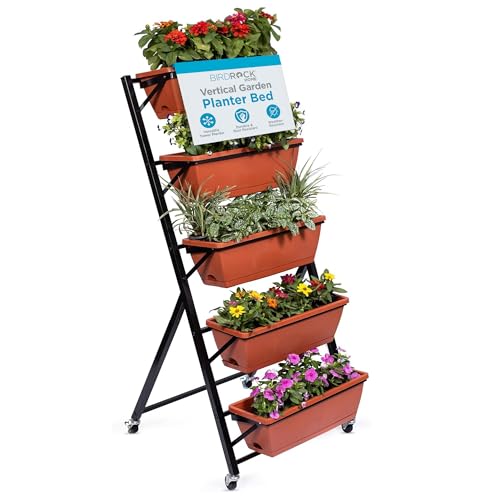
The BIRDROCK HOME 5-tier vertical garden combines metal construction with a compact, rolling frame. This design is well-suited for both indoor and outdoor use, offering a sturdy platform for herbs, flowers, and vegetables. Best for individuals seeking a robust, weather-resistant option or those who plan to move the garden between rooms or onto a patio. Limitation to consider: metal frames can be heavier and may require occasional protection from moisture to prevent rust in prolonged outdoor exposure.
Who it’s best for and why selected: Selected for its durable build and easy mobility. The rolling base and tiered arrangement maximize sunlight exposure while minimizing floor space usage.
Key features:
- Sturdy metal construction
- Five tiers with drainage on each level
- Ease of assembly and maintenance
Buying Guide: Key Considerations for Indoor Vertical Gardens
Space, lighting, water, and maintenance are the core factors when choosing an indoor vertical garden. Use the following quick questions to filter options.
- How much space do you have? If you live in a studio or small apartment, prioritize compact towers or 4–5 tier units with a small footprint.
- Do you need soil-free operation? Hydroponic systems reduce soil mess and water use, but require a power source and water management plan.
- Is lighting important for your setup? Systems with built-in LED grow lights save on additional equipment and stabilize year-round growth.
- What plants are you growing? Leafy greens and herbs thrive in compact towers; fruiting plants may require larger baskets or taller towers.
- Maintenance and cleaning: Look for modular, easy-to-clean layers and components to minimize algae buildup and simplify refilling.
- Portability: If you expect to rearrange space often, choose lightweight, movable towers with wheels or easy disassembly.
Choosing Between Water-Saving and High-Yield Designs
Hydroponic systems emphasize water efficiency and rapid growth, making them ideal for urban living. Tower designs with larger plant counts maximize yield but may require more careful watering management. Consider your goals—daily fresh greens, decorative greenery, or experimental gardening—and pick a model that aligns with your daily routine and space constraints.
Materials and Durability
Metal frames offer durability and a premium look, suitable for indoor-outdoor use, while plastic or ABS components can reduce weight and cost. When placing near moisture, ensure materials are corrosion-resistant and easy to clean to extend the life of the unit.
Technology and Automation
Systems with LCD controls, smart timers, and automatic watering reduce manual intervention. Check whether the setup requires Wi-Fi, power, or both, and plan electrical access accordingly. Consider how often you’ll need to replenish nutrients and manage reservoir maintenance.
Plant Range and Expansion
Look for the number of pods, pods size, and whether the system supports adding more layers or pods later. If you want a wider variety of crops, a modular design that supports expansion can be valuable.
FAQ
- Do vertical gardens require soil? Not necessarily. Many systems use hydroponics or soilless media to grow plants, which can reduce mess and water waste.
- Can I place a vertical garden in a small apartment? Yes. Look for compact footprints, lightweight frames, and built-in lighting to maximize growth without overwhelming space.
- Is maintenance difficult with tall towers? Modular designs and removable layers help with cleaning and planting. Regularly check drainage and clean reservoirs to prevent algae.
- What plants work best in vertical towers? Lettuce, spinach, herbs, peppers, and small fruiting plants can perform well, depending on the system’s lighting and basket size.
- Do I need a special electrical setup? Many systems require standard outlets and proper placement away from water. Some advanced models use Wi‑Fi and smart features for data monitoring.
- Are these gardens right for beginners? Yes, several models are designed with straightforward controls and guided planting in mind, though some familiarity with hydroponics helps.