Whether you’re growing succulents, bonsai, or potted flowers, pot mesh drainage screens help keep soil in place while promoting proper drainage. This guide highlights five top picks that are versatile, affordable, and easy to use for both indoor and outdoor planters. Each option suits different pot sizes and gardening needs, from compact 2-inch screens to larger 4-inch pads. Read on to find the best match for your plants and workspace.
Overview at a glance:
| Product | Best For | Size Range |
|---|---|---|
| GREGICH Bonsai Mesh | Small pots and bonsai; soil retention | 2–4 inch |
| LE TAUCI 2-Inch Pads | Indoor/outdoor planters; easy cleanup | 2 inch |
| LE TAUCI 4-Inch Pads | Larger pots; anti-slip design | 4 inch |
| shemist 2-Inch Screens | Replanting and soil retention | 2 inch |
| MAQIHAN Fiberglass Mesh | Observing pot bottom; lightweight reuse | 2 inch |
GREGICH Bonsai Mesh for Plant Pot Drainage Screen

The GREGICH mesh set comes in a practical assortment of 100 pieces across 2, 3, and 4 inch sizes. The dense 0.04 inch mesh holes help minimize soil loss, making it ideal for bonsai, succulents, and other pots with drainage holes. The material is a flexible polyester that resists corrosion and odors, ensuring long-lasting use. Best for gardeners who want a ready-made supply of screen inserts for various pot sizes and frequent repotting.
Who it’s best for: home gardeners who maintain multiple small to medium pots and want a single, versatile pack. The assortment reduces the need to stock separate sizes and supports quick replacements after repotting or soil refreshes.
Why selected: the broad size range covers common pot diameters, and the dense mesh improves soil retention without hindering drainage. This makes it a reliable all-in-one option for frequent pot maintenance.
Limitations: the pads are plastic-based and may lose some flexibility in very cold conditions. If you regularly work with very large pots, you’ll need additional pads beyond the 2–4 inch range.
Key features:
– Dense 0.04″ mesh prevents soil loss
– 100-piece assorted pack (2″, 3″, 4″)
– Polyester, corrosion-resistant, odor-free
LE TAUCI Plant Pot Hole Mesh Pads, 2-Inch Round

LE TAUCI’s 2-inch round mesh pads are designed to sit securely over drainage holes to prevent soil spill and keep planters tidy. The pads are lightweight and flexible, making them easy to install and reuse. They’re described as tear-proof and abrasion-resistant polyamide, ensuring shape and color retention over seasons. Suitable for indoor and outdoor planters, these pads provide dependable drainage while keeping soil contained.
Who it’s best for: gardeners seeking a compact, reusable solution for small pots, especially those who repot frequently or need a quick DIY fix for soil migration issues. The 2-inch size fits many standard bonsai and small flower pots.
Why selected: strong emphasis on soil retention and easy cleanup, with a durable construction designed for multiple seasons. The reusable nature reduces waste and ongoing replacement costs.
Limitations: the 2-inch size may be too small for larger pots, and some users may prefer foam or silicone alternatives for certain plant types. Ensure the pad thickness won’t obstruct drainage in very deep pots.
Key features:
– Prevents soil spill and leaks
– Durable, reusable polyamide
– Indoor/outdoor compatibility
LE TAUCI Plant Pot Hole Mesh Pads, 4-Inch Round
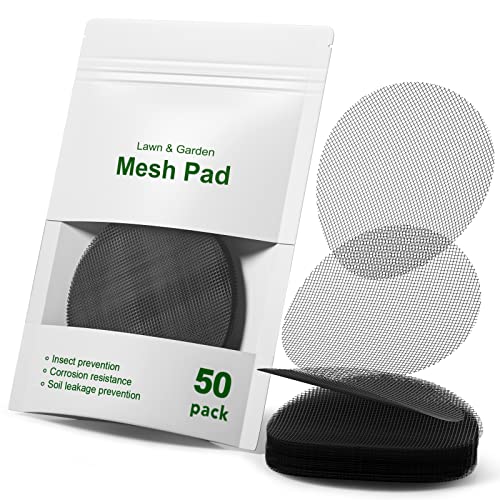
The 4-inch mesh pad from LE TAUCI is designed for larger planter pots. It features a drainage hole to prevent soil migration and an anti-slip property to keep the pad in place. This combination supports stable drainage while maintaining a tidy pot surface. The larger size makes it a strong choice for medium to big planters that still rely on bottom soil containment.
Who it’s best for: users with bigger pots or those who prefer a single, robust pad for larger planters. The anti-slip feature helps in windy outdoor settings or on slick planter surfaces.
Why selected: its large diameter addresses a common need for larger pots, reducing soil leakage risks and keeping planters neater during watering sessions.
Limitations: 4-inch pads may be unnecessary for very small pots and could require cutting for some plants. If you mostly grow tiny succulents, a smaller size may be more economical.
Key features:
– 4-inch diameter for larger pots
– Drainage hole to prevent soil loss
– Anti-slip design
shemist Plant Mesh Drainage Screens

The shemist mesh screens come as a 100-piece 2-inch set, crafted from durable 100% polyester. They’re designed to stop soil loss while allowing water to drain, which helps protect roots from rot. The fabric is wear-resistant and holds its shape across seasons, making them a solid choice for repotting projects and ongoing pot maintenance.
Who it’s best for: gardeners who frequently repot and want a dependable, reusable screen that’s easy to salvage and reposition during ongoing plant care. The 2-inch size is especially suitable for small to medium pots.
Why selected: emphasis on soil retention and root protection during drainage, coupled with a resilient polyester construction that sustains performance over time.
Limitations: polyester screens may not be as heat-resistant as some fiberglass options, and buyers with very large pots will need larger sizes or additional packs.
Key features:
– Stops soil loss and promotes healthy roots
– 100% polyester, wear-resistant
– Ideal for repotting and ongoing use
MAQIHAN 100 Plant Pots Hole Mesh Pad (2 Inch)

MAQIHAN offers a 100-pack of 2-inch hole mesh pads made from fiberglass material. The pads are reusable, easy to clean, and support proper drainage and ventilation. They’re transparent to allow inspection of soil moisture at the pot bottom and help prevent soil leaking from the pot’s drainage hole.
Who it’s best for: hobbyists and small-scale growers who want a long-lasting, reusable mesh solution for frequent repotting or infinite reuse across multiple pots at once.
Why selected: transparency for soil monitoring and a robust fiberglass composition that stands up to repeated use, while maintaining clear inspection visibility of the pot’s water drainage status.
Limitations: fiberglass pads can be stiffer than polyester options, which may affect fit in some irregular pot rims. Some users may prefer softer materials for delicate planters.
Key features:
– Durable fiberglass material
– Reusable and easy to clean
– Transparent to observe pot bottom
Buying Guide for Pot Mesh Drainage Screens
What size should you choose?
Start with your pot diameter. Common sizes are 2, 3, and 4 inches. For mixed collections, consider a multi-pack that covers multiple sizes. Larger pots benefit from 4-inch pads with anti-slip features, while small pots require 2-inch screens to prevent soil loss without crowding the drainage hole.
What material matters?
Polyester screens are flexible, corrosion-resistant, and budget-friendly. Fiberglass pads provide rigidity and long-term reuse but may feel stiffer. Polyamide or fiberglass blends often balance durability with ease of use. Choose based on climate, planter material, and how often you plan to repot.
How important is reusability?
Reusable screens reduce waste and ongoing costs. If you repot frequently or manage a large collection, prioritize pads described as reusable with durable materials. Inspect for odor resistance and stability after washing to ensure continued performance.
What about installation and fit?
Look for pads that sit flat over the drainage hole and resist slipping. Anti-slip features help in windy outdoor areas or on surfaces prone to movement. If your planter has a recessed lip or irregular shape, ensure the pad can cut or bend to fit without blocking drainage.
Indoor vs outdoor considerations?
Outdoor pots face weather exposure, so materials should resist UV and moisture. Indoor planters benefit from pads that keep soil contained while staying visually discreet. In damp spaces, choose pads that won’t mold or degrade quickly.
Replacement vs. repair mindset
Consider whether you prefer a one-and-done replacement or ongoing maintenance. If you expect frequent repotting, a larger pack with multiple sizes reduces the need for new purchases and ensures you always have a match on hand.
Frequently Asked Questions
- Do pot mesh screens really prevent soil from leaking? Yes. They cover the drainage hole to keep soil in while allowing water to drain away, reducing mess during watering and filtration.
- Can these screens be reused after cleaning? Most are designed for reuse; check the material for wear after washing to ensure they retain shape and effectiveness.
- Which size is best for bonsai pots? For small bonsai, 2-inch pads are usually sufficient, while larger bonsai pots may benefit from 3 or 4-inch screens with non-slip properties.
- Are fiberglass pads safe for edible herbs? Fiberglass is generally safe for indoor pots, but always follow manufacturer guidelines and wash before use with edible herbs to minimize residues from packaging.
- What is the main advantage of a dense mesh? A dense mesh reduces soil loss more effectively and supports healthier root zones by keeping soil where it belongs while maintaining drainage.
- Should I cut pads to fit odd-shaped pots? Some pads are easily cut with scissors for an exact fit. Ensure any cut edges don’t create sharp points that could damage roots.