If you need a reliable pneumatic refillable pressure sprayer, this guide highlights top options that balance durability, versatility, and safety. These sprayers are best for automotive maintenance, lubrication, rust protection, and small cleaning tasks. Choose a model with a robust canister, adjustable spray, and clear safety features. This list targets buyers seeking long-term, non-aerosol or high-pressure options for repeated use, professional shop workloads, or serious DIY projects. The following table compares five strong choices to help you decide quickly.
Overview of selected products
| Product | Canister Capacity | Best For | Key Benefit |
|---|---|---|---|
| FIRSTINFO A1638 (3rd Gen) | 620 ml | Automotive maintenance and lubrication | Thickened aluminum, two-way nozzle |
| FIRSTINFO A1638Y5 (3rd Gen) | 620 ml | Versatile spraying at multiple angles | Upside-down use, multiple nozzles |
| LAUCO Non Aerosol Pressure Sprayer (32 oz) | 32 oz | Professional shop use with non-aerosol design | Brass nozzle, steel body |
| JOUNJIP Refillable Non Aerosol Spray Bottle | 16 oz | Compact, portable lubrication and cleaning | Multiple tips, air valve core kit |
| FIRSTINFO A1639 (3rd Gen) | 1000 ml | Large-volume applications and heavy-duty tasks | Preset safety valve, universal valve stem |
FIRSTINFO A1638 (3rd Gen) Patented 140psi Sprayer
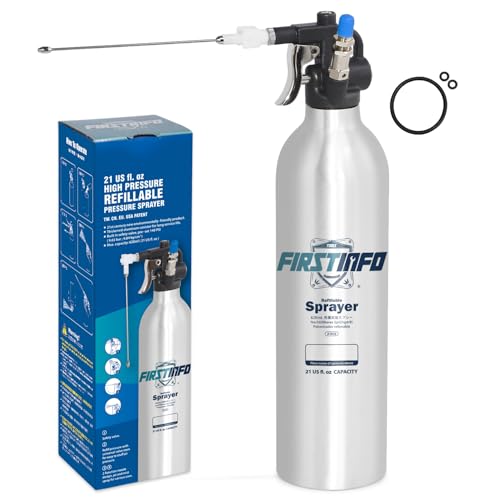
The FIRSTINFO A1638 is designed for automotive lubrication and anti-rust tasks. It uses a thickened aluminum canister with a 620 ml capacity and a maximum 140 psi pressure. The product includes a two-way nozzle with a threaded connection for easy replacement and switching between straight jet and wide mist spray. This model is best for users who need precise spot application and a broad spray option in one unit. A key limitation is its guidance against using air-only dusting, which means this is not a pure air-duster solution.
- Best for: Car maintenance, bike care, and rust protection projects that require both spot and wide-area spraying.
- Why selected: Durable metal canister, adjustable nozzle, and clear safety features.
- Limitation: Not advised for air-only dusting tasks; avoid corrosive or solvent-heavy fluids.
FIRSTINFO A1638Y5(3rd Gen) 140psi 620ml Refillable Sprayer

This variant adds multiple nozzle options and an upside-down capable design. It maintains the thickened aluminum canister (1.4 mm thickness) and a 620 ml capacity, expanding usability with five short nozzles and a two-way nozzle. It excels for users who spray in cramped spaces or need a wider range of nozzle sizes for different fluids. A caution is to follow the included guidelines about compatible fluids and not using with acetone or highly corrosive substances.
- Best for: Complex spraying tasks requiring multiple spray patterns and upside-down operation.
- Why selected: Enhanced nozzle versatility and upside-down operation improve accessibility.
- Limitation: Requires careful fluid selection to avoid damage to seals and nozzle threads.
LAUCO Non Aerosol Pressure Sprayer (32 oz)
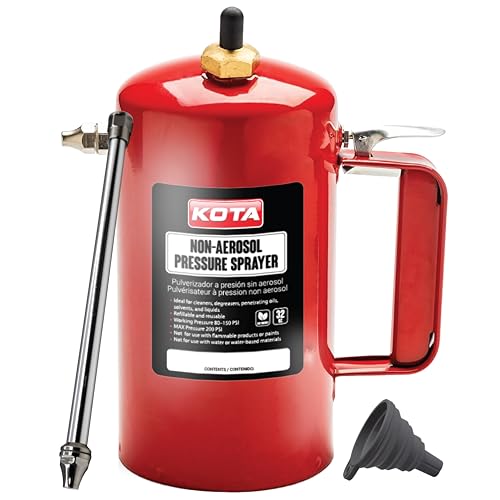
LAUCO’s non-aerosol design emphasizes a reusable steel canister with brass nozzles, suitable for non-flammable automotive fluids. This model is ideal for shop environments needing durability and reduced solvent propellants. Its non-aerosol format lowers waste and long-term cost, but it should not be used with paint-based products because of material compatibility.
- Best for: Professional garages and frequent-use scenarios with brake cleaners, degreasers, and lubricants.
- Why selected: Steel build and brass nozzle provide reliable spray under tough conditions.
- Limitation: Not compatible with paint products; ensure fluids are non-flammable and non-paint based.
JOUNJIP Refillable Non Aerosol Sprayer

JOUNJIP offers a compact 16 oz non-aerosol sprayer with multiple tips and a pressure relief valve. It is designed for lightweight lubrication, cleaners, and solvents. The kit includes three spray tips (tight, fine, jet), a set of extension tubes, replacement O-rings, and air valve cores. It is best for home garages and DIY projects where portability matters. A limitation is the relatively small capacity for high-volume tasks.
- Best for: Portable maintenance tasks, small-scale lubrication, and solvent cleaning on the go.
- Why selected: Complete tip set and air valve components improve adaptability and service life.
- Limitation: Smaller capacity compared to larger professional models.
FIRSTINFO A1639 (3rd Gen) 140psi 1000ml Sprayer

The A1639 model increases capacity to 1000 ml and uses a thickened aluminum canister with 140 psi preset safety. It is designed for high-demand spray tasks that require more fluid without constant re-filling. A universal valve stem allows easier pneumatic or manual refilling, and a safety preset helps prevent over-pressurization. This sprayer is best for heavy-duty blasting and longer spraying sessions, but its larger size may be less convenient for very tight spaces.
- Best for: Long sessions and large-volume spraying in automotive or workshop settings.
- Why selected: Higher capacity plus robust construction and safety features.
- Limitation: Heavier and bulkier than smaller models; may not fit in small spaces.
Buying Guide
What should you consider before buying a pneumatic refillable pressure sprayer?
Capacity vs. footprint: Larger tanks reduce refill frequency but may be harder to maneuver in tight spaces. For frequent spot spraying, a smaller 620 ml unit can be more convenient. If you need to spray for longer periods without stopping, consider a 1000 ml model.
Material and durability
Aluminum canisters offer light weight with good durability, while steel bodies with brass nozzles provide maximum resilience in shop environments. Choose based on your fluids and conditions. Non-aerosol designs reduce propellant waste and may be safer for certain liquids.
Spray options and nozzle versatility
Two-way or multi-nozzle setups allow you to switch between jet and wide-mist modes. Some models include accessories to adapt to odd angles or tight spaces. Look for threaded or easily replaceable nozzles to extend product life.
Safety and compatibility
check for a built-in safety valve, preset pressure limits, and compatibility with the fluids you intend to spray. Avoid acetone, strong acids, or alcohol-based liquids if the canister material is not rated for them.
Ease of refilling and maintenance
Universal valve stems or compatible air sources, plus accessible O-rings and seals, reduce maintenance downtime. A model that can be filled pneumatically or manually provides flexibility for varied environments.
What makes a sprayer a good value?
Durable construction, reliable spray patterns, and a design that minimizes waste and maintenance cost over time define good value. If you spray frequently, prioritize capacity, nozzle variety, and safety features over cheaper, low-capacity units.
FAQ
- Can these sprayers be used with water? Yes, many models are suitable for water or light lubricants. Verify compatibility for heavier or chemical fluids before use.
- Is a non-aerosol sprayer safer than an aerosol can? Non-aerosol sprayers reduce propellant exposure and waste, offering a safer alternative for repeated tasks.
- What is the typical maximum pressure for these sprayers? Most models operate around 80-140 psi, with some presets at 140 psi for consistent performance.
- Do these sprayers work upside down? Some models are designed for upside-down use, improving reach in cramped spaces; check product specifications.
- Can I refill from a standard air compressor? Many units support pneumatic refilling via a compressor or manual pumps; confirm compatibility with your setup.
- Are there tips to avoid leaks? Ensure O-rings are in place, threads are tightened correctly, and you use fluids within recommended specifications.