If you’re looking for a ground-level bird bath that stays stable, provides clear water, and attracts a variety of small birds, you’ve come to the right page. This guide highlights five low-ground options ideal for gardens, patios, and yards. Each option is evaluated for durability, ease of use, and suitability for different types of birds and climates. The buyer’s notes below indicate who benefits most from each product. A quick summary table after the intro helps you compare key points at a glance.
| Product | Material | Best For | ||
|---|---|---|---|---|
| TOWDREU Stone Bird Bath | Natural Solid Stone | Stable, long-lasting outdoor display | ≈ 5.8 lbs | Hand-carved, easy to rinse |
| Erva Ground Level Bird Bath | Black steel ring with green bowl | Low-maintenance ground setup | — | Made in USA, wide base for stability |
| BIRDS AND BEYOND Fiber Clay Bowl (Low-Profile) | Fiber clay | Lightweight, movable, versatile | ≈ 6.5 lbs | Ideal for flexible placement |
| Bakayoyo Ceramic Bird Bath | Ceramic | Decorative ground-level water source | — | Durable ceramic; good for stable, flat placement |
| Voltogar Ceramic Bird Bath | Ceramic with blue glaze | Garden decor with functional water | — | Flat bottom; can double as decor |
TOWDREU Stone Bird Bath
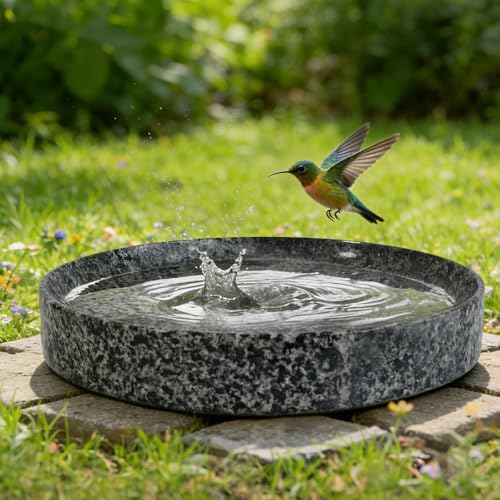
The TOWDREU Stone Bird Bath uses natural solid stone, making it a durable ground-level option for rustic or traditional garden styles. Best for buyers who want a heavy, stable bowl that resists tipping from wind or curious birds. The surface is hand-carved and polished, which provides a gentle surface for birds and easier cleaning. A potential limitation is the weight, which makes relocation harder once placed, so plan placement carefully.
Erva Ground Level Bird Bath

The Ground Level Bird Bath by Erva features a sturdy steel ring with a 14-inch diameter and a 1.25-inch water depth. It is best for gardeners who want a simple, durable ground bowl that’s easy to fill and clean. The powder-coated finish helps resist weathering, and the wide base improves stability on grass or decks. A caveat is that metal can get warm in sun, which may affect evaporation rates; avoid placing in direct afternoon sun for extended periods if water retention is a priority.
BIRDS AND BEYOND Fiber Clay (Low-Profile)

This Fiber Clay bowl is lightweight and portable, making it a flexible choice for seasonal repositioning. It’s described as easy to maneuver across the garden and suitable for low-profile setups. It’s not as heavy as stone or ceramic options, so it’s less stable in windy conditions. Best for buyers who want quick setup and multi-location use without heavy lifting.
Bakayoyo Ceramic Bird Bath

The Bakayoyo Ceramic Bird Bath blends green hues to blend with outdoor greenery. Its ceramic construction offers a balance between durability and aesthetics. Suitable for flat, stable placements on ground or tabletops. Potential limitation is fragility compared with stone or fiber clay; handle with care during relocation or seasonal changes.
Voltogar Ceramic Bird Bath

The Voltogar Ceramic Bird Bath combines a stylish blue glaze with a flat bottom for stable placement on the ground or a patio. It doubles as decor when not in use as a water source, which is attractive in multi-use garden spaces. The flat bottom helps with level positioning, but ceramic surfaces can be slippery if wet; consider adding a non-slip mat under the bowl to minimize movement on slick surfaces.
Buying Guide: Low Ground Bird Bath Essentials
Key factors to consider when choosing a low-ground bird bath include material, weight, stability, ease of cleaning, water depth, and climate suitability. Heavy options like natural stone offer durability and wind resistance but are harder to reposition. Lighter fiber clay and ceramic bowls are more versatile for seasonal changes but may require careful placement to avoid tipping in strong gusts. Flat-bottom designs improve ground stability, while bowls with shallow water reduce drowning risk for smaller species.
- Stability: If you have windy areas or active pets, prioritize heavier or wider-based options.
- Maintenance: Smooth, non-porous surfaces rinse easily and resist algae growth. Consider materials that tolerate your climate (e.g., stone in cold climates, fiber clay in temperate regions).
- Placement: Ground-level bowls should be placed away from heavy foot traffic and under partial shade to minimize evaporation and heat exposure.
- Water depth: A shallow 1–1.25 inch depth is often safer for small birds; deeper bowls attract a broader range but increase risk for tiny species.
- Multi-use potential: Ceramic and decorative bowls can double as garden accents when not in use.
Frequently Asked Questions
- What is the best material for a durable ground bird bath?
Stone and metal are typically the most durable for ground placement, with stone offering a natural look and metal providing wide stability. - How deep should water be in a ground bird bath?
1 to 1.25 inches is a common depth that works for many small birds without risking drowning. - Can I move my bird bath seasonally?
Yes, especially lightweight fiber clay and ceramic bowls. Heavier stone baths are best repositioned by careful planning. - Should I place a bird bath in sun or shade?
Partial shade helps reduce algae growth and evaporation, extending water freshness. - Do bird baths require maintenance?
Yes. Regular water changes and occasional scrubbing prevent algae and keep birds healthy. - Are low-ground bowls suitable for all climates?
Most are, but consider winter conditions. In colder areas, some materials should be sheltered or stored indoors during freezing temperatures.