Answering the question: which compact tractor rotary tiller is best for your small plot or garden? This guide highlights five compact, 3-point tillers designed for Category 1 tractors in the 15–35 HP range. Ideal buyers include home gardeners, small-farm owners, and landscapers who need deeper soil mixing without sacrificing maneuverability. The top picks balance width, depth, build quality, and ease of use to cover edges, cover tire tracks, and create a clod-free seedbed.
| Product | Working Width | Depth | |
|---|---|---|---|
| MechMaxx 42 in LRT42 | 42″ | up to 5″ | Small plots and edge coverage |
| MechMaxx 48 in LRT48 | 48″ | up to 5″ | Medium gardens needing even depth |
| Ag-Rite 48″ | 48″ | up to 6.89″ | Hobby farms and larger beds |
| MechMaxx 45 in LRT45 | 45″ | noted with 4″ offset capability | Edge coverage and tight spaces |
| DOPERFE 49″ | 49″ | up to 4.7″ | Flexible, lighter option for 20–30 HP tractors |
MechMaxx 42 Inch LRT42 Rotary Tiller
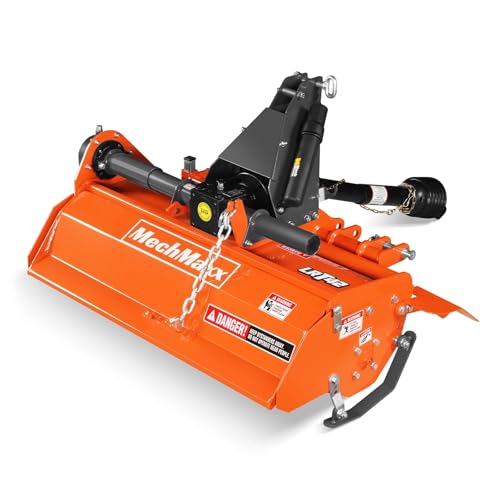
Features: 42″ working width suitable for small plots, manual offset up to 4 inches to the right, replaceable C-shaped steel tines capable of digging up to 5 inches, depth control via adjustable skid shoes. Best for gardeners needing precise edge tiling and compact maneuverability. Caution: depth may vary with soil moisture and compaction, which can affect tilling depth.
MechMaxx 48 Inch LRT48 Rotary Tiller

Features: 48″ working width with a cast iron gearbox and enclosed chain drive for smooth operation and durable life. Includes 4″ right-offset capability and a heavy-duty, oil-bath rotor system. Best for gardeners needing reliable, deeper tilling in wider beds. Caution: heavier build may require a larger-capacity tractor for optimal efficiency.
Ag-Rite 48″ Rotary Tiller

Features: 48″ working width, gear-driven transmission, 5″ maximum depth, designed for 20–35 HP tractors. Built for compact tractors with sturdy, tined soil churn. Best for hobby farms and large gardens needing consistent soil conditioning. Caution: 6.89″ maximum depth is achieved under ideal soil conditions; real-world depth may vary with soil composition.
DOPERFE 49″ Rotary Tiller

Features: 49″ working width, 5″ working depth, 540 RPM PTO, lightweight with replaceable L-shaped tines. Best for 20–30 HP Category 1 tractors seeking a versatile, easy-to-transport tiller. Caution: lighter construction can impact stability in very rocky soils; ensure proper tractor ballast for best performance.
Buying Guide
What to consider when choosing a compact tractor rotary tiller
- Tractor compatibility: Confirm Category 1 hitch compatibility and horsepower range (commonly 15–35 HP).
- Working width: Wider units till more area per pass but require a larger tractor and more clearance near obstacles.
- Depth capability: Deeper tilling is useful for root prep but may require soil conditioning and proper ballast.
- Drive system: Cast iron gearboxes and enclosed chain drives offer longevity; oil-bath systems reduce maintenance needs.
- Offset and edge coverage: Manual offset helps cover tire tracks and edge beds without reworking soil.
- Replaceable blades: Availability of replacement blades and ease of replacement affect long-term costs.
- Weight and maneuverability: Heavier tillers are more stable but harder to maneuver in tight spaces; balance with tractor size.
- Maintenance: Look for models with straightforward lubrication schedules and readily available replacement parts.
Frequently Asked Questions
- How deep can a 3-point rotary tiller till with a standard 540 RPM PTO?
Answer: Depth varies by model and soil; many tillers reach 4–6 inches in favorable conditions. - Is a larger tiller always better for my garden?
Answer: Not necessarily. Choose width based on bed size and tractor capability to avoid overloading the tractor. - Do I need any special PTO shaft for these tillers?
Answer: Most models include a PTO shaft; ensure your tractor has a compatible 540 RPM PTO and three-point hitch. - Can I use a compact tractor tiller for rocky soil?
Answer: Some models are designed to handle tougher soils, but rocky ground can cause blade wear and require slower operation. - What maintenance is essential for longevity?
Answer: Regular lubrication, replaceable blade maintenance, and checking the gearbox/chain drive alignment. - Which tiller is best for edge coverage?
Answer: Models with manual offset features (up to several inches) are better for edging and avoiding tire tracks.