If you’re looking for reliable plastic starter plant pots for seed starting, cuttings, and easy transplanting, these options are well-suited for home gardeners, urban growers, and classroom projects. Each pick focuses on drainage, durability, and easy handling to promote healthy root development. This guide highlights five strong choices and explains who each pot is best for, plus practical buying tips to compare sizes, drainage, and reuse potential.
| Product | Opening Diameter | Height | Bottom Diameter | Best For |
|---|---|---|---|---|
| OZOSHINE 40 PCS | 4 inches | 3.4 inches | 2.6 inches | Seed starting and succulents; durable and reusable |
| WandaQueen 30 Packs | 3.5/4/5 inches | Varies by size | Varies | Monitoring moisture visually; multiple sizes for varying plant stages |
| TDHDIKE 4″ (100 pcs) | 4 inches | 3.2 inches | 2.5 inches | Compact seed starting and cuttings; includes labels |
| JERIA 100-Pack | 4 inches | 3.3 inches | 2.7 inches | Bulk projects; easy stacking and labeling |
| Cidenbio 100 PCS | 4 inches | Varies | 2.8 inches | Reusable starter pots with clear labeling |
Note: All products include drainage holes to prevent waterlogging and support healthy root respiration. When choosing, consider required sizes for your plants, how you’ll label each pot, and how easily you can store unused pots between seasons.
OZOSHINE 40 Pcs Plant Nursery Pots

Opening diameter 4″, height 3.4″, bottom diameter 2.6″. Made from soft PP plastic that remains durable after pressure. Includes eight drainage holes per pot to promote drainage and gas exchange, reducing root rot. Best for seed starting, cuttings, and transplanting in home and office environments. The pots are flexible and reusable, supporting multiple seasons with proper cleaning.
- Best for: Seed starting and small transplant projects where durability and reusability matter.
- Why selected: Clear drainage design and sturdy feel make them suitable for busy planting cycles.
- Caution: Reuse requires washing to maintain integrity over time.
WandaQueen Clear Nursery Pots

Visualized clear pots showing soil moisture and plant growth details. Includes 30 pots in multiple sizes (3.5, 4, 5 inches) plus 20 labels. Weighs roughly 0.5 ounces in the largest size. Drainage holes at the bottom help prevent overwatering and root rot. Ideal for learners, classrooms, and enthusiasts who want to monitor growth closely.
- Best for: Visual monitoring of water levels and plant development; flexible growth stages.
- Why selected: Transparent design makes it easy to judge when to water or transplant.
- Caution: Slightly lighter than some others—handle carefully when full of soil.
TDHDIKE 4″ Seedling Pots
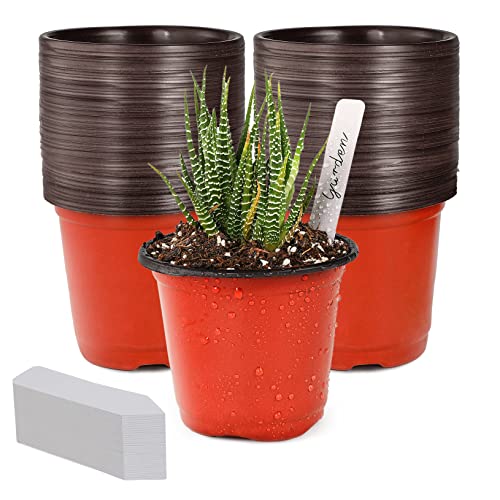
100-pack of 4″ nursery pots with 8 drainage holes each. Height 3.2″, bottom diameter 2.5″. Includes 100 plant labels for easy seedling identification. Lightweight, flexible, and reusable; designed for compact spaces and efficient stacking.
- Best for: Bulk seed-starting projects and educational use with labeling included.
- Why selected: Clear labeling support helps organize multiple varieties at once.
- Caution: Small drainage holes require careful watering to avoid overflow in very humid setups.
JERIA 100-Pack Nursery Pots

100 pots with a 4″ opening and 3.3″ height, bottom 2.7″. Comes with 100 plant labels for easy identification. The soft plastic design allows stacking and reuse after cleaning. Raised rim enhances handling and storage efficiency, while eight drainage holes support drainage and air circulation.
- Best for: Large starter projects and classrooms needing many identical pots.
- Why selected: Balanced size and included labels streamline seedling management.
- Caution: Ensure proper drying between uses to maximize reusability.
Cidenbio Nursery Pots 100 Pack

Includes 100 pots with labels for seedling tracking. Two size variations available, including 4-inch openings. Made from soft, thin plastic that’s lightweight and reusable after washing. Durable enough for multiple cycles, making them a practical greenhouse or home starter option.
- Best for: Reusable starter pots with labeling for ongoing projects.
- Why selected: Value-pack with labeling supports plant inventory management.
- Caution: The material is lightweight; handle with care to avoid deformation during transport.
Buying Guide: How to Choose Plastic Starter Plant Pots
Durability, size, drainage, and reuse potential influence how well a plastic starter pot serves your goals. Consider the scale of your project, whether you need multiple sizes, and how you will label and store pots between seasons.
What size should you choose?
For tiny seedlings and cuttings, 3.5–4 inch pots work well. If you plan to transplant later to larger pots or garden beds, having a mix of 3.5, 4, and 5 inch sizes can reduce transplant shock and give you a smoother workflow.
How important is drainage?
Drainage holes prevent waterlogged soil and promote healthy root growth. A typical 4 inch pot with 6–8 drainage holes is a safe baseline for most seed-starting scenarios.
Labeling and organization matters
Inclusive plant labels save time and prevent mix-ups. If your set does not include labels, consider separate, durable plant markers or a labeling system that resists moisture.
Reuse and storage considerations
Soft plastic pots that recover after pressure and are easily washed tend to last longer. Stackable designs save space in storage, which is especially helpful for classrooms or seasonal gardeners.
Material and environmental notes
Most options use lightweight PP plastic. Reusability depends on cleaning and handling. If avoiding single-use plastics is important, prioritize pots marketed as reusable and designed for multiple cycles.
FAQ
- Are these pots good for succulents? Yes. Their drainage and shallow depth suit succulents and cuttings well, reducing overwatering risk.
- Can I reuse these pots after transplanting? Often yes. Clean with mild soap and water, dry completely, and store flat to maintain shape.
- Which size is best for starting tomato seedlings? Start with 4–5 inch pots for deeper roots and a smoother transplant later.
- Will clear pots help me monitor moisture better? Yes. Clear pots make it easier to gauge soil moisture and root development at a glance.
- Are there any downsides to lightweight pots? They are easy to handle and store but can show wear if mishandled or overstacked during transport.