Yes, growing wheatgrass for profit is achievable with simple, scalable setups. This guide highlights five dependable kits and seed options that suit different spaces and goals—from compact countertop systems to hydroponic methods. This overview is ideal for aspiring home entrepreneurs, small-scale farmers, and busy households looking to juice, pet-safe cat grass, or sell fresh wheatgrass in local markets.
Summary table of selected products:
| Product | Best For | Notes |
|---|---|---|
| Organic Wheatgrass Growing Starter Kit – Grow & Juice Wheat Grass | Beginners; countertop growing | Includes organic seeds and reusable trays. |
| Nature Jims Sprouts Wheat Grass Seeds | Seed saver; fast sprouts | Non-GMO organic seeds; good for cat grass and sprouts. |
| Back to the Roots Organic Wheatgrass Seeds | Value-focused buyers | 2 lb bag; quick 5–7 day growth window. |
| Organic Wheatgrass Growing Kit by ZESTIGREENS | Modern, clean look; self-watering | Soilless grow mats; bamboo surround and lid. |
| Handy Pantry Wheatgrass Growing Kit (Hydroponic) | Hydroponic enthusiasts; fast results | Certified Organic; includes multiple trays and seeds. |
Organic Wheatgrass Growing Starter Kit

Best for beginners who want an all-in-one setup. This kit includes reusable trays, drip trays, and two pounds of organic, non-GMO wheatgrass seeds in pre-measured bags. It’s designed for countertop use with minimal mess, making it suitable for homes aiming to produce fresh juice or cat grass. A limitation is that harvest frequency depends on your planting schedule and growth conditions, which may affect daily output.
Who this is best for: home cooks and busy households seeking a straightforward entry into wheatgrass production with minimal setup and easy cleanup. Why selected: the kit combines seed, trays, and a simple watering approach in one package, reducing initial planning steps.
Nature Jims Sprouts Wheat Grass Seeds

Best for seed-first growers who want fast sprouts and versatile uses. These 100% USDA-certified organic, non-GMO seeds are ideal for planting wheatgrass, sprouts, or cat grass. They sprout in about six days, supporting quick harvests for juicing, salads, or pet diets. Caution: seed freshness and storage impact germination rate, so keep seeds sealed and cool between uses.
Back to the Roots Organic Wheatgrass Seeds

Best for value-focused buyers who want a bulk seed option. This 2-pound bag is USDA-certified organic, non-GMO, and easy to grow with a quick 5- to 7-day window. It supports steady output for juicing or pet grass. Limitation: bulk packaging may require more storage space and careful moisture control to prevent spoilage before use.
Organic Wheatgrass Growing Kit by ZESTIGREENS

Best for modern kitchens that favor a neat, self-watering system. This kit uses soilless grow mats and a bamboo surround with a black-out lid for tidy cultivation. It includes organic, non-GMO seeds and a germination-friendly setup. Caution: growth speed can vary with indoor light and humidity; ensure consistent light exposure for optimal results.
Handy Pantry Wheatgrass Growing Kit – Hydroponic
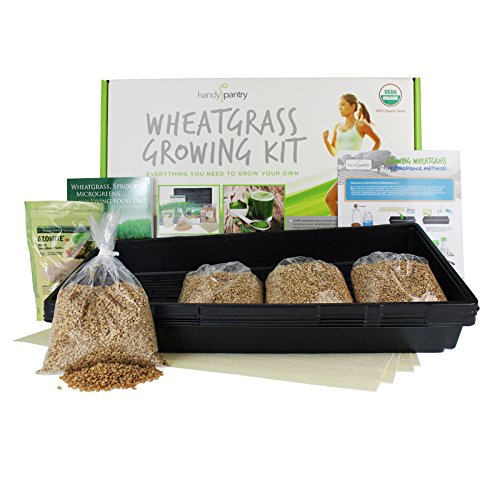
Best for hydroponic enthusiasts seeking fast, soil-free production. This kit includes two reusable growing trays, two drain trays, and four pounds of organic wheatgrass seed. It’s ideal for clean, upstairs setups or commercial-style microfarms in compact spaces. Limitation: hydroponic systems require electricity for pumps and monitoring to maximize growth consistency.
Buying Guide
What matters most when choosing a wheatgrass kit?
- Growing method: soil-based, soilless mats, or hydroponic. Your space and comfort with watering routines will guide this choice.
- Seed quality: organic, non-GMO seeds with good germination rates lead to quicker, more reliable harvests.
- System cleanliness: reusable trays and easy-to-clean components reduce mess and improve repeat harvests.
- Growth speed: some kits produce grass in as little as 5–7 days; others may require longer depending on lighting and moisture.
- Pet safety: if cat grass is a goal, verify seed suitability and ensure pets won’t access any treated materials.
Should you start with a kit or buy seeds separately?
- Kit approach: best for beginners who want a complete, easy setup with guided instructions.
- Seed-first approach: best for growers who want flexibility, larger batches, or to scale up production independently of a kit.
How to maximize profit with wheatgrass?
- Stagger plantings to maintain a steady harvest rhythm and consistent supply for juicing or selling.
- Invest in a clean, efficient setup to reduce waste and improve turnover between harvests.
- Offer fresh wheatgrass juice, smoothies, or cat grass as diversified products to increase revenue streams.
Care and safety considerations
- Store seeds in cool, dry conditions to preserve germination potential.
- Follow kit-specific instructions for watering, light, and temperature to prevent mold or spoilage.
- Keep growing areas out of reach of young children and pets if there are choking hazards or access concerns.
FAQ
- What is the typical harvest time for wheatgrass?
- Do these kits require soil?
- Is wheatgrass safe for pets?
- Can wheatgrass be sold commercially from home?
- What is the best seed quality to start with?
Most setups yield harvestable wheatgrass in about 5–10 days, depending on the method and light exposure.
Some kits are soil-based, while others use soilless mats or hydroponics. Choose based on your space and cleaning preference.
Yes, when using cat grass varieties and avoiding treated seeds; always monitor pets and consult a vet if unsure.
Yes, with proper sanitation, packaging, and local regulations followed. Plan for consistent harvest cycles to meet demand.
USDA Organic, non-GMO seeds with a good germination rate tend to perform best and support reliable harvests.