Answer: Red coral bells perennials offer vibrant foliage and seasonal color that thrives in a range of shade to sun conditions. This guide highlights five well-suited choices for American gardens, suitable for borders, containers, and woodland-inspired beds. Each option targets different growing conditions and buyer needs—from compact, shade-loving cultivars to drought-tolerant varieties. The quick reference table below helps you compare key traits at a glance.
| Product | Best For | Light | Size | Notes |
|---|---|---|---|---|
| Melting Fire Heuchera | Shaded borders, containers | Full sun to shade | 2nd year maturity | Vibrant red foliage |
| Forever Red Heuchera (Coral Bells) | Classic red foliage, low border impact | Full sun to partial shade | Approximately 7 inches tall | Hardy in zones 4–9 |
| Orange to Red Heuchera Live Plant | Container planting, shade garden | Shade to partial sun | 2.5 inch pot | Color-changing foliage |
| GARDENS ALIVE! Mixed Coral Bells | Dramatic color mix, starter garden | Partial shade | Dormant bare root | 5 plants per offer |
| Outsidepride Coral Bells Firefly Seeds | Low-maintenance, borders | Full sun to partial shade | Seed packets | Compact growth, long color |
Melting Fire Heuchera

Features include vibrant perennial foliage with red, burgundy, and merlot tones, sun-to-shade tolerance, and moisture-loving roots. This variety is best for gardeners seeking bold color in cooler, moister areas, and for those who want dependable year-round interest in woodland borders or shaded patios. It is drought-tolerant once established, but performs best with consistent moisture in well-drained soil. The plant is noted for its deep, saturated foliage that can anchor a shady bed and provide contrast against lighter greens and silvers.
Best for: Shade to part-sun borders, containers, and woodland garden edges where bold foliage is desired. This is a solid pick for gardeners who value dramatic leaf color as a year-round focal point.
Limitation: May require consistent moisture in hot, dry climates to prevent leaf scorch. Consider mulch and regular watering during extended dry spells.
Forever Red Heuchera

Features point to hardy foliage with deep red leaves and white flower spikes on 14″ stalks. It is suited for zones 4–9, with compact growth around 7″ tall. The cultivar provides strong color in spring and fall when temperatures are cooler. It performs best in well-draining soil and can be staged with other red-leaved perennials for a cohesive color scheme. The listing notes that plants arrive in seasonal condition, sometimes dormant in non-growing months, which may affect immediate planting in colder windows.
Best for: Garden beds where a reliable, compact red-leaved cultivar is desired as a backbone plant for color in spring and autumn.
Limitation: USDA zone restrictions apply; verify compatibility with local climate, especially in borderline zones.
Orange to Red Heuchera Live Plant
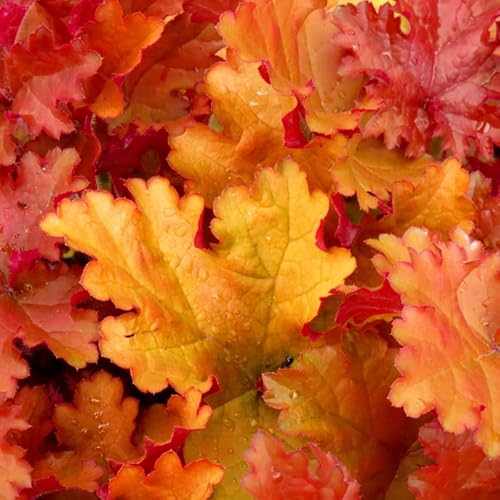
This live plant offers color-shifting foliage from orange to red and is well-suited for shade gardens and containers. It comes in a 2.5-inch pot and is described as well-rooted, making it ready for transplantation. Color variability can help create dynamic seasonal scenes, especially when paired with purple or lime-green companions. The plant is best in partial shade with evenly moist soil but can tolerate some sun in cooler climates.
Best for: Small-space planters and shade gardens where foliage color changes add seasonal interest.
Limitation: Color shift can be less predictable in very hot, sun-drenched locations; provide afternoon shade in such areas.
GARDENS ALIVE! Mixed Coral Bells

This offer contains five dormant bare-root coral bells designed to establish in a space of about 20–24 inches apart. They arrive in a ready-to-plant state and are suitable for a range of soils. The mix provides a spectrum of foliage hues, which can brighten beds that lack contrast. Bare-root plants often require careful planting and moisture management in the initial establishment phase.
Best for: New or expanding perennial borders where a quick, varied foliage palette is desired.
Limitation: Bare-root plants may need more careful handling and longer establishment time than potted specimens.
Outsidepride Coral Bells Firefly Seeds
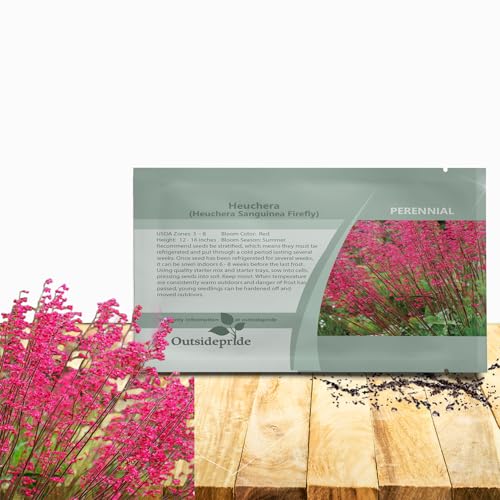
A seed option for growers who prefer starting from seed. The Firefly mix yields red, bell-shaped blooms in summer and keeps foliage color throughout seasons. It tolerates a wide range of climates (zones 3–8) and performs well in sun to partial shade, making it versatile for borders, containers, and rock gardens. Seed-grown plants may require more time to reach maturity, but can be a cost-effective route for larger landscapes.
Best for: Budget-conscious gardeners or those who enjoy starting perennials from seed for borders or ground covers.
Limitation: Seed-grown plants require longer to establish and bloom compared with buying established transplants.
Buying Guide
What factors matter most when choosing red coral bells?
- Light conditions: Many Heuchera tolerate a range, but foliage color and growth vigor can shift with sun exposure. Choose varieties suited for your garden’s light profile.
- Soil moisture and drainage: Most coral bells prefer evenly moist, well-drained soil. In drought-prone areas, ensure consistent watering or select drought-tolerant cultivars once established.
- Growth habit and size: Consider ultimate height and spread to plan borders, containers, and ground covers. Compact varieties suit small spaces, while larger cultivars create impact in borders.
- Cold hardiness: Check USDA zones to determine if a cultivar will survive winter in your region. Some options are hardy across a broad range; others have narrow zones.
- Color stability: Foliage color can vary with temperature and light. Some cultivars retain color in heat, while others deepen in cooler periods.
How to plant and care for red coral bells
- Plant in well-drained soil with organic matter; avoid waterlogged sites.
- Mulch lightly to retain moisture and suppress weeds.
- Water regularly during establishment; adjust based on weather and soil moisture.
- Fertilize sparingly; excessive fertilizer can heighten leaf growth at the expense of flowering.
- Group plants for visual impact or mix with hostas, ferns, or purple-leaf selections for contrast.
Common questions
- Are red coral bells deer-resistant? Many Heuchera varieties are less palatable to deer, but no plant is completely deer-proof in all regions.
- Do coral bells require full sun? Most perform well in partial shade; some tolerate full sun if soil remains consistently moist.
- When do they bloom? Heuchera typically produces bell-shaped flowers in late spring to summer, depending on the cultivar and climate.
- Can they be divided? Some Heuchera tolerate division, especially when established; this helps rejuvenate older plants.
Frequently asked questions
- What is the best red coral bells for shade? The Melting Fire and Forever Red cultivars are strong candidates for shade to partial shade with bold foliage color.
- Are seeds a good option for red coral bells? Seed propagation is possible (as with Outsidepride Firefly Seeds), but transplants from established plants often establish faster and show true color sooner.
- Can I grow coral bells in containers? Yes, most varieties perform well in containers with regular watering and adequate drainage.
- Which varieties pair best with purple foliage? Deep purple Heuchera or purple leaved perennials provide striking contrast with red foliage.
- Do red coral bells attract hummingbirds? Some Heuchera species do attract hummingbirds with their nectar-rich blooms.
In sum, selecting red coral bells depends on light, moisture, zone, and whether you want immediate impact or long-term color development. The five highlighted options provide a spectrum of options—from seed-grown trials to established transplants—suited for a variety of American garden styles and climates. Use the buying guide as a quick decision aid to pair plant choice with your landscape goals.