Looking for a lawn mower pull trailer that boosts yard work efficiency and reduces trips back and forth? This guide highlights five versatile trailers designed to work with tractors, lawnmowers, ATVs, and UTVs. It helps buyers choose based on capacity, build, and compatibility, with notes on who each trailer suits best and practical limitations to consider before purchasing.
| Product | Capacity | Volume | Best For |
|---|---|---|---|
| VEVOR 10 Cu.Ft. & 500lbs Trailer | 500 lbs | 10 cu ft | Small to mid-sized yards; light debris and soil |
| VEVOR 15 Cu.Ft. & 1500lbs Trailer | 1500 lbs | 15 cu ft | Heavy hauling; large cleanups |
| VEVOR 7Cu.Ft. & 1200lbs Trailer | 1200 lbs | 7 cu ft | Heavy items in tight spaces; versatile unload |
| YITAMOTOR 20 Cu.Ft. & 500lbs Trailer | 500 lbs | 20 cu ft | Bulk yard waste; extended hauling |
| Garvee 15 Cu.Ft. & 750lbs Trailer | 750 lbs | 15 cu ft | Balanced capacity and durability |
VEVOR 10 Cu.Ft. & 500lbs ATV Trailer Dump Cart
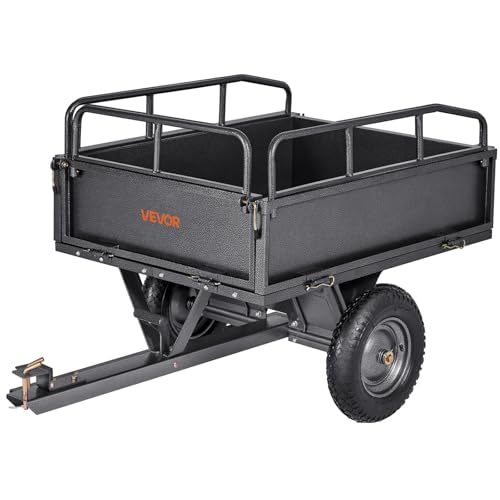
The VEVOR 10 Cu.Ft. trailer is a compact, heavy-duty option designed for light to medium yard tasks. It features a 0.47″/12mm hitch pin for broad compatibility with tractors, ATVs, UTVs, and lawn mowers. The 500-pound capacity and 10 cubic feet of space support garden waste, soil, and smaller loads with ease. The three-sided guard rail design helps secure loads during transport, reducing trips and time on the job. This trailer is best for small to mid-sized properties where frequent trips are minimized but payloads remain manageable.
Who it’s best for: homeowners with smaller yards or urban lots needing a simple, reliable trailer that pairs well with common yard equipment. Why selected: lightweight connection with broad compatibility and a reinforced, durable build for everyday hauling. Caution: the 500-pound limit may limit larger debris or soil loads on very demanding days.
VEVOR ATV UTV Trailer Tow Behind Dump Cart, 1500lbs

This larger VEVOR model delivers a 1500-pound capacity across 15 cubic feet, ideal for heavy loads and big cleanup jobs. It emphasizes universal connection to tractors, lawnmowers, ATVs, and UTVs—no special tools required. Enhanced structural elements include a stronger frame and reinforced sides to minimize deformation under heavy use. The trailer proves practical for bulk materials like soil, mulch, and sizeable debris. Best for: property owners with frequent heavy-haul needs and existing compatible towing equipment. Caution: the higher capacity requires secure hitching and proper ballast on steeper terrain.
VEVOR 1200lbs 7Cu.Ft Garden Dump Cart

This 7 cubic foot trailer handles up to 1,200 pounds and includes a 2-in-1 convertible handle for hand-pulling or vehicle towing. Its all-terrain wheels enable operation across varied ground conditions, making it a flexible choice for mixed landscapes. Quick release dumping and a 180-degree adjustable handle boost efficiency during unloads. Best for: users who need a mid-sized capacity with strong dump features and adaptable operation. Caution: smaller cargo space means more trips for very bulky loads.
Garvee 750 LBS Utility Trailer

The Garvee 750 LBS utility trailer offers a balanced combination of load capacity and durability with 15 cubic feet of hauling space. Its 0.5-inch-thick side plates and reinforced construction support up to 750 pounds, while a universal hitch accommodates tractors, lawnmowers, ATVs, and UTVs. The three-sided rail design helps secure materials such as soil, wood, and yard waste. Best for: buyers who want a robust, mid-to-large capacity trailer that remains easy to attach to common lawn equipment. Caution: ensure load is evenly distributed to prevent tipping on uneven terrain.
Buying Guide
What payload capacity do you actually need?
Consider the typical load you haul. For routine grass clippings, soil, and small debris, a trailer in the 500–750 lb range may suffice. For larger cleanup jobs or fencing materials, a 1000–1500 lb trailer provides more flexibility without requiring frequent trips.
How important is overall volume vs. weight capacity?
Volume determines how much material fits per trip; weight capacity limits how heavy the load can be. Some trailers offer high volume with modest weight limits, while others maximize weight at the expense of space. Choose based on the dominant material you haul—soil and mulch favor higher volume; rocks and concrete waste favor higher weight capacity.
What hitch compatibility matters most?
Universal hitch compatibility simplifies setup with existing equipment. Look for a trailer that uses a standard hitch pin or a simple connection method compatible with your tractor, mower, ATV, or UTV. A straightforward connection reduces setup time and compatibility headaches on job sites.
What terrain and operating conditions will you face?
Consider wheel type and ground clearance. All-terrain wheels improve stability on uneven ground, while larger wheels help in soft soil or grass. If you work on slopes, ensure the trailer has secure side rails and a balanced weight distribution to minimize tipping risk.
Is removable sides or dump capability important?
Removable sides simplify loading and unloading, especially in tight spaces. A dump mechanism speeds up material release, saving time on large projects. If you transport bulk materials often, prioritize a model with reliable dumping and side configurations.
Durability vs. budget
Sturdy steel construction and reinforced frames extend lifespan and reduce maintenance. While heavier-duty models tend to cost more, they often offer improved longevity with fewer deformations when hauling dense loads like soil or wood.
FAQ
- What is the typical use for a lawn mower pull trailer? They are used to haul soil, mulch, yard waste, wood, and tools, helping reduce trips and improve yard-work efficiency.
- Can these trailers attach to riding mowers? Yes, many models feature universal hitch compatibility designed for riding mowers, ATVs, UTVs, and tractors.
- Do all trailers have dump functions? Not all, but several options include dump mechanisms or easy unloading features to speed up tasks.
- What should I check before buying? Check payload capacity, volume, hitch compatibility, wheel type, and whether side rails or dump functions meet your loading needs.
- Are these trailers suitable for steep or uneven terrain? They can be, but ensure proper weight distribution, secure hitching, and appropriate wheel design for the terrain to avoid tipping.