Find the right Venus Fly Trap supplies to support thriving carnivorous plants. This guide highlights reliable soil blends and feeding options suited to growers at different levels—from beginners to seasoned enthusiasts. Best for: beginners seeking safe, easy-to-use media; intermediate buyers needing reliable moisture retention and drainage; and advanced growers aiming for professional-grade soil mixes.
Summary table of selected products:
| Product | Best For | ||
|---|---|---|---|
| Gardenera Sphagnum Moss Potting Mix | Soil Mix | 75% sphagnum moss for high moisture retention | Delicate roots and moisture-loving species |
| Kapecute Carnivorous Plant Soil Mix | Soil Mix | Well-balanced peat and perlite with handpicked debris | Clean, natural, ready-to-use media |
| Perfect Plants Carnivorous Plant Soil | Soil Mix | Organic, moisture-retentive for long-term use | All carnivorous types incl. Venus Fly Traps |
| Omitgoter Premium Carnivorous Plant Soil | Soil Mix | High drainage and breathable structure | Robust root health and low-nutrient environment |
| Orchid Gene Venus Flytrap Solid Gel Food | Plant Food | Solid gel that mimics prey for natural feeding signaling | Convenient, mess-free feeding |
Gardenera Sphagnum Moss Potting Mix For Carnivorous Plants

Gardenera’s Sphagnum Moss Potting Mix blends 75% New Zealand sphagnum moss with 25% organic perlite. This formulation targets carnivorous plants such as Venus Fly Traps, Pitcher Plants, Sundews, and Sarracenia, offering a low-nutrient, airy, and moisture-retentive environment. Best for: growers who want a ready-to-use moss-heavy medium that supports delicate root systems and reduces watering frequency. Limitation: some users may require additional perlite or peat adjustments for very large plants or unique pot sizes.
Kapecute Carnivorous Plant Soil Mix 2 Qts

Kapecute’s 2-quart soil mix blends peat moss and perlite with handpicked sphagnum debris and dust-free perlite. It prioritizes water retention from peat and drainage from perlite, creating a balanced medium suitable for Venus Fly Traps, Pitcher Plants, and Sundews. Best for: buyers seeking a clean, natural media with careful sorting to minimize impurities. Caution: check pot size to ensure the compressed mix expands adequately when watered.
Perfect Plants Carnivorous Plant Soil (4 Qts)
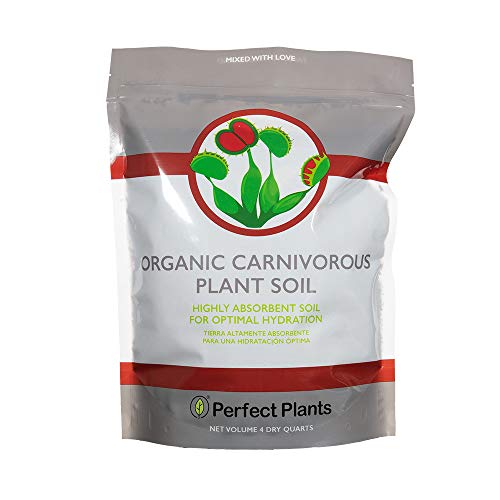
Perfect Plants offers an organic premium mix designed for all carnivorous plants, emphasizing ideal acidity and excellent water management. The medium supports long-term growth by maintaining moisture levels while avoiding over-nutrition. Best for: growers wanting a USA-mixed, professionally prepared substrate. Limitation: described as organic with consistent long-term enrichment, but exact nutrient levels are not disclosed.
HiThrive 4oz Carnivorous Plant Food

HiThrive’s 4oz carnivorous plant food provides a liquid-like feeding supplement designed to boost growth through macronutrients and essential nutrients. It acts as a soil conditioner to improve water and nutrient absorption in loamy or water-repellent media. Best for: users who want a soluble option or a feeding regimen alongside their soil. Caution: data describes a liquid feeding mix; ensure compatibility with your current soil type to avoid overfertilization.
HiThrive 4oz Carnivorous Plant Spray

This spray forms a mist that nourishes carnivorous plants with macronutrients for vigorous growth. It also helps to condition soil, promoting easier water and nutrient absorption. Best for: gardeners who prefer a spray-on feeding approach rather than solid media additives. Caution: ensure even coverage to avoid localized over-fertilization.
Buying Guide: Key Considerations For Venus Fly Trap Supplies
- Soil composition: Choose media with low nutrients and good drainage. Venus Fly Traps prefer bog-like, moisture-retentive environments without heavy fertilizers.
- Moisture management: Look for blends that retain sufficient moisture without becoming waterlogged. Regular feeding should align with plant growth stages.
- Moisture retention vs. drainage: Balanced mixes combine sphagnum moss, peat, and perlite to achieve both properties; avoid mixes that retain too much water or drain too quickly.
- Purity and cleanliness: Handpicked debris and dust-free perlite reduce root irritation and help seedlings establish well.
- Feeding approach: Gel foods offer mess-free options; liquid sprays provide quick access to nutrients but may require careful application to avoid overfeeding.
- Plant type compatibility: Some mixes are marketed for all carnivorous plants, while others target Venus Fly Traps specifically. Choose based on your plant collection.
- Availability and storage: Consider packaging size and shelf life for ongoing care. Sphagnum moss blends can dry out if not stored properly.
Frequently Asked Questions
- What soil is best for a Venus Fly Trap?
A low-nutrient, well-drained medium such as peat-based mixes with perlite or sphagnum moss is typically best. Avoid rich potting soils with high fertilizer content.
- How often should I water Venus Fly Traps in soil mixes?
Keep the root zone consistently moist but not waterlogged. Adjust watering based on humidity, pot size, and plant growth stage.
- Is solid gel food better than liquid feeding for Venus Fly Traps?
Solid gel foods can mimic prey and are mess-free, while liquid sprays may be easier for frequent feeding. Choose based on your maintenance preference and plant response.
- Can I reuse soil for multiple seasons?
Some mixes are designed for long-term use, but monitor for signs of compacting or nutrient buildup. Refresh media when growth slows or plants show stress.
- How do I know if my Venus Fly Trap’s soil needs salt or mineral-free water?
Use distilled or rainwater to avoid minerals that can accumulate and harm sensitive roots.
- Should I mix different soil brands?
Mixing can tailor texture and drainage, but ensure the combined media remains low in nutrients and free of contaminants.