The best 13-watt LED grow lights deliver compact, energy-efficient options for starting seeds, maintaining herbs, or supporting small indoor gardens. This article highlights five suitable picks with different spectrum styles, power levels, and features. It is ideal for small spaces, home gardeners, and beginners who want reliable, low-energy lighting to supplement natural light.
| Product | Best For | Why Picked |
|---|---|---|
| SunBlaster SL0900151 | All-year indoor growing | Includes four 13W CFL bulbs that mimic daylight and provide 900 lumens per bulb. |
| Briignite A19 11W (2-Pack) | Energy savings & full spectrum | Full spectrum and 1000 lm, low wattage for strong results. |
| SANSI 10W Grow Light | High efficiency & even coverage | Full spectrum with secondary optical design for better distribution. |
| GooingTop 6000K Clip Light | Flexible placement | 10 Red + 74 White LEDs, adjustable gooseneck and timer. |
| LEOTER 80 LED Grow Light | Versatile spectrum options | Multiple modes, 10 dimming levels, and timer for auto operation. |
SunBlaster SL0900151 13 Watt Indoor Grow Light Set

Best for year-round indoor growing in small spaces. The set includes four 13W CFL bulbs rated at 6,400K for a daylight-like spectrum. Each bulb delivers about 900 lumens, providing adequate brightness for seedlings and compact indoor pots. This option is well suited for gardeners who want a simple, plug-and-play light source with low energy use.
- What’s included: Four 13W CFL bulbs at 6,400K.
- Best for: Year-round indoor growth, seed starting, and small herb gardens.
- Limitation: CFLs generally have shorter lifespans than LED alternatives, and color tuning is fixed at 6,400K.
Briignite A19 Full Spectrum Grow Light Bulbs (11W, 2-Pack)

Best for energy-efficient full-spectrum plant support at all growth stages. The A19 bulbs emulate natural sunlight with a full spectrum that includes red and blue channels. Each bulb outputs about 1000 lumens while consuming 11 watts, offering substantial output with low electricity use. Suitable for tomatoes, leafy greens, and herbs, especially in compact setups.
- Best for: Small indoor gardens needing full-spectrum lighting with low energy use.
- Why chosen: High brightness at low wattage, broad spectrum coverage.
- Limitation: Not a dedicated 13W unit; intended as an 11W option in two-pack.
SANSI 10W Full Spectrum LED Grow Bulb

Best for efficient, even-light distribution with a compact form factor. This 10W bulb uses a secondary optical design to improve light distribution and PPFD, making it capable of supporting diverse plant stages when combined with larger setups. It uses a ceramic heat-sink design for reliability and a longer lifespan in typical indoor environments.
- Best for: Home growers seeking reliable, low-profile full-spectrum lighting.
- Why chosen: High light efficiency and improved distribution with long-life potential.
- Limitation: It is a 10W bulb, not strictly 13W, which may require multiple units for larger areas.
GooingTop 6000K Clip Grow Light
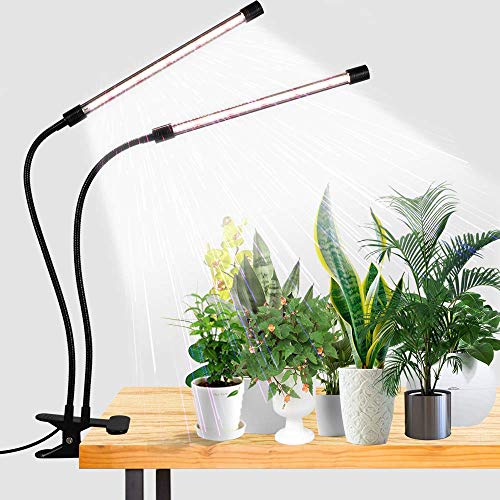
Best for flexible placement and targeted lighting. This clip-on lamp combines a 6000K white light with a mix of red LEDs. It includes a timer with multiple presets (4H, 8H, 12H) and a USB or AC power option, making it convenient for desks, shelves, or small greenhouses. Suitable for mature seedlings or herbs needing precise daily photoperiods.
- Best for: Flexible, space-saving lighting with timer automation.
- Why chosen: Clip-on design and adjustable gooseneck for precise light angles.
- Limitation: The light spectrum is primarily blue/white; may require complementary reds for flowering.
LEOTER Grow Light With 80 LEDs
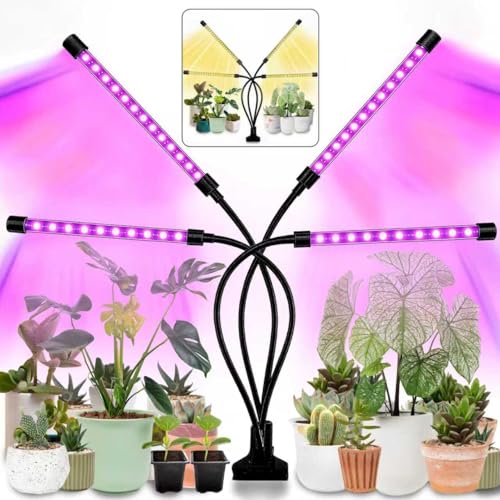
Best for versatile spectrum control and multi-mode operation. The LEOTER light uses 80 LEDs with 32 red, 12 blue, and 36 full-spectrum diodes. It offers 3 switch modes and 10 dimmable levels, letting growers tailor intensity and spectral balance for various growth stages. An adjustable gooseneck and timer enable hands-free operation for busy households or offices.
- Best for: Growers seeking flexible spectral options and numerous brightness levels.
- Why chosen: Multiple spectrum channels and significant dimming range for different plant needs.
- Limitation: High-end features may be more than needed for very small setups.
Buying Guide: How To Choose The Right 13-Watt Style For You
- What spectrum do plants need at different stages? Seedlings generally prefer blue-rich light, while flowering and fruiting benefit from red-rich light. Look for products that provide full spectrum or a mix that suits your plant types.
- How much space do you light? For very small setups, compact clip-on or bulb-based options work well. Larger tables or shelves may require multiple bulbs or panels to achieve even coverage.
- What is your energy budget? LEDs typically provide the best efficiency. Compare lumens, wattage, and so-called PAR or PPF values to estimate actual plant-usable light per watt.
- Is automation important? Timers and auto-on features help maintain consistent photoperiods, especially when you’re away from home or working full-time.
- What about ease of use and installation? Clip-ons, plug-and-play bulbs, and simple screw-in bulbs are ideal for beginners. Complex fixtures may offer advanced customization but could require more setup.
- Are there any practical limits? Some 13W-rated options are part of larger kits or 2-pack bundles. If you need broader coverage, consider combining two or more units while ensuring you don’t oversaturate plants in one area.
Frequently Asked Questions
- What does 13W LED grow light mean for plant growth? It generally indicates a lower energy draw with a modest light output. For larger operations, multiple units or higher-wattage options may be necessary.
- Can I use a 13W light for flowering plants? Some 13W or comparable bulbs provide broad-spectrum light that can support vegetative growth, but flowering often benefits from red-rich spectrum and higher light intensity.
- Is LED better than CFL for grow lights? LEDs typically offer longer life, more consistent spectra, lower heat, and greater energy efficiency than CFLs, though selection depends on your setup and budget.
- Do these products work with standard light sockets? Many are designed as A19 or BR30 bulbs with E26 bases, making them compatible with common household fixtures and lamps.
- Should I mix different brands or types? Mixing different spectrum sources can extend coverage, but ensure the total light intensity and photoperiod are appropriate for your plants.
- How many lights do I need for a small herb garden? Start with 1–2 units for a compact herb setup, and add more if you see stretched stems or slow growth, especially during low natural light seasons.