Getting reliable pool water results starts with high-quality test kit reagents. This guide highlights five dependable reagent sets and refill kits designed for spa and swimming pool maintenance. Each option is selected for clear, objective results, suitability for common residential setups, and straightforward interpretation. The top picks are best for homeowners who test weekly, pool operators managing multiple locations, and hobbyists looking for easy-to-use refills. Use this guide to compare compatibility, chemistry coverage, and practical limits for your specific pool or spa needs.
| Product | Best For | Key Benefit |
|---|---|---|
| Poolmaster 23227 Replacement Indicator Solutions | Homeowners who test five factors | Five-factor coverage with ready-to-use solutions |
| Poolmaster 22260 5-Way Kit | All-in-one classic testing | Clear-view test block and color matching |
| Taylor K2005 High Range Kit | High-range chlorine and advanced needs | High Range capability for chlorine |
| Taylor Pool Water Test Kit (Complete) | Versatile, broad screening | Comprehensive checks for chlorine, pH, alkalinity |
| Lupo 3-in-1 Reagents (RB-01-US) | Refillable 3-parameter testing | 3-in-1 reagents for quick testing |
Poolmaster 23227 Replacement Indicator Solutions #1-#5

What it includes and tests it covers: This set provides 1 oz. solutions for #1-#3 and 1/2 oz. solutions for #4-#5, designed for five key water factors: Chlorine, Bromine, pH, Acid Demand, and Total Alkalinity. It is intended for maintaining balanced pool or spa water chemistry. The kit is a practical choice for households that rely on a single, compact source of reagents to run routine checks without buying multiple separate bottles. It’s best for homeowners who want a straightforward five-parameter solution in one package.
Best for: Homeowners who test five factors regularly and prefer a compact, all-in-one reagent set. Better for: small to mid-size pools where five-parameter testing covers primary needs. Choose this if: you want to avoid managing multiple reagent types or separate test liquids. Caution: The note about not interchanging Phenol Red (#2) should be observed to prevent inaccurate readings.
Why selected: It matches the core five-parameter testing framework many pools require, enabling consistent color-based readings with included solutions. The small-bottle format supports convenient testing without large, heavy containers.
Taylor Replacement Reagent Refill Kits — Basic Refill

What it includes and tests it covers: The basic refill kit comprises 2 oz. bottles of R-0001, R-0002, R-0004 and is designed to help prevent corrosion while maintaining essential pool chemistry parameters. This kit is typically used to replenish key reagents in Taylor testing systems, ensuring ongoing capacity to monitor chlorine, pH, alkalinity, and related factors when paired with the appropriate test blocks and instructions.
Best for: Pool owners using Taylor K2000-series or similar test blocks who need ongoing replenishment to maintain accurate readings. Better for: those who track corrosion potential and want a dedicated corrosion-prevention refill. Choose this if: you rely on Taylor reagents and want a straightforward replacement kit. Caution: Compatibility depends on your current Taylor kit model; verify that R-0001, R-0002, and R-0004 suits your system before purchase.
Why selected: It provides a simple, consistent refill path for common Taylor kits, supporting stable chemical testing over time. The 2 oz. bottle size is practical for moderate usage without frequent replacements.
WWD POOL Swimming Pool Spa Water Chemistry Test Kit (Refill)

What it includes and tests it covers: This refill focuses on the two standard testing solutions used to measure chlorine, bromine, and pH in pools and spas. It includes a 1/2 oz bottle of OTO Chlorine Test Solution and a 1/2 oz bottle of Phenol Red pH Test Solution. This kit is widely used to maintain baseline chlorine and pH testing with established colorimetric methods.
Best for: Pool owners who need to replenish standard chlorine and pH testing reagents specifically. Better for: users who follow traditional colorimetric testing workflows and want a compact refill. Choose this if: you primarily test with the classic OTO and Phenol Red reagents and require quick replenishment. Limitation: It covers essential tests but does not broaden parameter coverage beyond chlorine, bromine, and pH featured in this refill.
Why selected: It provides a compact, targeted refill option for widely used chlorine and pH test methods, ensuring continuity in routine testing without purchasing larger, multi-parameter kits.
Poolmaster 22260 5-Way Kit with Case
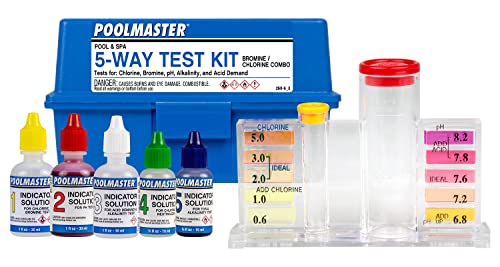
What it includes and tests it covers: This all-in-one kit tests for Chlorine, Bromine, pH, Acid Demand, and Total Alkalinity. It features a clear-view test block with integrated color chips for accurate color matching and includes 1 oz. solutions of #1-#3 and 1/2 oz. solutions of #4-#5. Note that #2 Phenol Red is not interchangeable with Phenol Red, so separate handling of that reagent is required.
Best for: Home pools or spas that want an integrated, easy-to-read testing experience with a built-in reference. Better for: situations where color matching accuracy is important due to the included color chips. Choose this if: you value a dedicated test block with a visual reference. Caution: Avoid misidentifying Phenol Red components; verify reagent numbers before use.
Why selected: This kit’s integrated color-matching system helps users interpret results quickly and consistently, supporting routine maintenance with minimal confusion. The included multi-parameter coverage aligns with common residential testing needs.
Taylor K2005 High Range Chlorine and Alkalinity Kit
What it includes and tests it covers: The K2005 High Range kit is designed for high-range chlorine testing and related alkalinity and pH assessment. It uses .75 oz reagent bottles and focuses on facilitating accurate results in pools with higher chlorine demand or challenging water conditions. This kit is commonly preferred by users who require broader chlorine range and robust test management for larger or heavily used pools.
Best for: Pools with higher chlorine fluctuations or advanced testing needs. Better for: users who regularly test high-range chlorine and seek precise readings. Choose this if: you regularly encounter high free chlorine levels or need extended range for accurate interpretation. Caution: It focuses on chlorine-related measurements; ensure you also monitor pH and alkalinity via complementary tests as needed.
Why selected: The high-range capability helps avoid saturation issues in readings for active pools, improving decision-making when adjusting sanitizers and balancing chemicals.
Taylor Pool Water Test Kit (Complete)

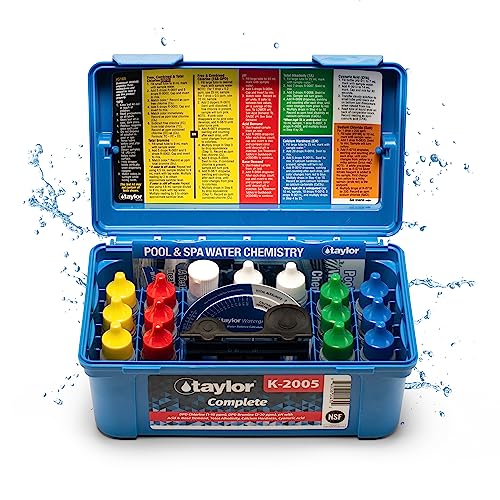
What it includes and tests it covers: This complete kit checks free and total chlorine, pH, acid/base demand, total alkalinity, calcium hardness, and cyanuric acid. It provides universal compatibility for any pool, hot tub, or spa and includes color-coded instructions and a waterproof chemistry guide for quick reference. The kit aims to deliver a broad, all-in-one testing solution for balanced water across multiple parameters.
Best for: Users seeking a versatile, all-in-one testing approach that covers a wide range of water quality indicators. Better for: households with mixed-use setups or owners who want a single kit that can adapt to various pool or spa configurations. Choose this if: you prefer a comprehensive kit with a built-in reference guide. Caution: Because it covers many parameters, it may require careful interpretation to avoid overcorrection if readings slightly deviate.
Why selected: It provides broad coverage in one package, reducing the need to juggle several separate reagents or test blocks while ensuring compatibility with different pool systems.
Lupo 3-in-1 Reagents Refill Kit RB-01-US
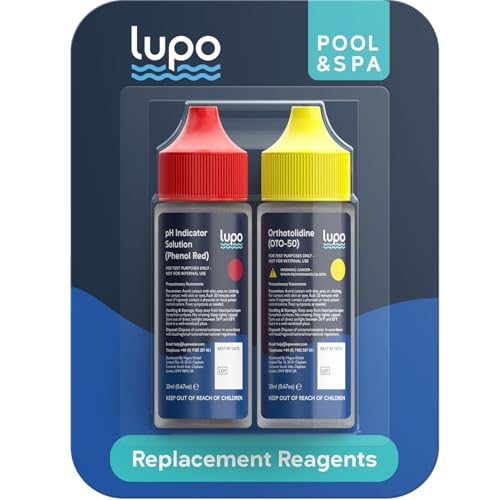
What it includes and tests it covers: This refill provides 3-in-1 reagents for testing Total Chlorine, Total Bromine, and pH. It includes enough reagents for 100 tests, making it a practical option for households that perform regular testing with a limited parameter set. The data suggests it aligns with USA Swimming-approved reagents for reliable at-home testing.
Best for: Homeowners who test three parameters and want reliable, fast results in a refill format. Better for: those with a steady testing routine who prefer a compact, economical refill. Choose this if: you mainly focus on three critical parameters and want a straightforward refill solution. Caution: It covers fewer parameters than six- or seven-parameter kits, so you may need additional testing if you require broader water analysis.
Buying Guide: Key Considerations For Pool Test Kit Reagents
- Parameter coverage: Determine which chemical factors you routinely monitor (chlorine, pH, alkalinity, calcium hardness, cyanuric acid, etc.). Choose reagents that cover your essential needs without paying for unused tests.
- Compatibility: Ensure reagents work with your existing test kit brand and model. Some brands require specific reagent types or bottle sizes to function correctly.
- Volume and frequency: Consider how often you test and select bottle sizes (1 oz, 1/2 oz, etc.) that align with your pool size and testing cadence.
- Color interpretation: Kits with integrated color chips or reference blocks can improve accuracy and reduce user error. This is especially helpful for beginners.
- Storage and shelf life: Reagents should be stored in a cool, dry place and used before expiration. Check packaging for storage guidance and expiration dates where available.
- Price versus value: Compare per-test costs and the breadth of tests. A slightly higher upfront price may yield longer-term cost efficiency if you avoid buying multiple separate reagents.
- Refill availability: For ongoing maintenance, select kits that offer reliable refills and replacement bottles to minimize downtime.
FAQ
- What should I test first in a new pool?
The most common starting tests are free chlorine, pH, and total alkalinity to establish a baseline balanced state. Consider adding cyanuric acid and calcium hardness as needed for your water type.
- Are high-range chlorine tests necessary for residential pools?
High-range kits can be helpful for pools with heavy usage or high sanitizer demand, but most residential pools function well with standard-range tests unless readings indicate otherwise.
- Can I mix reagents from different brands?
Mixing reagents from different brands is not recommended. Use the reagents designed for your specific test kit to avoid inaccurate readings or chemical interactions.
- How often should I replace test reagents?
Check the manufacturer’s guidance and expiration dates. Replace reagents when nearing expiration or if results become inconsistent, unstable, or faded in color.
- What is a good testing cadence for a residential pool?
Test at least twice weekly during peak season and after heavy rainfall or an event that may affect water balance. More frequent testing helps maintain consistent water quality.