Hollyhock mallow perennials bring tall, colorful blooms and butterfly-friendly charm to sunny borders. This guide highlights five solid options, clarifying who each is best for and why. Ideal buyers include gardeners seeking tall, showy backdrop flowers, pollinator-attracting varieties, or low-maintenance seeds for large plantings. The table below summarizes key choices at a glance.
| Product | Best For | Height Potential | Color Range |
|---|---|---|---|
| VISTATU 350+ Seeds Carnival Mix | Colorful start-to-finish bloomers for mixed borders | Up to 50 inches | Red, pink, yellow, purple, white |
| VISTATU 700+ Seeds Carnival Giant Mallow | Dense mass plantings and dramatic backdrop | Up to 50 inches | Multiple colors in mix |
| The Lucky Stars 350+ Seeds Carnival Mix | Showy cut flowers and cottage garden style | 4–8 feet tall in some varieties | Red, pink, yellow, purple, white, bicolor |
| Seeds Of Strength 120+ Seeds Carnival Mix | Budget-friendly starter plants for sunny beds | Up to 3–6 feet tall | Mix colors |
| Graffiti GRDN Seeds Hollyhock Seed Mix | Showy mixed-color perennial for hedges and walls | Up to 3–6 feet | Multicolor assortment |
Hollyhock Seeds Carnival Mix By VISTATU
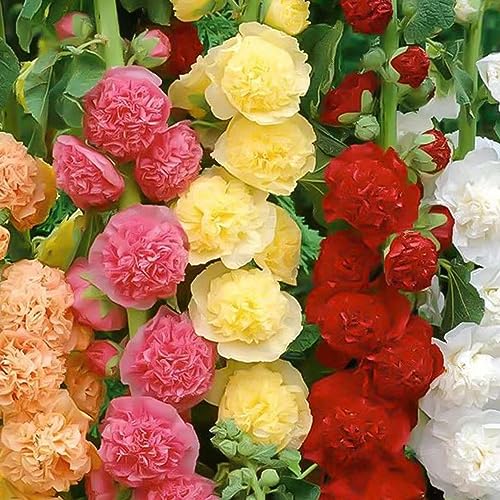
Includes 310+ seeds with a 95% germination rate. Planting is best in late summer, autumn, or the following spring. Easy to grow from seed; expect germination about one week after planting. Plants can reach around 50 inches tall and thrive in full sun. Each flower spans 4–5 inches. Seeds come in tear- and moisture-resistant packaging, suitable for current and next growing seasons.
Who it’s best for: new gardeners seeking reliable, tall backdrops and a vivid multicolor display.
Why chosen: Great germination rate, compact packaging, and consistent height make this a strong starter for sunny borders. Caution: performance may vary with extreme heat or heavy shade.
Hollyhock Seeds Carnival Giant Mallow by VISTATU

Contains 700+ seeds with a stated 95% germination rate. Plant in August/September or the following spring; seeds germinate within about a week. Plants reach approximately 50 inches and enjoy full sun. Flowers are 4–5 inches wide. Packaging is tear- and moisture-resistant for storage across growing seasons.
Who it’s best for: large-scale planters and gardeners needing repeated tall blooms.
Why chosen: high seed count and consistent height support bigger garden projects. Limit: tall varieties may require staking in windy locations.
The Lucky Stars 350+ Seeds Carnival Mix

Beautiful giant hollyhock flowers in a carnival mix. Plants can grow tall, often 4–8 feet, with colors including red, pink, yellow, purple, white, and bicolor. The mix is well-suited for cutting gardens and borders, attracting butterflies and hummingbirds. Seeds are packaged for durability and long-term storage.
Who it’s best for: gardeners who want dramatic vertical color and versatile bloom colors.
Why chosen: exceptional color variety in a single pack. Limitation: some plants may reach taller heights than compact spaces allow.
Seeds Of Strength 120+ Seeds Carnival Mix

Includes about 120 seeds with instructions in English. Planting is best in well-drained soil in a sunny location. Sow seeds 1/4 inch deep and space 18–24 inches apart. Keep soil consistently moist until seedlings are established.
Who it’s best for: budget-conscious buyers or beginners aiming for straightforward establishment.
Why chosen: clear sowing guidelines and reliable spacing support easy cultivation. Limitation: smaller seed quantity may require more frequent replanting for full garden coverage.
Malva Sylvestris Seeds by Wivolibe

Premium selection with a rare, striking color variation. Sow in prepared soil by broadcasting or row planting, then cover with a thin 1/8 inch layer. This cultivar emphasizes spring to autumn interest and adds unique hues to perennial borders.
Who it’s best for: gardeners seeking a rarer, distinctive hollyhock color.
Why chosen: adds visual variety when paired with standard hollyhocks. Limitation: rarer color may be harder to pair with common garden palettes.
Hollyhock Seed Mix Graffiti GRDN

A multicolor mix designed for showy perennial borders. Plants can reach tall heights with a sturdy vase-like form. Drought tolerance is noted, with resilience across frost conditions typical of hollyhocks. The mix is suitable for hedges, fences, and walls, offering a bold backdrop.
Who it’s best for: landscape-ready plantings and vertical accents in borders.
Why chosen: versatile color mix and strong architectural presence. Limitation: color spread may vary per germination batch.
Buying Guide: Key Considerations for Hollyhock Mallow Seeds
- Location and light: Hollyhock thrives in full sun and well-drained soil. Avoid heavy shade for the tallest specimens.
- Height expectations: Some varieties reach 3–6 feet, while others approach 8 feet. Plan spacing and staking accordingly.
- Color and bloom timing: Mixes offer a spectrum of colors and often bloom in the second year. Consider border color planning and pollinator timing.
- Seed quality and germination: Seed counts and germination rates vary by brand. Higher germination helps ensure faster garden impact.
- Watering and maintenance: Regular watering until seedlings establish is essential. Once established, hollyhocks are relatively low-maintenance.
- Durability and storage: Packaging should be moisture-resistant when purchasing seeds for future seasons.
Frequently Asked Questions
- Q: When should I plant hollyhock seeds for best results? A: Plant in late summer to early autumn or in spring for best germination and strong first bloom.
- Q: How tall do hollyhocks typically grow? A: Heights commonly range from 3 to 8 feet, depending on variety and growing conditions.
- Q: Do hollyhocks attract pollinators? A: Yes, they attract butterflies and hummingbirds, adding life to borders and beds.
- Q: Can I grow hollyhocks in containers? A: They are better suited to garden beds and borders due to height, but dwarf varieties may work in large containers with support.
- Q: Are hollyhocks perennials or annuals? A: Many hollyhocks are perennials in temperate regions, returning year after year with proper care.
- Q: Do all seeds have similar germination rates? A: Germination varies by batch; higher rates improve predictability of bloom times.