If you’re growing indoors and need powerful, energy-efficient lighting, a 300W dual-spectrum grow light is a solid choice. These fixtures typically deliver full-spectrum illumination that supports seed starting, vegetative growth, and flowering. The top options below are designed for high PPFD, adjustable angles, and long-lasting bulbs. They’re best for small to medium indoor gardens, herb setups, and container-grown veggies. This guide highlights five standout models, explains who each is best for, and compares features to help you decide.
Summary table of selected products:
| Product | Best For | Key Benefit | Limitations |
|---|---|---|---|
| SANSI 300W Full Spectrum Dual Gooseneck | All growth stages, compact spaces | 360° gooseneck, high PPFD with lens | Bulbs replaceable; no timer on some models |
| SANSI 300W Full Spectrum Dual Gooseneck With Timer | Auto scheduling, busy schedules | Auto on/off timer options | Higher initial cost |
| SANSI 300W Clip-On Gooseneck | Desk or shelf setups | Clip-and-go design with full spectrum | Clip strength may vary by surface |
| LBW Dual-Head Full Spectrum | Tall plants and larger beds | Adjustable tripod, wide coverage | Timer requires setup |
| SDOVUERC Dual Heads, 3/9/12H Timer | Seedlings to vegetative stages | Multiple timer presets, higher brightness | Basic packaging, may ship without extras |
SANSI LED Grow Lights With 300W Full Spectrum Dual Gooseneck
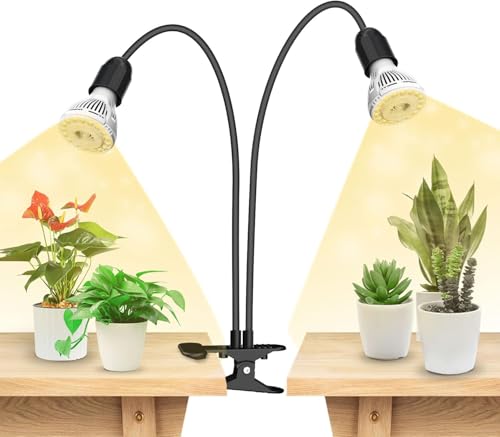
Best for high PPFD and flexible positioning. This SANSI model provides 402 μmol/s/㎡@1ft PPFD through a secondary optical lens, delivering strong light for compact grow spaces. It uses only about 20W, offering energy savings compared with traditional incandescent equivalents. The 360° gooseneck design ensures coverage around the plant, supporting all growth stages with a full spectrum (400nm-780nm) and daylight-like 4000K color temperature. The bulbs are replaceable, reducing waste and enabling long-term maintenance. This option is ideal for enthusiasts who want strong, targeted light without frequent bulb replacements.
Who it’s best for: Small to mid-size indoor gardens, desk tops, or bench setups needing high PPFD with adjustable light exposure. Caution: The overall unit relies on replaceable bulbs, so expect occasional bulb maintenance; ensure you have compatible replacements on hand.
SANSI 300W Full Spectrum With Timer Dual Gooseneck

This model adds an auto on/off timer to the dual gooseneck setup, making it better for growers who want a consistent schedule without manual intervention. It emits a full spectrum from 380nm to 800nm, with high PAR output to accelerate photosynthesis across growth stages. The replaceable bulbs and ETL-listed safety features emphasize reliability and ongoing maintenance. Best for growers who want reliable automation and full-spectrum coverage for a variety of plants—from herbs to small fruiting crops.
Who it’s best for: Busy growers, seed starters, and hobbyists who value a set-and-forget lighting routine. Caution: The max per-head wattage is limited to 10W, so plan light distribution accordingly for taller or denser setups.
SANSI 300W Dual Gooseneck Clip-On Grow Light

Best for compact benches or shelves where clip stability matters. This option emphasizes a strong secondary optical design with 402 μmol/s/㎡@1ft PPFD and a 360° gooseneck for versatile placement. It provides a bright, daylight-like 4000K color temperature and a broad full spectrum (400nm-780nm) to support all growth phases. Replaceable bulbs help with long-term costs, and a whole-life warranty adds peace of mind. Choose this if you need a flexible, space-saving light source with robust coverage.
Who it’s best for: Small apartment grow spaces, windowsills turned grow zones, and users who want to reposition light frequently. Caution: The general design prioritizes reach and angle over ultra-tall canopy coverage; for tall plants, verify height clearance.
LBW Dual-Head Grow Light With Tripod Stand
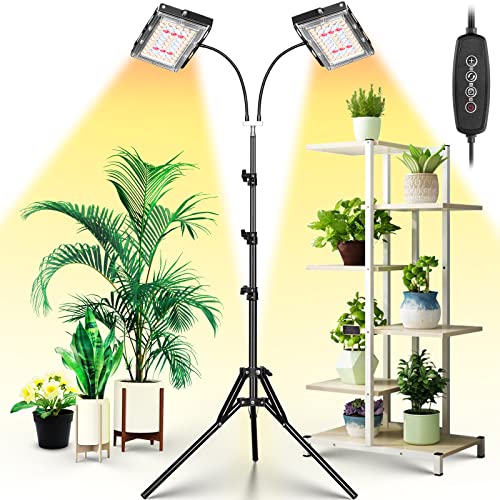
The LBW model pairs a tall, adjustable tripod with dual LED heads to create a broad, evenly lit area, suitable for larger plants or multiple specimens. It outputs a full spectrum (380nm-800nm) with 100 high-efficiency LEDs (12 Red, 60 Warm White, 28 Cold White) and a 3/6/12-hour auto timer. The design supports easy height and angle adjustment, helping you manage canopy distance and light distribution. Best for gardeners with varied plant heights or those needing a broader light footprint.
Who it’s best for: Tall or wide plants in a dedicated grow corner, or households seeking a single fixture to cover several containers. Caution: Tripod stability can vary with extended height; ensure a sturdy surface and balanced setup.
SANSI 24W Grow Light Bulb (300W Equivalent)

This is a compact 24W bulb designed to deliver a 4000K daylight spectrum, closely mimicking natural daylight. It features a secondary optical design for improved PPFD distribution (227.5 μmol/s/㎡@1ft) and a high-clarity color rendering index near 100. The ceramic-based design and upgraded insulation help reduce heat risk and extend bulb life to around 25,000 hours. This option is ideal as a supplementary or replacement bulb within a larger system. Choose this when you want a high-clarity daylight supplement that minimizes heat load.
Who it’s best for: Growers who already own a larger fixture and need a reliable, efficient bulb upgrade. Caution: As a bulb, it requires a compatible fixture and ballast system for proper operation.
SDOVUERC Full Spectrum Dual Heads With Timer

SDOVUERC combines dual heads with a flexible timer system and a 10-foot cable, making it a practical choice for larger setups or rooms with multiple plant clusters. It claims a sunlight-like spectrum (6000K white, 3000K warm white, 660nm red) and higher brightness relative to similar models. The three timer options (3/9/12H) support consistent daily lighting cycles. Best for multi-plant arrangements where even coverage is important. Limitation: The product’s power and heat output depend on installation and ambient conditions; monitor heat near the grow surface.
Buying Guide: Key Purchase Considerations
- Light spectrum and intensity: Look for full-spectrum fixtures that cover 400nm-780nm and provide high PAR/PPFD to support all growth stages. A lens or optical design can improve light utilization at standard distances.
- Fixture type and reach: Gooseneck designs offer flexible positioning for small grow spaces. Clip-on and tripod options work for desks, benches, or taller setups. Choose based on plant height and canopy spread.
- Power, efficiency, and heat: Compare wattage to actual light output (PPFD) and heat generation. Higher efficiency is preferable for energy savings and minimal heat stress in close canopies.
- Bulb lifecycle and replacement: Replaceable bulbs reduce long-term costs and waste. Confirm compatibility and availability of replacement parts.
- Automation and timers: Auto on/off timers simplify care for busy schedules or vacation periods. Ensure the timer supports the desired cycle length (3H/6H/12H, etc.).
- Build quality and safety: Look for ETL-listed or equivalent safety certifications, ceramic heat sinks, and flame-retardant materials when available. Consider splash resistance for humid environments.
- Size and setup: Measure your grow area to ensure the fixture provides adequate coverage without overheating leaves. Consider adjustable stands, goosenecks, or multi-head configurations for uniform light distribution.
Frequently Asked Questions
- What does PPFD mean and why is it important?
PPFD measures light intensity at the plant canopy. Higher PPFD supports faster photosynthesis, especially during vegetative and flowering stages. - Are 300W grow lights suitable for all plants?
They work well for compact to mid-size setups, including herbs, leafy greens, and small fruiting plants. Very tall or dense canopies may require larger fixtures or multiple units. - Should I choose a light with a timer?
Timers help maintain consistent photoperiods, which improves growth regularity and reduces manual tasks. - Is replaceable bulb technology better than integrated LEDs?
Replaceable bulbs lower long-term costs and waste, but may require more maintenance planning and compatible fixtures. - What maintenance is expected with these lights?
Periodic bulb replacement (when applicable), cleaning of lenses or optics, and ensuring adapters or fixtures remain secure and properly ventilated. - How do I position these lights for tall plants?
For tall plants, elevate the light or use adjustable stands to maintain an appropriate distance (typically 12-24 inches depending on plant type and LED intensity) to avoid leaf burn.