Choosing a raised herb garden box that fits your space and gardening goals is essential for healthy, productive herbs. This guide highlights five top options suited for patios, balconies, and backyards, focusing on ease of use, durability, and drainage. Ideal buyers include seniors or mobility-challenged gardeners, urban dwellers with limited outdoor space, and anyone who wants organized herb growing with minimal bending. Below, you’ll find direct comparisons, who each product is best for, and practical buying tips to help you pick the right box for raised-herb success.
Summary of selected products:
- LEETOLLA Elevate 32″ Tall Raised Garden Bed with Wheels — best for mobility and heavy use
- FOYUEE 31.5″ Tall Raised Bed with Wheels — best for extra planting space
- MIXC Wooden Raised Garden Bed with Legs — best for a sturdy wood option
- Best Choice Products 48 x 24 Raised Garden Bed — best for large soil capacity
- Keter Urban Bloomer Raised Garden Bed — best for built-in water features
LEETOLLA Elevate 32″ Tall Raised Garden Bed

Best for gardeners who need mobility and strong durability. This 32″ tall bed uses powder-coated steel and supports up to 400 lbs, reducing bending and stress. The two all-terrain wheels and ergonomic handle make repositioning simple, even when the bed is loaded with soil. This design also features a double-drainage system to prevent root rot, improving plant health after heavy rain. Ideal for seniors, mobility-restricted users, or anyone who moves their garden seasonally.
Why it’s selected: The combination of mobility, high capacity, and rust resistance provides a long-lasting, weather-ready solution for herbs and vegetables. Caution: Heavy loads on uneven ground may affect wheel performance over time; ensure a stable, level surface before moving.
FOYUEE 31.5″ Tall Raised Garden Bed

Best for maximizing small outdoor spaces with extra planting room. The 37.4″ x 15.7″ planting area accommodates a mix of herbs, vegetables, and flowers, with a sturdy 200-lb soil-load capacity. An integrated handle and large 6″ wheels aid mobility, and the elevated height reduces bending. Choose this if you want more growing space without sacrificing accessibility. Caution: The wide planting area requires more soil and maintenance than narrower beds.
MIXC Wooden Raised Garden Bed With Legs

Best for gardeners seeking a natural wood option with strong structural design. The bed uses untreated fir with a robust beam-and-column frame, supporting about 331 lbs of soil and plants. Drainage holes and a waterproof liner help manage moisture and soil health. This is a good pick for traditional garden aesthetics and durability. Caution: Wood-based beds require planning for rot resistance and seasonal maintenance.
Best Choice Products Raised Garden Bed
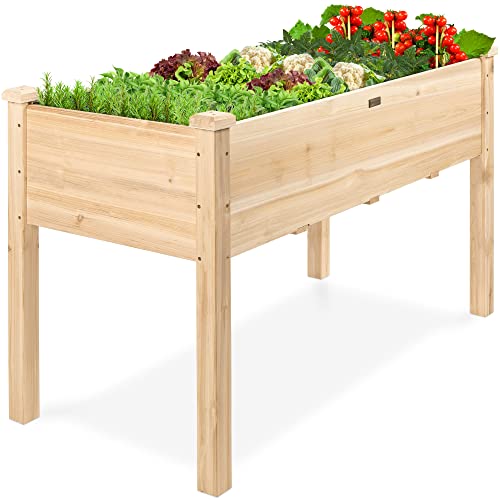
Best for large planting space and all-wood construction. This bed provides about 5 cubic feet of soil depth and a weather-resistant wooden frame. It supports herbs and vegetables with good drainage and air flow. A practical choice for users who want a straightforward, sturdy outdoor planter. Caution: Wooden beds may require liner solutions to protect against soil leakage and weed intrusion over time.
Keter Urban Bloomer 12.7-Gallon Raised Bed

Best for compact spaces that need a built-in watering feature. The Keter Urban Bloomer includes a self-watering reservoir with a water gauge and adjustable drainage, making it ideal for herbs and small vegetables in apartments or balconies. It’s a lighter option compared to heavy steel beds. Caution: Smaller capacity may limit you to a few herb varieties or microgreens at a time.
Buying Guide
- Space and height: Determine available outdoor area and choose a box with a height that reduces bending but fits your footprint.
- Materials and durability: Metal beds offer longevity and mobility; wood beds give a natural look but may require maintenance. Consider liners or drainage as needed.
- Mobility: If you need to move your bed seasonally, prioritize beds with wheels or handles and ensure wheels perform well on your terrain.
- Drainage and moisture management: Adequate drainage prevents root rot and ensures healthy herb growth; look for multiple drainage paths or built-in drainage systems.
- Load capacity: Check soil and plant load requirements. Higher capacity is beneficial for richer planting mixes and dense herb beds.
- Liner and soil compatibility: Some beds include liners to prevent soil contact with wood; others require you to supply your own liner for moisture control.
- Assembly and maintenance: Consider the ease of assembly and the need for future upkeep, such as rust protection or wood sealants.
FAQ
- What size raised bed is best for herbs? A: A bed around 31–37 inches wide with a depth of 8–12 inches is typically ideal for most herb varieties.
- Do I need a liner for wooden beds? A: Liners help prevent soil contact with the wood and reduce weed intrusion, but not all beds require them.
- Is mobility important for an herb bed? A: If you want to chase sun or shield from weather, a bed with wheels or easy maneuverability is beneficial.
- Should I choose metal or wood for herbs? A: Metal beds are durable and low maintenance; wood offers a natural look and can be refurbished or painted.
- How do I prevent root rot in raised beds? A: Ensure proper drainage, avoid overwatering, and use a liner or drainage holes to maintain airflow and soil moisture balance.
- Can raised beds support year-round herbs? A: Yes, with proper mulch, drainage, and protection from freezing temperatures, many herbs can overwinter in raised beds.