Answering the practical needs of farmers, ranchers, and outdoor enthusiasts, these hay bale movers are designed to attach to ATVs, UTVs, or pickups to lift, tow, and transport round bales with minimal effort. They are best for small-to-mid sized operations, DIY farms, and anyone moving bales on uneven terrains. The following five options stand out for durability, adjustable sizing, and compatibility with common towing setups. Below, you’ll find a quick buying guide and a comparison table to help you choose the right model for your setup.
| Product | Best For | Why It Stands Out |
|---|---|---|
| Lunanniu Adjustable Round Bale Mover | Medium farms, ATV/UTV users | Adjustable forks, high capacity, solid steel frame |
| LuckyNote Adjustable Bale Mover | Versatile towing with common pickups | Three fork positions, 1500 lb capacity, universal coupler |
| Lunanniu Adjustable Bale Mover (Second Model) | Heavy hay operations | Heavy-duty construction, three fork intervals, 1500 lb support |
| Tomkate Adjustable Bale Mover | Budget-conscious buyers | Solid steel build, three fork positions, universal towing |
| TYMMC Dawn Adjustable Bale Mover | Wide bale range | 1500 lb capacity, standard 2-inch coupler, stable winch |
Lunannniu Adjustable Round Bale Mover — 1500 lb Capacity

Best for users needing a versatile, heavy-duty mover that can handle various bale sizes. The three adjustable fork intervals (24.5″, 37″, 49″) let you tailor the tool to bales ranging up to five feet in diameter. The 1600-lb manual winch offers controlled lifting and lowering with a safety-latch hook for secure bale attachment. A 2-inch ball coupler ensures compatibility with most ATVs, UTVs, and pickup trucks. Choose this if you want a robust, all-around bale mover that adapts to different bale dimensions and towing setups.
Who it’s best for: Small- to mid-scale farms or homesteads that need reliable performance with varying bale sizes. Caution: The manual winch is straightforward but requires physical effort to lift heavier bales; plan for occasional heavier loads to minimize strain.
LuckyNote Adjustable Bale Mover — Universal Trailer
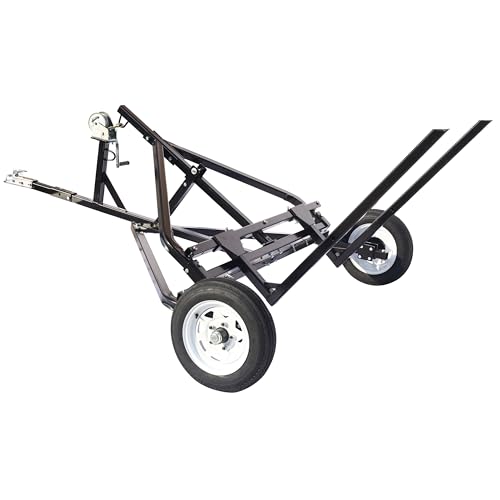
This model excels in compatibility and versatility, featuring three adjustable fork positions (24.5″, 37″, 49″) to handle bales up to 5 feet and a universal 2-inch coupler for ATVs, UTVs, and pickup trucks. Its sturdy steel construction and powder-coated finish promise durability in outdoor conditions. Best for buyers who need a flexible mover that can be towed by multiple vehicle types. Limitation: Assembly and mounting may require time to align the fork height precisely for larger bales.
Lunanniu Adjustable Bale Mover — Heavy-Duty Trailer Model
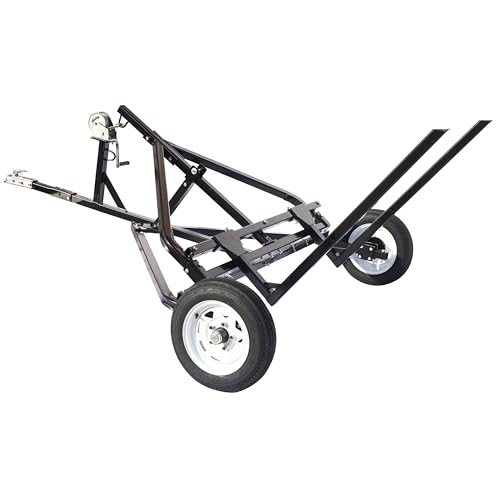
Designed for heavy-duty use, this mover supports bales up to 1500 lbs with three adjustable fork intervals (24.5″, 37″, 49″). The combination of a durable powder-coated steel frame and a high-capacity manual winch makes it suitable for frequent moves, including large round bales of hay or straw. Best for operators who require long-term reliability and a strong, stable lifting mechanism. Caution: The weight of the loaded bale may exceed some vehicle payloads; verify your vehicle’s tow rating before use.
Tomkate Adjustable Bale Mover — Universal Trailer

Tomkate’s bale mover emphasizes value without sacrificing essential features. It uses a heavy-duty steel frame with a powder-coated finish and offers three adjustable fork positions (24.5″, 37″, 49″) to accommodate varied bale sizes. The included manual winch enables smooth lifting and lowering, while the 2-inch standard coupler supports towing by ATVs, UTVs, or trucks. Choose this if you want a practical, budget-friendly option with universal compatibility. Caution: Some users may find the winch crank lever stiffer on larger bales after repeated use.
TYMMC Dawn Adjustable Bale Mover — 1500lbs

TYMMC offers a dependable option with 1500-lb capacity and a manual winch system to lift and lower bales safely. The 4.80×12″ tubeless tires mounted on adjustable rims help manage tongue weight and towing stability on uneven surfaces. Best for buyers who want stable towing performance and straightforward operation. Limitation: The wheel setup is tailored for on-trail towing; very rough terrain may require extra caution to avoid jackknifing or sway.
Buying Guide: Key Considerations for Choosing a Hay Bale Mover
- Compatibility: Ensure the mover’s coupler matches your vehicle type (2-inch coupler is common for ATVs, UTVs, and trucks).
- Weight Capacity: Most movers handle up to 1500 lbs. Confirm your typical bale size and weight before purchasing.
- Fork Adjustability: Look for adjustable fork positions (commonly 24.5″, 37″, 49″) to fit different bale diameters. This flexibility reduces frequent tool swapping.
- Winch Type: Manual winches are common and reliable, but assess the effort required for repeated lifts. A safety latch on the hook improves security.
- Build Quality: Powder-coated steel frames resist rust and weathering; check for reinforced bracing for stability during transport.
- Towing and Handling: Consider wheel/tire design and tongue weight to maintain stability on variable terrain.
- Vehicle Readiness: Verify that your tow vehicle, trailer hitch, or hitch receiver can handle the added weight and dynamic loads.
- Ease of Assembly: Some units require assembly—evaluate included hardware and instructions for a quick setup.
FAQ
- What is the typical bale size these movers handle? Most models support bales up to about 5 feet in diameter, with adjustable forks to fit smaller sizes.
- Do these movers require a special trailer or hitch? A standard 2-inch coupler is common and compatible with ATVs, UTVs, and pickup trucks.
- Is a winch necessary? A winch simplifies lifting and lowering rounds bales, but some users may rely on manual lifting with helper devices.
- Can these be used with tractors or skid steers? Some models are designed for compatibility with ATVs, UTVs, and pickups; others are more suited for light tractor attachments.
- Are there safety features to prevent bale slippage? Yes, features like safety latch hooks and robust frame bracing help keep bales secure during transport.
- What maintenance is recommended? Regularly inspect bolts, pivot points, and the winch cable; apply lubrication to moving parts and check for rust or wear.