Answering the needs of homeowners, landscapers, and hobby gardeners, this guide highlights the best black poly irrigation tubing options for drip systems. These products are suited for main supply lines, feeder lines, and emitter-enabled dripper runs. The top picks emphasize durability, ease of use, and flexibility for different garden layouts. Buyers new to drip irrigation can choose confidently, while seasoned installers can compare flow capacity and compatibility. The following table summarizes five reliable choices to help you decide quickly.
| Product | Best For | Key Benefit |
|---|---|---|
| Raindrip 052050 1/2-Inch Drip Irrigation Supply Tubing | Medium to large drip setups | Versatile main/feeder/dripper line |
| Raindrip 052020P 1/2-Inch Drip Irrigation Water Supply Tubing | Drip irrigation with emitters | Direct-emitter compatibility |
| Raindrip 016010T 1/4-Inch Drip Irrigation Supply Tubing | Small, precise feeder runs | Compact size for micro-irrigation |
| Dripworks Drip Irrigation Tube 100′ Roll (3/4″ Mainline) | Larger layouts | Higher flow capacity |
| POND BOSS 1/2-Inch PVC Tubing for Water Gardening | Water features and ponds | Black PVC for discreet looks |
Raindrip 052050 1/2-Inch Drip Irrigation Supply Tubing
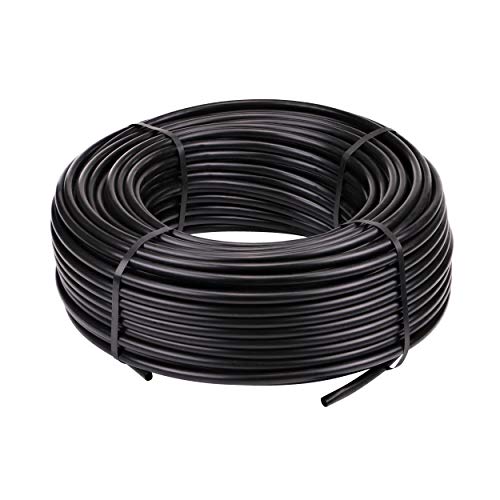
Best for flexible main lines and feeder runs, this 1/2-inch black polyethylene tubing supports emitters punched directly into the line. Its OD/ID measurements (0.62 in / 0.52 in) make it compatible with common drip fittings and drippers. This tubing is ideal for trees, shrubs, garden beds, planters, and hanging baskets. It supports various configurations from a primary supply line to branches feeding multiple zones.
Who it’s best for: homeowners building moderate drip networks and landscapers creating mixed plant layouts. Why selected: versatility across main, feeder, and dripper roles reduces the need for multiple tube sizes. Caution: punch-out emitters may weaken the line if over-tapped in very long runs; plan for spacing and test pressure.
Raindrip 052020P 1/2-Inch Drip Irrigation Water Supply Tubing
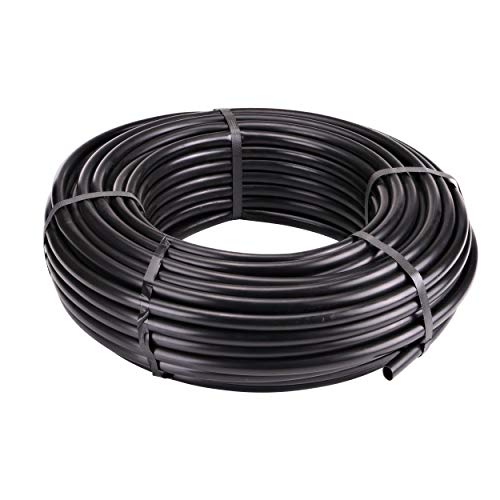
This tubing is designed for drip irrigation systems with emitters punched along the line. It works as a main supply or feeder line, and it pairs well with drip irrigation parts to deliver water directly to plant roots. It suits trees, shrubs, flower beds, groundcovers, and container plantings that benefit from close-to-root irrigation. The black color helps it blend into garden aesthetics.
Who it’s best for: installers needing a reliable main or feeder tube with straightforward emitter integration. Why selected: consistent 1/2-inch sizing supports a wide range of emitters and fittings. Caution: avoid excessive long runs without check valves to prevent backflow in some setups.
Raindrip 016010T 1/4-Inch Drip Irrigation Supply Tubing

This 1/4-inch tubing is ideal for small feeder lines and close-to-emitter connections. Use it to deliver water to micro-irrigation devices or as a secondary line feeding main lines. Its shrink-wrapped coil simplifies storage and keeps the tubing organized for quick deployments in tight garden beds or planter boxes.
Who it’s best for: precision irrigation in tight spaces and targeted plantings. Why selected: compact size enables neat layouts where larger tubing would be unwieldy. Caution: limited flow capacity means not suitable as a primary supply line for larger gardens.
Dripworks Drip Irrigation Tube 100′ Roll (3/4″ Mainline)

Designed for larger layouts, this 3/4-inch mainline tubing offers increased flow capacity for bigger irrigation schemes. The LDPE construction maintains flexibility for curving through beds and rows. It serves as a robust backbone that feeds multiple zones with emitters and drip lines. Best for expanding gardens or landscapes that require higher GPH throughput.
Who it’s best for: landscape projects with multiple drip zones requiring higher flow. Why selected: a higher internal diameter supports more water per run. Caution: bulkier diameter means you may need bigger fittings and thicker trenches in some installations.
POND BOSS 1/2-Inch PVC Tubing for Water Gardening
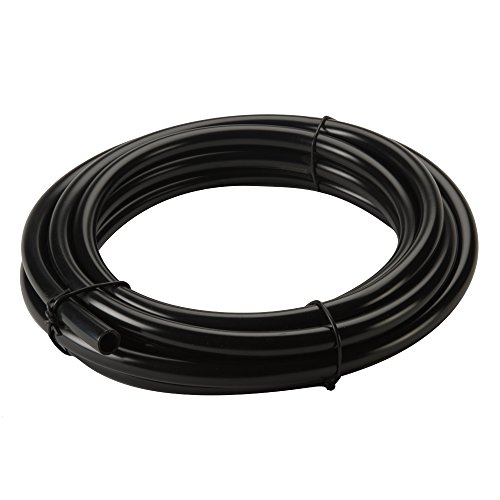
Though marketed for water features, this 1/2-inch PVC tubing is a sturdy option for pond and fountain connections. Its black color helps it blend with water features and garden aesthetics. It supports typical pump-to-feature setups and simple runs between equipment in a pond environment.
Who it’s best for: those integrating tubing with ponds, fountains, or waterfall features. Why selected: discreet, flexible, and easy to route around water features. Caution: PVC is less flexible than LDPE in long, winding layouts; plan routing to minimize sharp bends.
Buying Guide: Key Considerations For Black Poly Irrigation Tubing
- System size and flow needs: Larger landscape layouts benefit from 3/4″ or 1/2″ mainlines with higher GPH capacity. For micro-irrigation, 1/4″ feeder lines offer precision without waste.
- Emitter compatibility: Check if your tubing can easily accept emitters, barbed fittings, or inline drippers. Ensure the tubing ID matches the fittings you plan to use.
- Durability and environment: Black tubing helps hide lines and resist sunlight, but consider temperature ratings and chemical exposure in your area.
- Flexibility and installation: For tight spaces, consider tubing with good bend radius or coiled lengths that reduce the need for connectors and fittings.
- Compatibility with accessories: Evaluate whether the tubing works with your existing valves, filters, and manifolds to avoid buying incompatible parts.
- Longevity and maintenance: Choose tubing that resists aging and kinking. Be prepared to flush lines periodically to prevent emitter clogging.
Frequently Asked Questions
- What size tubing should I choose for a new drip system?
Answer: Start with 1/2″ mainline tubing for moderate-size gardens, with 1/4″ feeders to emitters. Use 3/4″ if you have a large layout needing higher flow. - Can I use black vinyl tubing for pond features?
Answer: Yes, many projects use 1/2″ or 3/4″ vinyl tubing for pond pumps and water features, provided pressure and chemical compatibility are suitable. - Do I need special connectors for these tubing types?
Answer: Yes. Ensure barbed fittings, clamps, and emitters match the tubing ID. Some lines require specific adapters for leak-free connections. - Is thicker tubing always better?
Answer: Not always. Thicker walls improve durability, but larger outer diameters demand bigger fittings and trenches. Match tubing size to your layout needs.