Looking for a self-contained growing system that works indoors without natural sunlight? This guide highlights five top self-contained growing systems designed for beginners and seasoned gardeners alike. They help you grow herbs, greens, and small vegetables inside with minimal mess and maintenance. Each option is suited to different spaces and lifestyles, from compact desks to kitchen counters and apartments. The following selections emphasize reliability, ease of use, and clear benefits for frequent urban growers.
| Product | Best For | Key Benefit |
|---|---|---|
| Indoor Garden Growing Systems Self-Watering Plant Pot with 17W LED | New indoor gardeners seeking automation | Full-spectrum LED with self-watering feature |
| NATGAI Hydroponic System Kit | Those starting hydroponics or classrooms | Versatile, multi-use for indoor/outdoor setups |
| Modern Sprout Mason Garden Jar | Stylish, compact herb growing and décor | No-soil hydroponics in a mason jar |
| ZESTIGREENS Microgreens Kit | Quick harvest microgreens on a counter | No soil, no mess, rapid microgreen growth |
| VEVOR RDWC Hydroponics System | Expanded hydroponic setups with higher capacity | Recirculating deep-water culture for faster growth |
Best Self-Watering Indoor Garden With LED Grow Light

The DRYADES self-watering plant pot combines a 17-watt LED grow light with a compact soil-based planting system. Best for beginners who want a simple, contained setup that doesn’t rely on outdoor weather. The full-spectrum light supports photosynthesis and is designed to improve stability compared with low-light conditions indoors. The cycling and sunlight settings add flexibility for different rooms and climates. A limitation is that it remains a soil-based pot, which may require occasional soil maintenance and re-potting as plants grow.
Who this is best for: Busy apartment dwellers or first-time indoor growers who want a self-contained, low-hybrid setup with built-in lighting and a simple watering routine.
NATGAI Hydroponic System Growing Kit

This hydroponic kit is designed for beginners and classroom projects, with the potential to scale up for indoor gardens or balcony use. It supports multiple applications—indoors or outdoors—making it versatile for families and educators. The kit promises faster growth (3-5 times faster than soil) and the ability to cultivate herbs, lettuce, or vegetables in a soil-free environment. A common consideration is that setup and management require attention to nutrient solutions and system maintenance, especially for first-time users.
Who this is best for: New indoor growers, students, or teachers seeking a hands-on hydroponic experience that’s easy to assemble and adapt to different spaces.
Modern Sprout Mason Garden Jar

The Mason Garden Jar blends decorative design with functional hydroponics in a reusable glass jar. It’s best for spaces where aesthetics matter as much as fresh greens. The kit supports easy, soil-free herb growing—especially basil—by using a self-watering mechanism and a minimal setup. Seeds germinate in a short window, and harvests occur within a couple of months. A limitation is that it may not accommodate large crops and is better suited for compact herb growth rather than leafy greens in high volumes.
Who this is best for: Small-space lovers who want stylish, distraction-free indoor greenery and a quick-start herb garden with minimal fuss.
ZESTIGREENS Microgreens Growing Kit
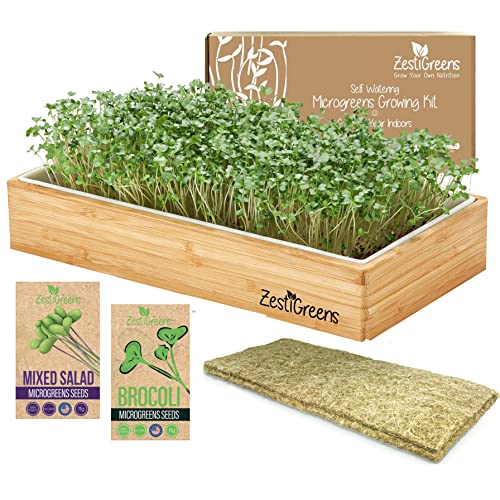
This organic microgreens kit offers a soil-free, no-mess option for kitchen counters. It includes a reusable tray, hemp mats, grow media, seeds, and a grow guide. The kit supports weekly harvest cycles, with microgreens ready in as little as 7–10 days, depending on the variety. Some seeds perform better in hydroponic conditions, while others thrive in soil, so you may need to adjust growth methods for different crops. It’s ideal for quick, nutrient-dense greens and casual cooking experiments.
Who this is best for: Home cooks and small-space gardeners who want fast, fresh microgreens with a compact, easy-to-manage setup.
VEVOR RDWC Hydroponics Grow System

This recirculating deep water culture system offers a larger, more advanced setup with a top-drip design and an integrated air pump and water level device. It’s best for growers who want higher capacity and faster root development for leafy vegetables. The system uses a nutrient solution circulated through multiple buckets, promoting rapid growth and uniform nutrient delivery. A potential limitation is the setup complexity and ongoing maintenance required to balance nutrient levels and prevent clogging in the lines.
Who this is best for: Intermediate to advanced indoor gardeners seeking a scalable, high-output hydroponic solution for leafy greens and herbs.
Buying Guide: Key Considerations for Self-Contained Growing Systems
- Space and footprint: Assess available counter, shelf, or balcony space. Low-profile pots work well in tight apartments, while vertical towers maximize small areas.
- Growing medium: Decide between soil-based pots, hydroponic jars, or fully soil-less systems. Hydroponics generally yields faster growth but may require more maintenance.
- Lighting: Look for full-spectrum LED lighting that supports photosynthesis, preferably with adjustable intensity and timers for energy efficiency.
- Automation and watering: Self-watering features simplify care. Consider systems with timers, moisture sensors, or auto-fill capabilities to reduce daily chores.
- Plant variety and yield: Some kits excel with microgreens, herbs, or compact vegetables, while others support larger crops in multiple buckets or trays.
- Maintenance and clean-up: Soil-based systems may require periodic soil refreshes, while hydroponic setups demand nutrient management and algae control.
- Ease of setup: Beginners should prioritize plug-and-play kits with clear instructions, while experienced users can opt for modular systems with expandability.
- Aesthetics and décor: For home spaces, consider whether the device blends with décor, especially models like mason jars or minimalist jars.
Frequently Asked Questions
- What is a self-contained growing system? It is a compact setup that combines a growing medium, lighting, and watering in one unit or tightly integrated components to grow plants indoors without relying on outdoor conditions.
- Do these systems require soil? Some use soil, while others are soil-less or hydroponic. Choose based on your preference for mess, maintenance, and growth speed.
- Can I grow leafy greens and herbs in these systems? Yes, many models support leafy greens and herbs, with some designed specifically for microgreens or basil and similar herbs.
- Is lighting necessary for indoor growing? Yes, a full-spectrum LED light supports photosynthesis and stabilizes growth when natural sunlight is limited.
- Which system is best for beginners? Look for simple, all-in-one kits with clear instructions, such as soil-based self-watering pots or beginner-friendly hydroponic kits.
- Are these systems energy-efficient? LED-powered systems with timers generally save energy by optimizing light exposure and reducing unnecessary operation.