Answering the question of how to keep fountains and birdbaths clear and pest-free, this guide highlights five practical fountain water treatment chemicals. These products target common issues like algae, sludge, odors, and mineral buildup. They’re suited for different buyers: hobbyists maintaining small decorative fountains, pond owners needing algae control, and enthusiasts seeking regular maintenance to prevent buildup. The quick reference below helps you compare key options at a glance.
| Product | Best For | What It Does | Notes |
|---|---|---|---|
| Fountain Water Clarifier | Small decorative fountains; birdbaths | Breaks down organic waste and improves water clarity | Enzyme-based; simple dosing |
| API POND ALGAEFIX | Ponds and fountains with algae issues | Controls most algae types; safe for fish/plants | Copper-free EPA-registered formula |
| ActiClear Muck Clear | Water features with sludge buildup | Dual-action bacteria and enzymes break down sludge | Two sizes; safe, chemical-free approach |
| PondBliss Algaecide | Fountains and small ponds with algae blooms | Clear, prevents algae; clarifies water | Effective against multiple algae types |
| Aquascape Prevent | Fountains needing white-scale and stain prevention | Prevents white-scale buildup and stains | Special blend of clarifiers |
Fountain Water Clarifier – 8 Oz
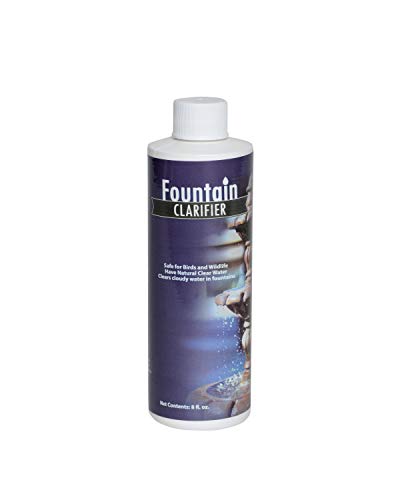
- Brand: Sanco Industries
- Features: Keeps fountains clean and clear by breaking down organic waste and contaminants; easy to use; improves water quality by reducing odors and discoloration.
Best for: Small decorative fountains and birdbaths where simple maintenance and quick results are desired. This clarifier is chosen for its straightforward dosing and focus on organic debris reduction. A potential limitation is that it targets organic waste primarily; mineral buildup may still occur if water is hard.
API POND ALGAEFIX (16 fl oz)

- Brand: API
- Features: Copper-free formula, fast action, treats up to 4,800 gallons; safe for fish and aquatic plants when used as directed; EPA-registered.
Best for: Ponds or fountains with green water or visible algae blooms where a fast, broad algae control is needed without copper. Use caution with extremely delicate aquatic plants; always follow dosing directions to avoid disrupting beneficial bacteria or water chemistry.
ActiClear Muck Clear – 500 Tablets

- Brand: ACTICLEAR
- Features: Advanced dual-action formula with beneficial bacteria and enzymes to breakdown organic sludge; slow-release tablets sink to bottom; improves water quality and reduces odors.
Best for: Ponds, fountains, and birdbaths experiencing persistent muck and sludge. Choose this if you prefer a biological, chemical-free approach with long-lasting bottom-dwelling action. Limitation: effectiveness depends on consistent dosing and water temperatures above 50°F for best results.
PondBliss Algaecide for Fountains

- Brand: PondBliss
- Features: Removes common green algae; restores color and clarity; effective against string, hair, filamentous, chara, blanketweed, and planktonic algae.
Best for: Fountains and small ponds disrupted by algae blooms. Opt for this when algae control is the primary goal and you want visible improvements within weeks. A caution: results vary with water flow and light exposure; insufficient turnover may slow results.
Aquascape PREVENT Water Treatment

- Brand: Aquascape
- Features: Prevents white-scale buildup, stains, foam, and other unsightly water conditions; contains a special blend of clarifiers to keep fountains looking clean.
Best for: Fountains and water features prone to mineral buildup or surface staining. Choose this when ongoing maintenance is desired to minimize scale and film formation. Limitation: primarily preventive; may require combination with other treatments for existing heavy buildup.
Buying Guide: Key Considerations for Fountain Water Treatments
- Water type and size: Match product capacity to fountain or pond volume. Over-treating may lead to unnecessary chemical exposure, while under-treating can fail to address the issue.
- Primary issue: Identify whether the main problem is algae, sludge, odors, or mineral buildup. Different products target specific conditions, as shown in the product highlights.
- Safety and compatibility: Look for fish- and plant-safe formulas when you have aquatic life. Copper-free formulas are gentler on wildlife and beneficial bacteria.
- Application routine: Some products require ongoing dosing (weekly or biweekly), while others are one-time clarifiers. Consider your maintenance schedule and ease of use.
- Environmental impact: Prefer natural or biological options when possible to reduce chemical load and support ecosystem balance in outdoor water features.
- Maintenance integration: Use clarifiers and algaecides in combination with routine cleaning, skimming, and aeration to maximize clarity and reduce buildup.
FAQ
- Q: Do fountain water treatments harm fish or plants?
A: Many products are labeled as safe for fish and plants when used as directed. Always follow dosing instructions and consider copper-free formulas if you have sensitive aquatic life. - Q: How often should I add treatment to a fountain?
A: It depends on the product and water conditions. Some require regular dosing (e.g., biweekly), while others are positioned as preventative steps. Check label directions for your specific system. - Q: Can I use these treatments with existing filtration?
A: Yes, in most cases. Aeration and filtration remain important, and clarifiers or algaecides work best when water is circulating and well-oxygenated. - Q: What is the difference between a clarifier and an algaecide?
A: Clarifiers help remove suspended particles to improve clarity, while algaecides target algal growth directly. Some products combine both actions, but it’s important to address the root cause (light exposure, nutrients, or stagnation) for long-term results. - Q: Should I test water after treatment?
A: For safety and effectiveness, test for pH, ammonia, and general clarity as needed, especially in larger ponds or systems with fish or plants. Follow product guidelines on any required adjustments.