Chelated iron is a targeted solution for correcting iron deficiency in trees and other landscape plants. This article highlights five highly relevant products, explaining how their formulas work, where they excel, and when to choose each option. Use the buying guide to compare chelated iron types, application methods, and soil considerations to optimize long-term health and color in your landscape.
Summary of chosen products:
style=”font-weight:bold”>Product Table
| Product | Brand | Form / Size |
|---|---|---|
| Fertilome (10625) Chelated Liquid Iron and Other Micronutrients | ferti-lome | 16 oz liquid |
| Southern Ag Chelated Liquid Iron | Southern Ag | 1 gallon |
| Grow More 0.2-0-0 EDDHA Iron Chelate | Grow More | 1 lb, water-soluble |
| LawnStar Liquid Iron | LawnStar | 32 oz |
| Greenway Biotech Chelated Iron DTPA Fertilizer | Greenway Biotech | 1 lb |
Fertilome Chelated Liquid Iron and Micronutrients

Fertilome Chelated Liquid Iron provides a quick remedy for iron chlorosis in trees and other plants. The formula is designed to correct yellowing foliage while delivering additional micronutrients to shrubs, lawns, trees, flowers, and vegetables. It’s a concentrated liquid that mixes easily with water and should be used as a targeted corrective spray rather than a full fertilizer substitute.
Southern Ag Chelated Liquid Iron

Southern Ag Chelated Liquid Iron is offered in a one-gallon jug, designed to correct iron deficiency across a range of plants including trees. It can be used for ornamental trees, vegetables, and lawns to promote a deeper, greener color. The product’s versatility makes it suitable for larger landscapes and repeated applications during the growing season.
Grow More EDDHA Iron Chelate

Grow More’s EDDHA iron chelate is designed for use on problematic soils with high pH, including caliche and alkaline substrates. The formulation is 6% iron and water-soluble, enabling rapid uptake by roots and foliage. It helps stop yellowing and restores lush green color for trees, shrubs, and other plant life in tough soil conditions.
LawnStar Liquid Iron

LawnStar Liquid Iron is a professional-grade, EDTA-free solution that delivers iron efficiently in alkaline soils up to pH 9.5. It supports chlorophyll production to correct chlorosis and improve the green color of lawns, flowers, shrubs, and trees. The sugar-based formulation aims for smooth uptake and steady health improvements without chelate-related drawbacks.
Greenway Biotech Chelated Iron DTPA
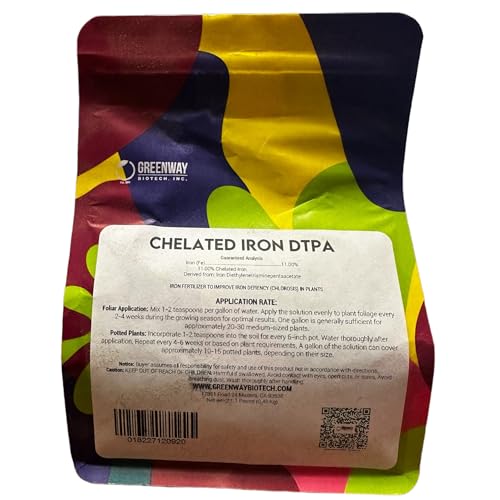
Greenway Biotech’s Chelated Iron DTPA Fertilizer emphasizes high-efficiency iron delivery for plants. The DTPA chelate is designed for quicker uptake, supporting photosynthesis and overall vigor. It’s positioned as a robust option for addressing iron deficiency in trees and other landscape plants, contributing to stronger growth and healthier foliage.
Buying Guide: Key Considerations For Choosing Chelated Iron
- Soil pH compatibility: Iron availability drops in high pH soils. Look for chelates like EDDHA or DTPA that perform well in alkaline conditions (pH 7.0–9.5) to avoid persistent yellowing.
- Chelate type: EDDHA chelates are highly effective in tough soils, especially for trees, but can be pricier. DTPA and EDTA variants offer good performance in many garden settings—choose based on soil tests and plant needs.
- Form and application method: Liquid chelates are easy to mix and apply as foliar sprays or soil drenches. Granular or concentrate forms require mixing and may suit large landscape installations.
- Target plants: Trees and woody plants benefit from products formulated for iron deficiency in woody species; check product labeling for tree-specific guidance and dosage.
- Soil test results: If possible, obtain a soil test to confirm iron deficiency versus other nutrient imbalances. Iron deficiency often co-occurs with nitrogen or manganese issues, influencing product choice.
- Usage frequency: For ongoing color and vigor, some products support regular seasonal applications, while others focus on immediate correction. Plan applications around the growing season and irrigation practices.
- Environmental impact: EDTA-free formulas (like LawnStar) are favored by some gardeners due to environmental considerations. Review labels for safety and runoff considerations in your area.
In selecting a chelated iron product for trees, balance soil conditions, plant species, and landscape scale. For tough soils or high pH, EDDHA-based products often deliver faster, more reliable results. For smaller problems or integrated plant care, liquid formulations paired with micronutrients can provide a quick green-up while supporting overall health.