Looking for a reliable weed puller that minimizes bending and back strain? This guide highlights top stand-up weed pullers ideal for different garden needs. Whether you’re a casual homeowner, a backyard farmer, or a professional landscaper, there’s a tool here to help you remove weeds with roots intact. Each option is evaluated for soil types, root depth, and user comfort, so you can choose confidently without trial-and-error.
| Product | Best For | Key Benefit |
|---|---|---|
| Grampa’s Weeder | Back-saving weeding for long-handled needs | Classic 45″ stand-up design with 4-claw head |
| Fiskars Ergo Weeder | Leverage and precision in tough soil | Cast-aluminum head, SoftGrip handle |
| Walensee Weed Puller | Your tall, stand-up option with 3 claws | Foot pedal for root extraction, stainless steel |
| NICOFPHY Weed Puller Tool | Customizable long reach for varied tasks | 2-in-1 head with adjustable length |
| Orelex Weed Puller Tool | Durable, all-steel design for frequent use | Durable four-tine design with solid build |
Buyer interest centers on tools that reduce bending, protect joints, and remove weeds with minimal soil disruption. The products below are arranged to help you compare options quickly and pick the best fit for your garden size, soil condition, and preferred handle length.
Grampa’s Weeder

- Features: Old-School, long-lasting stand-up design with a 45″ handle and a 4-claw steel head; easy to use with minimal bending; claims root removal with efficiency.
Best for: Gardeners seeking a long, traditional stand-up weed puller with a historic design that emphasizes back and knee relief. The long handle suits users who prefer a classic approach with strong root-gripping capability.
Why selected: This tool has a long heritage and a durable build that supports consistent root removal. It is a simple, proven option for pushing weeds out of beds without kneeling.
Caution / Limitation: Instructions emphasize proper use and videos to maximize effectiveness; users should learn correct technique to avoid root breakage in very dense soils.
Weed Puller Tool Garden Weeding Tool
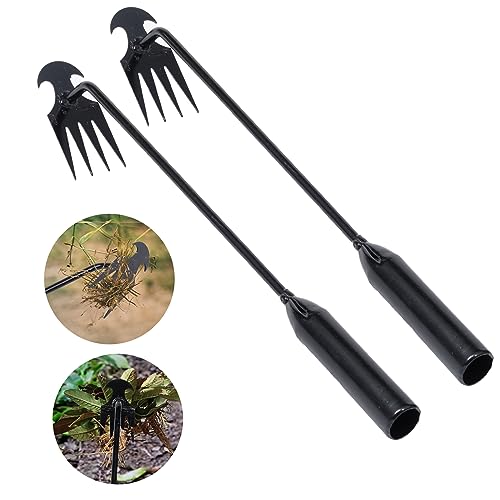
- Features: 16-inch length, 4-tine manganese steel forged head; lightweight, ergonomic handle; designed for uprooting weeds with less bending.
Best for: Gardeners who want a compact, easier-to-handle weed puller for smaller beds or patios. The 16-inch length makes it a good mid-range tool for quick, targeted weeding.
Why selected: The 4-tine head loosens soil effectively while the compact form reduces strain, making it a practical on-the-go option for frequent growers.
Caution / Limitation: The tool is lighter and may require more effort on deeply rooted weeds in very dense soil; best used for light-to-moderate weeding tasks.
Fiskars Ergo Weeder

- Features: Cast-aluminum angled head, ergonomic SoftGrip handle, rust-resistant design; designed for uprooting weeds and their roots with leverage.
Best for: Gardeners needing maximum leverage in tougher soils and those who value a comfortable grip during longer weeding sessions.
Why selected: The combination of a durable head and ergonomic handle helps reduce fatigue while delivering solid root removal performance.
Caution / Limitation: Aluminum heads, though rust-resistant, require regular care to prevent wear in extremely abrasive soils; ensure proper storage after use.
SIXCAR Weed Remover Tool

- Features: 13.3-inch weed puller with four-tine stainless steel construction; durable, rust-resistant design; comfortable handle.
Best for: Gardeners who want a sturdy all-steel option with a comfortable grip for frequent weed removal in moderate-sized gardens.
Why selected: The all-steel build enhances durability and longevity, making it suitable for regular use in varied soil conditions.
Caution / Limitation: Shorter reach compared to other stand-up models; may require kneeling for deeply rooted tasks in very tight spots.
Walensee Weed Puller

- Features: 39″ stand-up design with 3-claw teeth; foot pedal helps apply force; stainless steel construction for durability.
Best for: Taller gardeners or those who prefer a longer reach without bending, with a focus on robust root extraction in mixed soils.
Why selected: The extended handle and pedal mechanism provide leverage to remove entire weeds and roots, reducing regrowth potential.
Caution / Limitation: The 3-claw design may be less effective in very dense soils or extremely rocky beds where deeper root systems are present.
BREWIN TOOLS Hand Weeder Puller

- Features: Dual-ended design with Four-Tooth and Two-Tooth heads; ergonomic non-slip handle; heavy-duty construction for repeat use.
Best for: Gardeners who want a 2-in-1 tool to address both surface and deeper roots with a single implement.
Why selected: The 2-in-1 feature offers versatility, enabling faster weeding sessions by switching heads based on root depth.
Caution / Limitation: The two-tooth head is designed for deeper roots and may require stable footing in loose soil to prevent tool kickback.
Orelex Weed Puller Tool
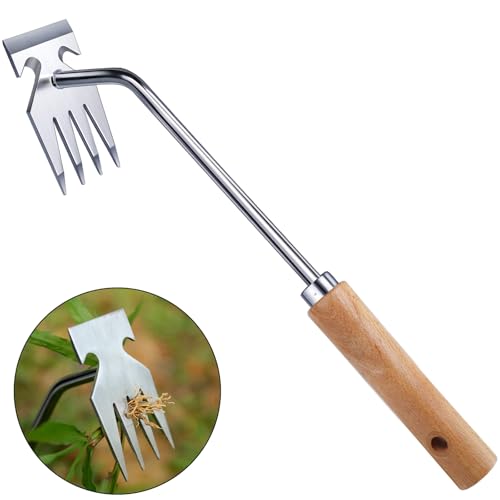
- Features: 13.1-inch four-tine stainless steel head with a solid wood handle; durable, rust-resistant design; lever-action for root pulling.
Best for: Gardeners who want a durable, compact option for frequent weed removal with a focus on rust resistance and smooth operation.
Why selected: The stainless steel construction and solid wood grip provide a reliable, ergonomic experience for regular weeding tasks.
Caution / Limitation: Shorter reach means this tool is best for mid-sized beds or beds where knee-friendly operation is a priority rather than extreme reach needed.
Buying Guide
What to look for when choosing a stand-up weed puller:
- Length and reach: Longer handles reduce bending. Consider your height and typical bed depth when selecting.
- Head design: Four-tine heads dig and loosen soil; three-claw heads grab roots; two-tooth heads bite thick roots. Choose based on weed type and soil density.
- Material: Stainless steel resists rust and corrosion; aluminum offers lightness but may require care; all-steel is highly durable but heavier.
- Ergonomics: Look for SoftGrip or padded handles to minimize fatigue during prolonged use.
- Maintenance: Dry and store tools properly to prevent rust; some designs are easier to rinse and clean after soil contact.
- Intended use: For small beds or patios, a compact model can be sufficient; for large yards, prioritize long reach and robust construction.
How to use a weed puller effectively
- Position the head around the weed; depress the foot pedal (when available) to anchor the tool.
- Apply steady pressure and twist slightly to loosen soil around the weed roots before lifting.
- Pull upwards with a smooth motion to extract the entire root system.
- Clean the head after use to prevent soil buildup and rust in metal components.
Maintenance tips
- Wipe metal parts dry after use; apply a light coat of oil if exposed to moisture.
- Check handles for cracks and tighten any loose connections on adjustable models.
- Store tools in a dry, sheltered area to extend longevity.
FAQ
- Q: Which weed puller is best for very dense soil? A: Tools with stronger leverage and four-tine or heavy-duty steel heads generally perform better in dense soil.
- Q: Do stand-up weed pullers remove deep taproots? A: Some models with long handles and robust heads can access shallow deep roots, but very deep taproots may require multiple passes or alternate methods.
- Q: Are these tools suitable for large gardens? A: Yes, especially longer-reach and robust models; for very large areas, consider combining with a powered cultivator for initial loosening.
- Q: Can these tools help with weed prevention? A: Regular removal of weeds with intact roots can slow regrowth, especially when combined with mulch and proper garden care.
- Q: How should I store these tools? A: Keep dry and clean; store in a shed or garage where humidity is low to prevent rust and handle degradation.
- Q: Are there child-safety concerns? A: Some models have sharp tines; keep away from children and pets, especially the 2-in-1 or sharp-edged heads.