Answering a common pond owner question, pond leaf net covers protect koi and other aquatic life while reducing maintenance. This guide highlights five solid options, suitable for different pond sizes, predators, and climates. Whether you need lightweight protective netting, heavy-duty mesh, or a dome-style cover, you’ll find a model that fits your needs. The top picks are best for koi habitats, small-to-medium ponds, and garden water features where birds and debris are recurring concerns. The following summary table helps compare core details at a glance.
| Product | Best For | Mesh Size | Notes |
|---|---|---|---|
| Rainleaf Pond Netting, 7′ x 10′ | Moderate ponds, compact koi setups | Standard | Lightweight yet durable; easy to install |
| AlpineReach Koi Pond Netting Kit 15′ x 20′ | Medium to large ponds | 3/8 inch | Dense mesh; clear view of water |
| Alloxity Pond Netting, 7′ x 10′ | Budget-friendly, versatile use | Standard | HDPE; strong protection |
| AlpineReach Koi Pond Netting Kit 14′ x 14′ | Small to medium ponds | 3/8 inch | Reusable; diagonal coverage |
| PACETAP 20′ x 30′ | Large ponds; layered protection | Small mesh | Sturdy, UV-resistant |
Rainleaf Pond Netting, 7′ x 10′ Pond Net Cover

The Rainleaf pond netting is designed for moderate koi ponds and smaller water features. It is lightweight while offering solid performance in debris filtration and predator protection. The mesh is soft and stretchy, enabling quick coverage without sagging. The netting helps reduce routine cleaning by catching falling leaves and other debris before they reach the water.
Best for: Home koi ponds or small decorative ponds where wind and weather can loosen lightweight nets. It’s suitable for owners who want quick setup with minimal maintenance. This model is also a practical option for ponds in shaded or partially shaded yards.
Why selected: It balances ease of use with reliable protection, and its durability under variable weather conditions makes it a practical long-term cover for light to moderate debris loads.
Caution: It may require occasional re-tensioning on very windy days to prevent sagging. Consider staking or weights as needed for your climate.
AlpineReach Koi Pond Netting Kit 15 x 20 ft

The AlpineReach 15 x 20 ft net is a heavy-duty option with a 3/8 inch woven mesh. It provides robust protection from blue herons, cats, and other predators while floating just above the water to avoid catching fish. The kit’s size accommodates a wide range of medium-to-large ponds and can be trimmed to fit specific layouts.
Best for: Ponds with frequent predator visits and larger surface areas where a strong, durable barrier is required. It’s well-suited to outdoor setups that need reliable long-term coverage and where sunlight exposure is a consideration.
Why selected: The combination of a tight mesh and a sizable reach ensures comprehensive coverage with fewer gaps, while the floating design minimizes fish entanglement risk.
Caution: The large net may require careful handling during installation to avoid tangling. Edges should be secured to prevent wind flapping in exposed locations.
Alloxity Pond Netting, 7′ x 10′

Alloxity offers a robust 7′ x 10′ pond netting with a focus on durability and predator protection. The material is made to endure UV exposure, tearing, and weather shifts, while the black netting blends with water surfaces for a discreet appearance. It’s reinforced to reduce tearing and tangling, ideal for frequent removal and reinstallation.
Best for: Pond owners seeking a cost-effective, sturdy net that performs across seasons without frequent replacements. It’s a solid choice for gardens where appearances matter and where debris control is a priority.
Why selected: The HDPE construction and reinforced strands provide dependable, long-term use with straightforward handling—good balance between protection and aesthetics.
Caution: The 7′ x 10′ size may be small for very large ponds; measure your surface area to ensure adequate coverage or consider larger options in the line.
AlpineReach Koi Pond Netting Kit 14 x 14 ft
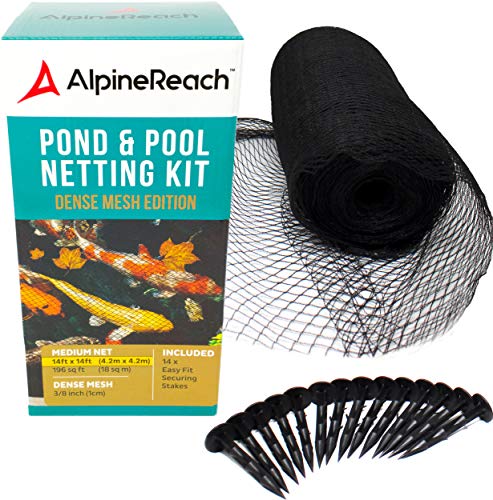
This AlpineReach kit is tailored for small-to-medium ponds, offering 14 x 14 ft of coverage with a 3/8 inch woven mesh. The durable material and included stakes allow for firm installation and resilience against wind. The net’s density helps keep out even small leaves and debris, supporting an aesthetically tidy water feature.
Best for: Garden ponds with moderate debris loads and a need for reliable predator protection without oversized hardware. Ideal for DIY enthusiasts who want a tidy, reusable solution.
Why selected: The kit’s balance of size, material strength, and reusability makes it a versatile choice for a variety of pond shapes and layouts.
Caution: As with larger nets, ensure proper staking to reduce movement during storms or heavy winds.
PACETAP 20′ x 30′ Koi Pond Netting Kit

The PACETAP netting kit covers a large surface with a 20 by 30-foot footprint and uses a small mesh size to capture even the tiniest leaves and debris. It includes stakes for easy installation and aims to provide reliable protection from birds, cats, and other predators. The HDPE material is designed to resist UV exposure and wear, offering long-term use across seasons.
Best for: Large ponds or multiple water features that require comprehensive protection with scalable coverage. Suitable for ponds that experience frequent leaf fall or bird activity.
Why selected: Its large area and dense mesh make it a practical choice for expansive ponds, reducing maintenance time while maintaining water clarity.
Caution: Larger nets can be heavier to handle; ensure sturdy anchors and consider helper installation for best results.
Buying Guide: Key Considerations For Pond Leaf Net Covers
What size should I choose?
Measure your pond’s surface area and consider the shape. Choose a net that provides at least 75-100% coverage with a tolerance for edges, corners, and features like fountains or skimmers. Larger ponds may require multi-panel setups or domes for complete protection.
What mesh size is best?
Smaller mesh (like 3/8 inch or finer) blocks smaller leaves and debris, but it can be harder to remove accumulated debris. Larger mesh is easier to shake off but may miss smaller particles. Balance debris control with maintenance ease based on your climate and tree density.
Should I prefer a dome or a flat net?
Dome nets, such as the models from Mxmoonant and Yoojahow, cover a pond from above, protecting from leaves and larger debris while preventing bird entry. Flat nets lie directly on the water surface and are typically easier to install for irregular pond shapes, but may offer less overhead protection.
What about predator protection?
Predator protection is a major advantage of pond netting. Nets designed to deter birds, raccoons, and cats often use dense or reinforced mesh and secure anchoring. If predation is a significant concern in your area, opt for a heavier-duty mesh with sturdy stakes and a snug fit.
What maintenance does a pond net require?
Regular checks for sagging, wear, and tangling are essential. In windy climates, re-tensioning every few months helps maintain coverage. Cleaning nets—shaking off debris and rinsing—helps extend their life and keeps the pond scenic.
FAQ: Quick Answers For Pond Leaf Net Covers
- How do I install a pond net cover? Secure the edges with stakes around the pond rim and pull taut to prevent sagging. For domes, assemble the frame and place the cover over the top, fastening anchors as needed.
- Will a pond net harm my koi? Properly installed nets float above the water surface and do not contact fish. Ensure there is space between the net and the water to avoid entanglement.
- Can I cut nets to fit an irregular pond? Yes. Many nets are designed to be cut to size; use caution to maintain structural integrity and re-stake edges after trimming.
- Which net is best for very large ponds? Opt for a larger, heavy-duty kit with a denser mesh or consider multiple nets with a dome cover for complete coverage.
- Do nets block sunlight or affect algae growth? Nets are typically UV-resistant and designed to allow some light penetration; they should not dramatically alter pond photosynthesis but may affect aesthetics slightly depending on color and density.
- Are dome nets easier to install than flat nets? Domes can be quicker for large, irregular ponds because they cover a larger volume with fewer drag points, though they require a sturdy frame and assembly.